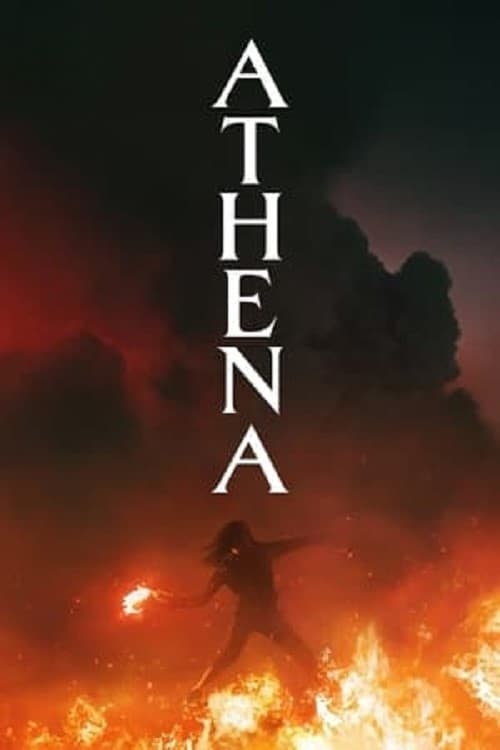
Athena (2022)
Directed by Romain Gavras
Yes — Athena is woke, scoring 60 out of 100 on our wokeness meter.
Athena arrives with impeccable credentials in the matter of representation.
Consciousness Markers
Racial unrest is the film's engine: the death of a North African youth at the hands of disguised far-right instigators deliberately stoking racial conflict drives the entire uprising.
The cast is overwhelmingly composed of French-North African actors (Dali Benssalah, Sami Slimane, Ouassini Embarek) portraying a banlieue community, giving the film authentic minority representation at its core.
The film depicts a poverty-stricken housing project in revolt against the state, with a drug-dealer subplot, but its anger is aimed at police and the establishment rather than capital as such.
Critics widely noted the film favors visceral spectacle over political argument, with several faulting its lack of depth rather than any preachiness.
The film is a hyper-masculine story of warring brothers and rioters; female characters are peripheral and no feminist thesis is advanced.
No LGBTQ+ characters or themes appear anywhere in the narrative.
No environmental or climate themes are present.
No body-positivity themes or messaging appear.
No neurodivergent characters or themes are featured.
The film is contemporary fiction set in a fictitious housing complex, not a revisionist account of historical events.
Why it received this score
Athena arrives with impeccable credentials in the matter of representation. Its cast is drawn almost entirely from French-North African performers, and the banlieue they inhabit is rendered with the specificity of lived geography instead of set dressing. The film's engine is racial grievance, plainly stated: a thirteen-year-old boy is beaten by men in police uniforms who turn out to be far-right provocateurs, and the burning housing complex is the consequence of their deliberate design. This is not subtext. The closing shot of the uniforms going up in flames makes the argument explicit, and the argument concerns race in France.
The omissions are equally instructive. There is no LGBTQ presence, no body-positivity thread, no neurodivergent character, no environmental lament. The feminist register is faint, since the narrative concerns warring brothers and their masculine codes, with women confined to the perimeter. An anti-capitalist reading is available, given the poverty on display and the drug dealer attempting to move his contraband through the chaos, but the anger here is aimed at police and the republic, not at capital as a system. The drug dealer is a businessman, and the film treats him as a nuisance.
Where the film might have lectured, it detonates instead. Reviewers were nearly unanimous that the technique overwhelms the thesis, that the long unbroken takes and the fireworks and the tear gas add up to a sensation of pure momentum. The politics remain a mood, an atmosphere of dispossession, and the film trusts the imagery to carry them. Whether that constitutes cowardice or confidence is a matter for other critics. From this chair, the spectacle is superb and the sermon is absent, which is its own kind of statement.
Analysis generated by our Consciousness Algorithm


Synopsis
Hours after the tragic death of their youngest brother in unexplained circumstances, three siblings have their lives thrown into chaos.
Questions about Athena
Is Athena woke?
Yes — Athena is woke, scoring 60 out of 100 on our wokeness meter. That earns it a verdict of Woke.
What makes Athena woke?
2 of the 10 markers register at 30 or above, led by Racial Consciousness (80) and Representation Casting (60). On Racial Consciousness: Racial unrest is the film's engine: the death of a North African youth at the hands of disguised far-right instigators deliberately stoking racial conflict drives the entire uprising.
How does Athena compare to other 2022 movies?
It ranks #12 of the 223 films from 2022 we've scored; their average is 22. The wokest is Bros (92).
How is the Woke Score calculated?
An AI-assisted process researches the film and its reception, scores it 0–100 on ten markers, then combines those into one 0–100 Woke Score. It measures a specific set of 2020s cultural themes, not film quality.