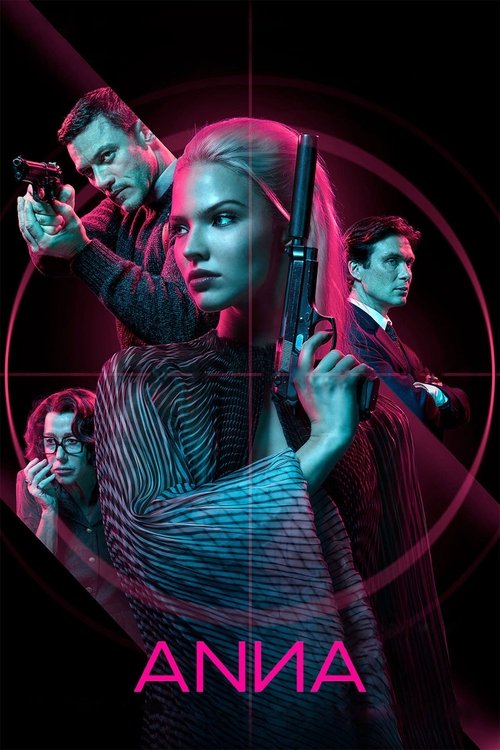
Anna (2019)
Directed by Luc Besson
No — Anna is not woke, scoring 16 out of 100 on our wokeness meter.
Luc Besson's Anna arrives with the familiar contours of a Cold War spy thriller: a beautiful Russian recruit, a KGB handler, a CIA counterpart, and a fashion modeling cover that allows the heroine to move through Paris and Milan with lethal efficiency.
Consciousness Markers
Anna enters a lesbian relationship with fellow model Maude as part of her cover, and the relationship is depicted on screen, though it functions more as plot mechanism than as an identity-driven theme.
A female assassin lead offers surface-level girl-power optics, but the film leans on the male-gaze femme-fatale trope and weaponized sexuality rather than any feminist argument.
The cast is overwhelmingly white and European, with a Russian lead and Western supporting players; no meaningful effort at diverse or inclusive casting is evident.
The film is a slick genre exercise with no preachy messaging or moral instruction.
No engagement with racial themes or racial consciousness whatsoever.
No environmental or climate content.
No critique of capitalism or wealth; the fashion-modeling world is used purely as espionage cover.
No body-positivity themes; the film trades heavily on conventional model beauty standards.
No neurodivergent characters or themes.
A fictional Cold War-era spy thriller; it does not revise or reinterpret historical events.
Why it received this score
Luc Besson's Anna arrives with the familiar contours of a Cold War spy thriller: a beautiful Russian recruit, a KGB handler, a CIA counterpart, and a fashion modeling cover that allows the heroine to move through Paris and Milan with lethal efficiency. The film has a female lead and a same-sex affair, but neither element is treated as an argument. The lesbian relationship functions as operational camouflage, a plot mechanism that keeps suspicion at bay. The movie has no interest in consciousness raising. It wants sleek surfaces, expensive clothing, and the sight of Sasha Luss dispatching enemies with a blank expression.
On the question of representation, the cast remains overwhelmingly white and European. A Russian lead and Western supporting players do not constitute a meaningful gesture toward inclusive casting. The feminist dimension is similarly thin. A woman with a gun offers surface-level girl-power optics, yet the camera treats her as a male-gaze femme fatale, and her sexuality is weaponized for the mission. Racial consciousness, climate concerns, anti-capitalist critique, body positivity, neurodivergence, and revisionist history are all absent. The fashion world is not indicted. It is merely a backdrop for espionage. Conventional model beauty is not challenged. It is the film's central visual currency.
Lecture energy is close to nonexistent. There is no sermon, no moral instruction, no plea for social reform. Besson delivers a slick genre exercise with nested timelines and double crosses, and it asks nothing of the audience beyond attention. The film does not lecture. It poses. That pose is occasionally diverting, but it carries little cultural weight. Anna is a modest artifact of progressive optics without progressive substance, a spy thriller that borrows the language of empowerment while keeping its gaze fixed on the same old surfaces.
Analysis generated by our Consciousness Algorithm


Synopsis
Beneath Anna Poliatova's striking beauty lies a secret that will unleash her indelible strength and skill to become one of the world's most feared government assassins.
Questions about Anna
Is Anna woke?
No — Anna is not woke, scoring 16 out of 100 on our wokeness meter. That earns it a verdict of Ultra Based.
Does Anna have any woke elements?
1 of the 10 markers register at 30 or above, led by LGBTQ+ Themes (40). On LGBTQ+ Themes: Anna enters a lesbian relationship with fellow model Maude as part of her cover, and the relationship is depicted on screen, though it functions more as plot mechanism than as an identity-driven theme.
How does Anna compare to other 2019 movies?
It ranks #134 of the 284 films from 2019 we've scored; their average is 22. The wokest is Black Christmas (79).
How is the Woke Score calculated?
An AI-assisted process researches the film and its reception, scores it 0–100 on ten markers, then combines those into one 0–100 Woke Score. It measures a specific set of 2020s cultural themes, not film quality.