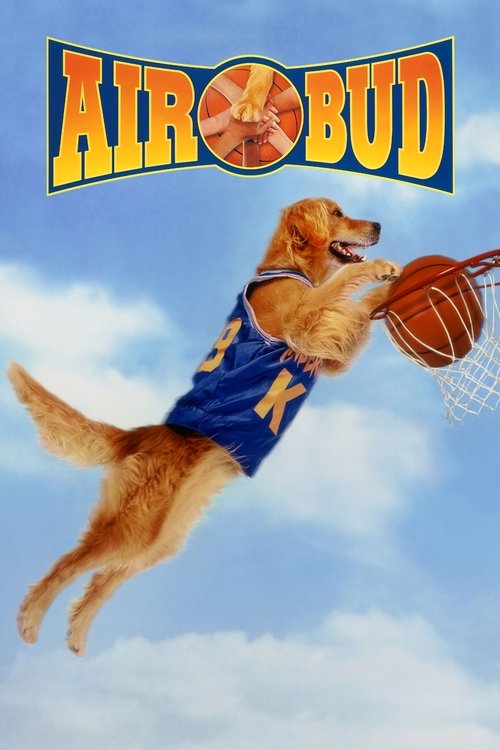
Air Bud (1997)
Directed by Charles Martin Smith
No — Air Bud is not woke, scoring 8 out of 100 on our wokeness meter.
Air Bud arrives from 1997, a year when a Golden Retriever could be cast as a basketball prodigy and nobody in the room felt the need to justify it.
Consciousness Markers
The cast includes Bill Cobbs as Arthur Chaney, a retired pro player turned school janitor and mentor, alongside a predominantly white principal cast. His presence is natural and unremarked upon, offering modest diversity without any commentary.
No LGBTQ+ characters, themes, or subtext of any kind appear in this 1997 family sports comedy.
The mother, Jackie, is a supportive single parent, but the film offers no feminist framing, critique of patriarchy, or gendered commentary.
Chaney's race is never addressed, and the film engages no themes of racial identity, injustice, or consciousness.
No environmental or climate themes whatsoever; the closest element is a truck crashing into a lake, which is played purely for slapstick.
The villain Snively wants to profit from Buddy's fame, but this is standard greedy-antagonist plotting rather than any systemic critique of capitalism.
No body positivity themes or messaging are present.
No neurodivergent characters or themes are depicted or referenced.
The film is a contemporary fictional story with no historical subject matter to revise.
The film delivers gentle lessons about friendship and perseverance through plot rather than preachy monologues; there is no didactic lecturing.
Why it received this score
Air Bud arrives from 1997, a year when a Golden Retriever could be cast as a basketball prodigy and nobody in the room felt the need to justify it. The plot concerns Josh Framm, a boy grieving his father, who finds a runaway dog with a jump shot. A franchise followed. For our purposes, the film's cultural inventory is nearly bare, and the one item on the shelf is Bill Cobbs, who plays Arthur Chaney, a retired professional player reduced to school janitor and elevated to mentor. His presence is warm, unforced, and entirely unremarked upon. The film never once pauses to explain him. That restraint is worth a small credit, and it is the only credit available.
Every other ledger sits at zero. There is no romantic or identity subplot beyond the heterosexual baseline, no feminist argument, no environmental conscience, no structural critique of the man who wants to monetize the dog. Norman Snively is an alcoholic clown with ownership papers, and his greed is treated as a personal defect, not a symptom of anything larger. The film has no interest in bodies, in minds that work differently, in the rewriting of history, or in telling the audience how to vote. Its lessons about perseverance and friendship are smuggled in through free throws and a custody hearing.
The climax takes place in a courtroom, where a judge agrees that the dog should choose his own owner, and the dog chooses the boy. It is absurd, it is efficient, and it never lectures. Thirty years on, the film plays as a relic of a gentler commercial instinct: entertain the children, sell the plush toys, move along. There is no sermon here, no accounting of identities, no invitation to examine our complicity in anything. Just a dog, a ball, and a boy who needs both. We classify it accordingly, with something close to affection.
Analysis generated by our Consciousness Algorithm


Synopsis
A lonely boy befriends a stray dog who has a natural talent for basketball and together they experience the highs and lows of life as their friendship remains solid through a series of escapades.
Questions about Air Bud
Is Air Bud woke?
No — Air Bud is not woke, scoring 8 out of 100 on our wokeness meter. That earns it a verdict of Ultra Based.
Does Air Bud have any woke elements?
Very few. None of the 10 markers reaches 30, the level where a marker counts as present; the highest is Representation Casting at 20.
How does Air Bud compare to other 1997 movies?
It ranks #53 of the 109 films from 1997 we've scored; their average is 12. The wokest is Happy Together (65).
How is the Woke Score calculated?
An AI-assisted process researches the film and its reception, scores it 0–100 on ten markers, then combines those into one 0–100 Woke Score. It measures a specific set of 2020s cultural themes, not film quality.