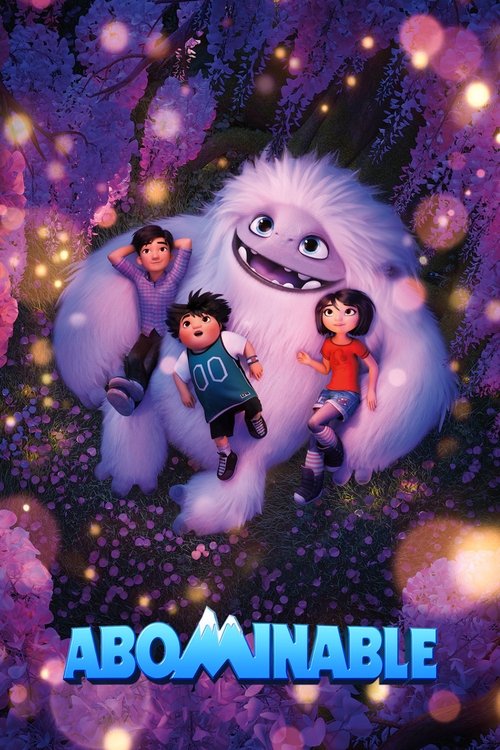
Abominable (2019)
Directed by Jill Culton
No — Abominable is not especially woke, scoring 32 out of 100 on our wokeness meter.
Abominable arrives from DreamWorks Animation and Pearl Studio as a China-United States co-production, and it wears that dual citizenship with an easy confidence.
Consciousness Markers
A China-US co-production led by a Chinese teenage girl (Yi) with a predominantly East Asian voice cast including Chloe Bennet, Albert Tsai, Tenzing Norgay Trainor, Tsai Chin, and James Hong, set entirely in China.
Directed by Jill Culton with a grounded female lead who is never forced into a romance and a female villain in Dr. Zara; critics specifically praised the avoidance of shoe-horned romantic arcs for Yi.
The antagonists are a wealthy industrialist (Mr. Burnish) and a profit-driven zoologist (Dr. Zara) who seek to capture and sell the Yeti, framing corporate greed and animal exploitation as the villain, though Burnish is redeemed.
The Chinese setting and cultural texture (baozi, Nai Nai, Shanghai, the Yellow River) are richly rendered, but the film treats them as backdrop rather than as a vehicle for racial commentary or consciousness.
Mild moralizing about family, grief, and following one's dreams runs through the story, but it is delivered gently through character arcs rather than as overt preaching.
Everest's magical power to accelerate plant growth (blueberries, dandelions, flowers) carries a faint nature-reverence motif, but there is no environmentalist thesis or climate messaging.
No LGBTQ+ characters, themes, or subtext appear anywhere in the film.
No body positivity themes or messaging are present.
No neurodivergent characters or themes are depicted.
The film is a fantasy adventure with no historical revisionism; the nine-dash line map controversy is a geopolitical censorship matter, not a narrative reworking of history.
Why it received this score
Abominable arrives from DreamWorks Animation and Pearl Studio as a China-United States co-production, and it wears that dual citizenship with an easy confidence. The story belongs to Yi, a Shanghai teenager who plays her dead father's song on a rooftop and stumbles onto a young Yeti in need of transport home. The voice cast leans heavily East Asian, and the film's geography (baozi, Nai Nai, the Oriental Pearl Tower, the Yellow River, the Gobi) is rendered with a specificity that suggests genuine affection for the terrain. This is representation as texture, not as sermon. The culture sits in the frame because the story lives there, not because anyone felt obliged to explain it.
Jill Culton directs and writes, and she gives us a girl who grieves and plays violin and never once needs a boyfriend to complete her arc. Critics noticed. A female villain, Dr. Zara, shares antagonist duties with a wealthy industrialist, Mr. Burnish, who wants to capture the Yeti for profit. The film's contempt for the monetization of a living creature is real, though Burnish gets a redemption and the critique never hardens into a thesis. Everest's ability to make blueberries and dandelions erupt from the earth offers a gentle reverence for growing things. It is a mood, not a movement.
Elsewhere the film is content to be a family adventure, and there is something almost restful about its restraint. No romantic subplot is forced on Yi. No lecture arrives about bodies, minds, or the weather. The moralizing about grief and family and finishing your father's journey is present, but it is whispered through character instead of shouted from a pulpit. The nine-dash line controversy that got the film banned in Vietnam, Malaysia, and the Philippines is a matter of cartography and geopolitics, not of narrative revision. What we have, then, is a pleasant film that declines to argue with anyone. It opened at number one and then yielded to Joker, which feels about right.
Analysis generated by our Consciousness Algorithm
Part of


Synopsis
A group of misfits encounter a young Yeti named Everest, and they set off to reunite the magical creature with his family on the mountain of his namesake.
Questions about Abominable
Is Abominable woke?
No — Abominable is not especially woke, scoring 32 out of 100 on our wokeness meter. That earns it a verdict of Based.
Does Abominable have any woke elements?
3 of the 10 markers register at 30 or above, led by Representation Casting (55), Feminist Agenda (45) and Eat the Rich (35). On Representation Casting: A China-US co-production led by a Chinese teenage girl (Yi) with a predominantly East Asian voice cast including Chloe Bennet, Albert Tsai, Tenzing Norgay Trainor, Tsai Chin, and James Hong, set entirely in China.
How does Abominable compare to other 2019 movies?
It ranks #71 of the 284 films from 2019 we've scored; their average is 22. The wokest is Black Christmas (79).
How is the Woke Score calculated?
An AI-assisted process researches the film and its reception, scores it 0–100 on ten markers, then combines those into one 0–100 Woke Score. It measures a specific set of 2020s cultural themes, not film quality.