Zombieland: Double Tap (2019)
Directed by Ruben Fleischer
No · Ultra Based
How we score movies →Consciousness Markers
The ensemble includes female characters (Emma Stone, Abigail Breslin, Rosario Dawson) who occupy active narrative roles and agency. However, this appears incidental to character construction rather than intentional representation strategy.
Female characters are active and capable, but the film makes no explicit feminist argument or commentary. Their agency is presented as practical necessity rather than ideological statement.
The film largely avoids preachy messaging, maintaining a comedic tone throughout. Minimal moments exist where characters might be perceived as delivering moral instruction, but these are minimal.
No LGBTQ+ themes, characters, or subtext are present in the film. The makeshift family unit is not coded as queer chosen family despite the potential for such reading.
The film contains no exploration of racial themes, identity politics, or racial consciousness. Characters are not differentiated by race in any thematically significant way.
Climate crusade messaging is entirely absent. The apocalypse is zombie-based rather than environmentally motivated, and there is no commentary on climate or ecological destruction.
The film contains no critique of capitalism, wealth inequality, or corporate structures. Survival in the apocalypse is presented as a practical matter rather than a political one.
There is no body positivity messaging. Characters are presented in conventional Hollywood form without commentary on body diversity or acceptance.
No neurodivergent characters or representation are present. Character quirks are played for comedic effect rather than presented as neurodivergent identity.
The film is set in an apocalyptic present and contains no historical revisionism or reinterpretation of past events.


Synopsis
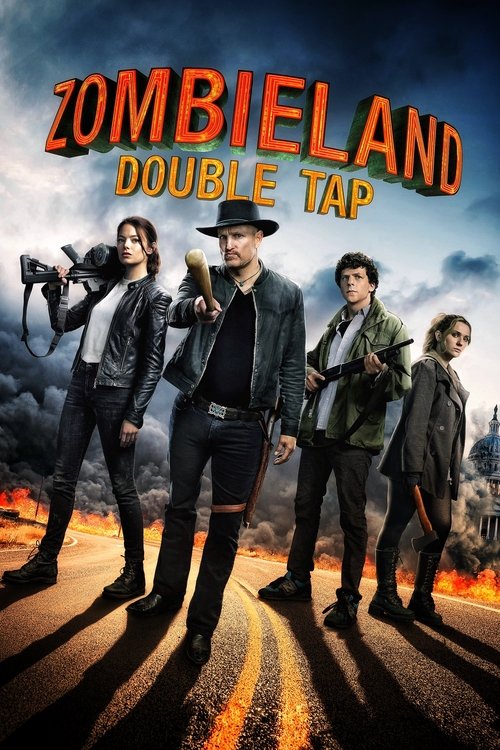
Columbus, Tallahassee, Wichita, and Little Rock move to the American heartland as they face off against evolved zombies, fellow survivors, and the growing pains of the snarky makeshift family.
Why it received this score
Zombieland: Double Tap presents itself as a straightforward continuation of the franchise's irreverent zombie-comedy formula, and it mostly succeeds by refusing to lecture its audience about anything. The film's modest social consciousness emerges primarily through its casting choices rather than through any deliberate thematic messaging. Emma Stone, Rosario Dawson, and Abigail Breslin occupy positions of agency in the narrative, and their characters are written as fully capable participants in the zombie-apocalypse survival narrative rather than as supporting ornaments to male leads. That said, this appears to be a function of basic character construction rather than progressive intent.
The film's relationship with its own setting is fundamentally apolitical. There is no critique of capitalism, no environmental messaging, no disability representation, and no particular consciousness regarding racial dynamics. The humor derives from character quirks and zombie mayhem rather than from social commentary. The ensemble's makeshift family structure might suggest something about chosen family and queer kinship, but the film itself makes no such argument and treats the dynamic as simply the natural result of apocalyptic circumstances rather than as a statement about alternative social arrangements.
What remains most notable is what is conspicuously absent from Double Tap's worldview. The film exists in a post-ideological space where the primary concern is entertainment value and franchise maintenance. There is no attempt to engage with the political moment of 2019, no gesture toward cultural awareness, and no suggestion that the filmmakers view their work as carrying any responsibility beyond providing ninety minutes of comedic zombie violence. In this respect, the film achieves a kind of consistency: it neither strives for nor achieves meaningful progressive positioning. It simply is what it is, which is refreshingly honest.
Analysis generated by our Consciousness Algorithm
Critic Reviews
“Zombieland: Double Tap is a riot, and a lot of that is due to Zoey Deutch and her character, Madison. While it doesn’t quite achieve classic status in its own right, when it comes to sequels that do the original film justice, it is up there. It’s worth the wait, your time and your money.”
“Zombieland: Double Tap continues the original’s cheeky tone and irreverent humor, while it also acknowledges that it’s a series a little out of place and time with the current political age. But if all you’re looking for is “Shaun of the Dead,” but American, then this is the movie for you.”
“For all the flying intestines and skulls that split open like past-due melons, Double Tap has another squishy organ at its center: a big, goofball heart.”
“Double Tap isn’t a worthwhile sequel, especially after a decade, but it’s certainly a number two.”