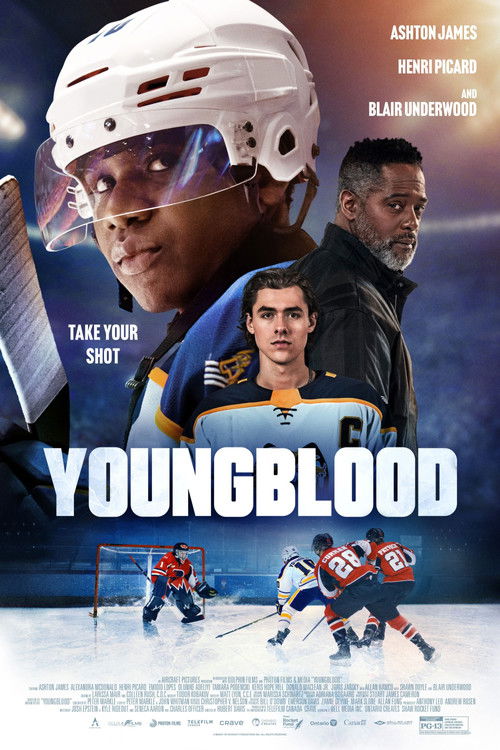
Youngblood (2026)
Directed by Hubert Davis
Yes · Woke
How we score movies →Consciousness Markers
Black protagonist in a predominantly white sport, deliberate casting choices that prioritize racial representation. The film centers a Black hockey player as the lead in a narrative explicitly about belonging and proof of worth.
Strong racial consciousness throughout. The film explicitly addresses racism and bigotry in hockey, the burden of proof placed on Black athletes, and systemic exclusion within the sport.
Moderate lecture energy. The film's engagement with themes of racism and toxic masculinity sometimes feels preachy rather than dramatically integrated. Critics noted the themes feel somewhat checklist-oriented rather than organically emergent.
Moderate revisionist approach. The remake itself is a form of historical revision, reframing 1980s sports cinema through a contemporary lens that centers race and toxic behavior as central rather than incidental.
Limited feminist agenda. While toxic masculinity is a stated theme, the film's engagement appears surface-level. The romantic subplot exists within traditional gender dynamics rather than challenging them.
Minimal anti-capitalist messaging. The film operates within the capitalist framework of professional sports and the NHL draft without interrogating economic systems or wealth inequality.
No significant LGBTQ+ themes identified in available materials. The film focuses on heterosexual romance and male-dominated sports culture without apparent queer representation or themes.
No climate themes present. This is a sports drama focused on hockey and personal development with no environmental or climate-related content.
No body positivity themes. The film centers athletic excellence and physical prowess as traditionally valued in sports narratives, without challenging beauty or body standards.
No neurodivergence representation identified. The film contains no characters coded as neurodivergent or themes exploring neurodivergent experience.
Synopsis
Hockey prodigy Dean Youngblood joins the Hamilton Bulldogs and has to deal with toxic behavior during his journey to the National Hockey League draft.
Why it received this score
Hubert Davis has executed a curious inversion on the 1986 Rob Lowe vehicle, transforming a straightforward sports fantasy into something considerably more self-conscious about its own cultural machinery. By centering a Black protagonist in a sport historically indifferent to racial representation, the film announces its intentions immediately and without ambiguity. The narrative mechanics remain those of the original: a talented young player, familial pressure, romantic subplot, redemptive coaching relationship. The difference lies in what the film believes these mechanics can now communicate. Where the original asked us to cheer for a young man's ascent, this version asks us to interrogate the systems that make his ascent a matter of overcoming racial suspicion and proving his belonging in spaces designed to exclude him.
The film's engagement with toxic masculinity registers as both its most committed element and its most theatrical liability. Critics note that the examination of how hockey culture perpetuates harmful masculine ideals feels underbaked, as though the script consulted a checklist of contemporary concerns rather than allowing them to emerge organically from character and conflict. The romance subplot, particularly, seems to exist in a different film altogether, one less interested in structural critique than in delivering the emotional beats required by genre convention. This version occupies a curious space between genuine cultural critique and formulaic sports drama, wanting to say something true about sport and society while remaining bound to the requirements of the genre.
The casting choices suggest a film aware of its own representation, yet the execution often feels more like casting as statement rather than casting as storytelling. Ashton James carries the film with quiet credibility, but the supporting ensemble sometimes feels deployed more for demographic balance than narrative purpose. This is not to suggest the film cynically weaponizes diversity, only that it occasionally mistakes inclusion for integration. The result sits in an interesting middle ground, neither the blunt instrument of propaganda nor the naturalized representation of a film entirely comfortable with its own casting decisions. It is a work that knows what it wants to say about hockey, race, and masculinity, and has said it with varying degrees of success.
Analysis generated by our Consciousness Algorithm
Critic Reviews
“The ending can be read as conclusively upbeat or as corrosively ironic. Still, Youngblood is never less than fascinating, and it's a bit like the game it explores: the times you don't want to look at it are the times you can't look away. [31 Jan 1986, p.D1]”
“Scenes on the ice look great and Lowe truly looks like the fast and accurate son-of-a-gun hockey player he’s supposed to be.”
“There's nothing wrong with Hollywood's obsession with making '80s updates of the Horatio Alger story. But Youngblood doesn't come close to capturing the spunk or spirit of youthful dreams.”
“A packed convention of contemporary cliches. [31 Jan 1986, p.J]”