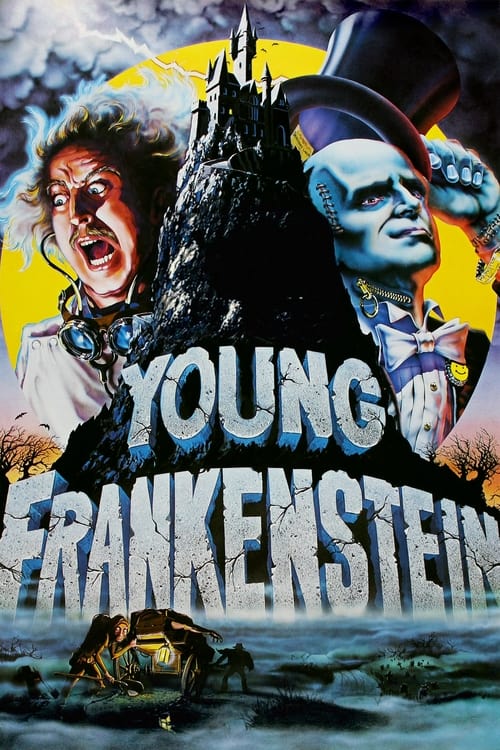
Young Frankenstein (1974)
Directed by Mel Brooks
No · Ultra Based
How we score movies →Consciousness Markers
Igor displays eccentric behavior played for laughs, but this predates modern neurodivergence discourse and contains no affirming representation.
The cast is uniformly white and reflects 1974 Hollywood casting practices. No attempt at diverse representation.
No LGBTQ+ themes, representation, or subtext present in the film.
Female characters serve traditional comedic roles without dimensional characterization or feminist perspective.
No engagement with racial themes or consciousness. The film exists in an all-white world without comment.
No climate-related themes or environmental consciousness present.
No critique of capitalism or class consciousness. The plot involves no economic themes.
Igor's physical disability is treated as a source of comedy rather than as a subject for positive representation.
The film is a genre parody with no engagement with historical narratives or revisionist impulses.
No preachy or preachy tone. The film exists purely as entertainment within the comedic register.

Synopsis
A young neurosurgeon inherits the castle of his grandfather, the famous Dr. Victor von Frankenstein. In the castle he finds a funny hunchback, a pretty lab assistant and the elderly housekeeper. Young Frankenstein believes that the work of his grandfather was delusional, but when he discovers the book where the mad doctor described his reanimation experiment, he suddenly changes his mind.
Why it received this score
Young Frankenstein is a 1974 parody of Universal's monster films, directed by Mel Brooks in black and white as a loving homage to the Gothic horror tradition. The film contains no discernible markers of contemporary progressive sensibility, which is to say it is entirely of its time and makes no attempt to address or redress social consciousness of any kind. Gene Wilder's neurosurgeon inherits his grandfather's castle and rediscovers the secrets of reanimation, leading to a series of increasingly absurd comedic set pieces that operate purely within the register of slapstick and genre pastiche.
The representation of disability here warrants particular scrutiny, though perhaps not in the manner one might expect. Marty Feldman's Igor is played as comic relief, and Brooks even undercuts the traditional hunchback trope by having the character's hump migrate from one side to the other throughout the film, a joke that operates at the level of pure visual comedy rather than any statement about disability itself. The female characters exist within the narrow comedic framework typical of 1970s comedy, neither progressive nor particularly regressive by the standards of their era. Madeline Kahn's Inga and Cloris Leachman's Frau Blücher are written as comic stereotypes without any attempt at dimensional characterization or social commentary.
The film's concerns are entirely formal and generic: how to successfully parody the visual language and narrative conventions of 1930s horror cinema. Social consciousness, whether progressive or otherwise, simply does not enter the picture. One approaches this film not as a cultural artifact worthy of scoring on axes of contemporary sensibility, but as a technical exercise in comedic pastiche. It is, by the standards of modern social consciousness, essentially inert.
Analysis generated by our Consciousness Algorithm
Critic Reviews
“Mel Brooks is home with Young Frankenstein, his most disciplined and visually inventive film (it also happens to be very funny). ”
“Brooks's most accomplished work, combining his well-known brand of comedy with stylish direction and a uniformly excellent cast.”
“In addition to just being side-splittingly funny, Young Frankenstein is an aesthetic triumph.”
“By and large, a rather pitiful parody of the Universal Frankenstein movies, taking typically Brooksian liberties with characters and plot, resorting to juvenile mugging, and relying to a great extent on fairly authentic sets and photography for its better moments.”