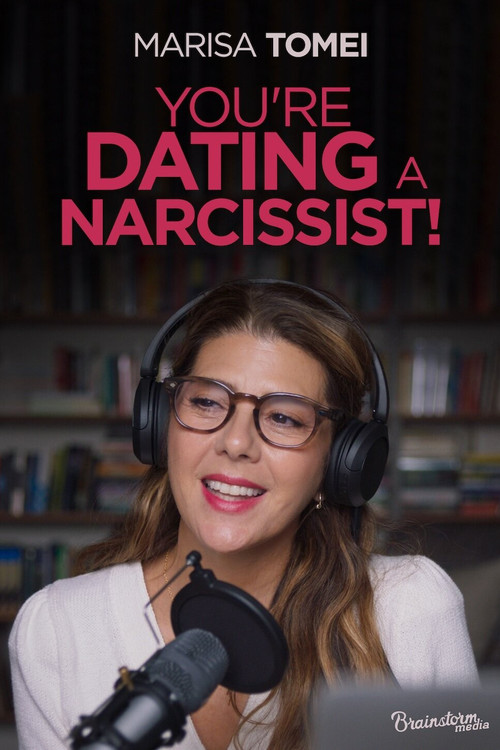
You're Dating a Narcissist! (2026)
Directed by Ann Marie Allison
Partly · Woke-Adjacent
How we score movies →Consciousness Markers
Three women at different stages of love anchor the entire narrative, the protagonist's professional expertise drives the plot, and the story is about female autonomy in romantic choice. Directed and co-written by women, the film wears its female-centric perspective without apparent self-consciousness, which is arguably more effective and more pointed.
The Los Angeles-set ensemble includes Sherry Cola, Marco Pigossi, and José María Yázpik alongside white leads, producing a multicultural cast that reflects the city's demographics. The diversity feels organic rather than architecturally engineered, but it is present and consistent.
A psychologist who flies across the country to diagnose her daughter's boyfriend and intervene in the relationship is, structurally, a delivery mechanism for a thesis. The film is described as tapping into the cultural obsession with red flags and gaslighting, which suggests the therapeutic framework is not merely background texture but an active ingredient in the storytelling.
Narcissistic Personality Disorder is the film's central diagnostic conceit, deployed by a clinical psychologist protagonist. The framing is more comedic than advocacy-oriented, but the film does trade in the therapeutic vocabulary of red flags and gaslighting that has migrated from clinical settings into everyday cultural discourse.
The diverse cast does not appear to engage with race as a thematic subject. Characters of different backgrounds coexist without the film pausing to remark upon it.
No LGBTQ+ characters, themes, or subplots are evident in any available material about the film.
No climate themes, environmental messaging, or ecological subtext are present in this romantic comedy.
No critique of capitalism, wealth, or corporate power is present. The film is concerned with romantic dysfunction, not economic systems.
No body positivity themes or related commentary are evident in any available material.
The film is a contemporary romantic comedy with no historical setting or revisionist ambitions.
Synopsis
An outspoken psychologist, burnt by love, takes an emergency trip to Los Angeles with her best friend to talk her smitten daughter out of marrying a man she is convinced is a narcissist.
Why it received this score
Ann Marie Allison's feature debut arrives bearing the full armamentarium of contemporary relationship discourse: a clinically credentialed protagonist, a villain defined by a DSM-adjacent personality disorder, and a plot engine powered by the concept of the red flag. Marisa Tomei plays a psychologist so thoroughly marinated in the language of toxic attachment that she cannot watch her daughter fall in love without reaching for a diagnosis. This is, the film seems to suggest, a reasonable response to modern romance. We are not in a position to disagree.
The film centers three women across different stages of romantic entanglement, a structural choice that allows it to survey the full terrain of female experience with men who are, in various ways, a lot. The feminist architecture is genuine and unforced, which is its own kind of achievement. Directed and co-written by women, populated by a Los Angeles-diverse ensemble that includes Sherry Cola, Marco Pigossi, and José María Yázpik, the film does not announce its progressivism so much as simply inhabit it. The lecture energy, however, is baked into the premise itself: when your protagonist is a professional explainer of other people's psychological failings who has been dispatched specifically to explain those failings to her daughter, some degree of sermonizing is not a bug but a load-bearing wall.
The cultural timing is precise. The film arrives at a moment when gaslighting has become a household word and red flags are catalogued on social media with the enthusiasm of birdwatchers. Whether it transcends its moment or merely reflects it with good comedic chops remains, at this early juncture, an open question. The narcissist in question has not yet been fully adjudicated by audiences. The psychologist, one suspects, already has her verdict.
Analysis generated by our Consciousness Algorithm