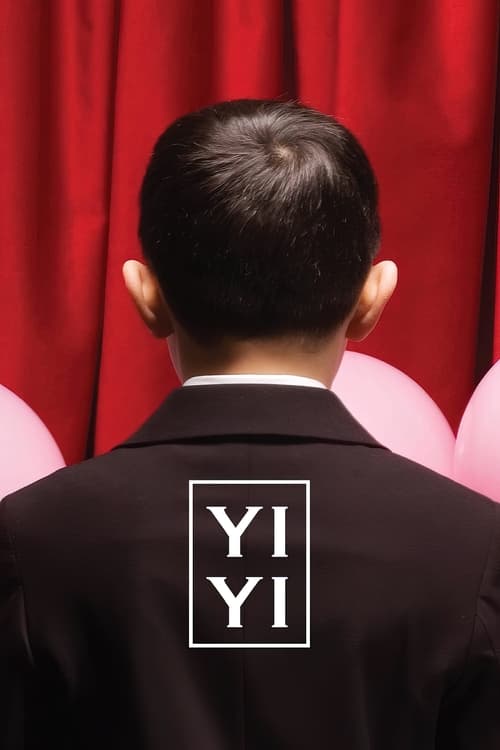
Yi Yi (2000)
Directed by Edward Yang
No · Ultra Based
How we score movies →Consciousness Markers
The film features a diverse Taiwanese cast with women in substantive roles, yet treats representation as natural rather than as a deliberate statement. Female characters drive their own narratives without commentary.
While the film depicts women navigating complex social and personal situations, it does not advance a feminist agenda. Female characters experience agency through individual choice rather than through systemic critique.
The film depicts characters navigating professional and commercial life, including business concerns and economic anxiety, but does not advance anti-capitalist critique or class consciousness.
The film is set in Taiwan and features Taiwanese characters, but contains no explicit racial consciousness or commentary on identity. Setting and ethnicity are treated as unremarkable.
The film maintains a documentary-like observational style that avoids preachiness. Characters do not deliver speeches about their circumstances or values to the audience.
No LGBTQ+ themes are present in the film. The narrative focuses on heterosexual family relationships and romantic entanglements.
No climate advocacy or environmental messaging appears in the film. Urban Taipei serves as backdrop without ecological commentary.
No body positivity messaging is present. The film simply depicts human bodies as they are without commentary on appearance or physical diversity.
No neurodivergent representation or awareness appears in the film. Characters are depicted without reference to neurological difference.
The film contains no historical revisionism. It focuses on contemporary family life in year 2000 Taiwan without engaging with historical narrative.


Synopsis
A Taipei family faces personal and moral uncertainty as everyday events test their relationships and sense of purpose.
Why it received this score
Yi Yi stands as a monument to the old school of humanist cinema, a three-hour examination of Taipei family life that treats its characters with the kind of patient, non-judgmental attention we associate with serious art. Edward Yang's final feature is populated by women who work, make decisions, and carry their own moral weight within the narrative. Yet the film makes no special claim about this representation. They simply exist as people do. The film observes a marriage in crisis, explores infidelity, tracks the anxieties of a teenage girl, and documents the slow decline of an elderly parent with remarkable tenderness. None of this, however, functions as cultural commentary aimed at contemporary audiences. The film asks us to understand the interior lives of its characters, not to recognize them as vessels for particular identity categories or progressive messaging.
What distinguishes Yi Yi from contemporary cinema is precisely its refusal to make social consciousness legible or to convert human experience into a series of talking points. The film contains no climate advocacy, no lectures about capitalism, no demonstrations of neurodivergent representation, no revisionist history. It simply presents ordinary people confronting ordinary moral complexity: a man reconnecting with a first love, a woman negotiating her place in a marriage, a child learning to see the world differently. This is cinema that trusts the viewer to find meaning without explanation. By the standards of modern progressive sensibilities, Yi Yi registers as almost entirely neutral. Its power lies in its specificity and its refusal to convert lived experience into ideology.
The film's restraint amounts to its defining feature. We see a diverse cast of Taiwanese actors inhabiting their roles with complete naturalism, but this representation serves the story, never the reverse. Gender dynamics emerge organically through character conflict rather than through deliberate thematic construction. The result is a work that feels almost oppressively apolitical to contemporary eyes, yet remains one of the finest achievements in cinema. Yi Yi proves that great art need not announce its values. Sometimes it simply shows us how people live.
Analysis generated by our Consciousness Algorithm
Critic Reviews
“Wise, delicate and impeccably performed, Yi Yi is a three- hour drama that looks at one middle-class family in transition -- and does so with such a kind and probing eye that we all see our lives reflected through Yang's lens.”
“Yang favors a gentle and introspective style that shows how deep and strong everyday emotions can run. A memorable treat.”
“One of the year's best: a rich, funny, enormously humane portrait of a middle-class Taipei family in the throes of romantic, economic and spiritual upheaval.”
“Presents an intelligent, profound and at times heartrending slice of Taiwanese middle-class existence - as seen by characters at different stages of life.”