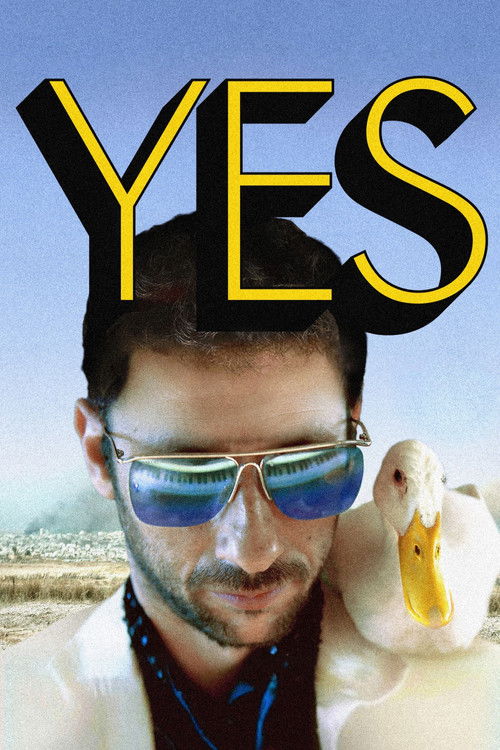
Yes (2025)
Directed by Nadav Lapid
Partly · Woke-Adjacent
How we score movies →Consciousness Markers
Lapid is not a filmmaker who trusts the audience to draw its own conclusions quietly. The film has been described as a 'blistering attack' and 'scorched-earth satire,' and the premise of composing a 'rousing, ruthless new national anthem' is a thesis statement worn on the film's sleeve. The lecture energy is high, though it is delivered through satirical heat rather than earnest PowerPoint.
The film's entire premise is the commodification of art and the human body: Y. and Yasmin literally sell themselves to the highest bidder among Israel's elite. The satirical framework is explicitly about money corrupting artistic integrity and the transaction between power and culture.
Yasmin's arc, selling her body as a dancer to the military-political elite, functions as a pointed commentary on the exploitation of women's labor and artistry by patriarchal power structures. The critique is embedded in the satire rather than stated outright, but it is unmistakably present.
The film presents a scorched-earth counter-narrative to Israeli nationalist mythology in the immediate aftermath of October 7, depicting the political and military establishment as venal and the national anthem as a cynical instrument of power. This is revisionism of a live, ongoing historical moment rather than the past, which is arguably more unsettling.
The cast is primarily Israeli with international co-production elements, and the film's ensemble reflects a cross-section of Israeli society without any apparent box-ticking agenda. The diversity present is organic to the story's setting rather than performative.
The film operates within a specifically Israeli context of Jewish identity, nationalism, and the Israeli-Palestinian conflict, which carries racial and ethnic dimensions. These are not foregrounded in the 2020s progressive-framework sense, but they are inescapably present in the political subtext.
No evidence of LGBTQ+ themes in the film's documented premise or critical reception. The central relationship is a heterosexual couple. A marginal score is not warranted; the 0 stands.
No evidence of climate themes whatsoever. The film is entirely consumed with nationalism, militarism, and artistic compromise in post-October 7 Israel.
No evidence of body positivity themes. The bodies in the film are sites of transaction and exploitation, not affirmation.
No evidence of neurodivergence themes in any documented aspect of the film.
Synopsis
In the days following October 7, Y., a jazz musician, and his wife Yasmin, a dancer, resolve to say yes to everything. Y. and Yasmin sell their bodies and souls to the highest bidder, surrendering themselves and their art to Israel's social, political and military elite. Soon, Y. is entrusted with a mission of the utmost importance: to compose the music for a rousing, ruthless new national anthem.
Why it received this score
Nadav Lapid has never been a director who whispers when he can shout, and "Yes" represents the logical endpoint of a career spent treating Israeli cinema as a form of controlled detonation. Set in the days following October 7, the film follows Y., a jazz musician, and his wife Yasmin, a dancer, as they resolve to say yes to everything, which in practice means selling their considerable artistic gifts to the military and political establishment in exchange for money, status, and the particular comfort of having stopped thinking. Y. is eventually commissioned to compose a new national anthem. This is not a subtle metaphor.
The film's anti-capitalist credentials are its most legible progressive credential, and they are considerable. The central transaction, art exchanged for access to power, is presented with the clinical detachment of a market report. Lapid seems genuinely interested in the mechanics of how creative people rationalize moral surrender, and the film earns its satire by being as ruthless about its protagonists as it is about its targets. The feminist dimension is quieter but persistent: Yasmin's body is the primary currency in several of the film's transactions, and the film does not look away from what that costs. The lecture energy is elevated throughout, as one expects from a director whose previous film was literally titled "Ahed's Knee," but the sermonizing here is delivered through escalating absurdism rather than earnest confrontation, which makes it more bearable and, occasionally, genuinely funny.
What is most striking about "Yes" in the context of social consciousness scoring is how it resists easy categorization by the standard progressive checklist. It has provoked condemnation from Israeli nationalists and pro-Palestinian activists in equal measure, which suggests Lapid has achieved something rarer than mere virtue signaling: he has made a film that is actually angry, at everyone, including itself. The revisionist impulse is directed not at history but at the present tense, which is a more dangerous target. The lead actor was detained for posting a poem critical of the prime minister. In the taxonomy of cultural awareness, this film is less a lecture and more a small explosion left on the doorstep of a nation at war with itself.
Analysis generated by our Consciousness Algorithm