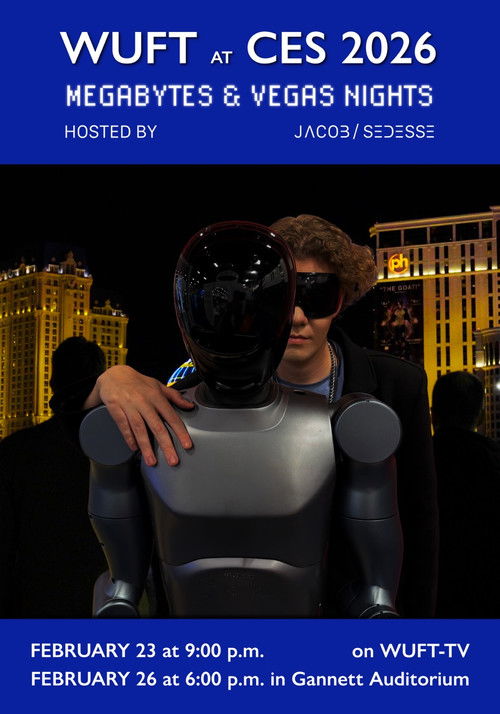
WUFT at CES 2026: Megabytes and Vegas Nights (2026)
Directed by Jacob Sedesse
No · Ultra Based
How we score movies →Consciousness Markers
The cast includes both men and women in professional roles, reflecting basic contemporary workplace diversity. No deliberate representation strategy is evident; this appears to be standard professional casting.
The documentary maintains an informational, explanatory tone appropriate to its educational purpose. There is minimal moralizing or hectoring, though the mixed-format approach includes some personal essay elements.
The cast appears to include people of various backgrounds, but the documentary contains no racial commentary or consciousness-raising. This is incidental diversity rather than intentional.
Female professionals appear in the cast (Bridget Carey, Justine Ezarik, Taylor Cole), but there is no feminist agenda or commentary. They are simply present as technology professionals.
No LGBTQ+ themes, representation, or narrative elements are present. The documentary focuses entirely on technology and consumer electronics.
No climate or environmental themes are present. The documentary focuses on consumer electronics and technology innovation without environmental critique.
The entire premise celebrates consumer electronics and the Consumer Electronics Show, an explicitly capitalist trade event. No anti-capitalist critique is present.
Body positivity themes are not present in this technology-focused documentary.
No neurodivergence representation or themes are evident in the documentary.
This is a contemporary documentary about a current technology event. No historical revision or reinterpretation is present.
Synopsis
Join WUFT technology reporter Jacob Sedesse on a whirlwind trip as the world's biggest electronics showcase descends upon the Las Vegas Strip.
Why it received this score
Here we have a PBS technology documentary of the most benign imaginable variety. WUFT at CES 2026 is a competent tour through the Consumer Electronics Show, presented with the neutrality one expects from a regional public broadcaster. Jacob Sedesse guides viewers through the Las Vegas convention center with the enthusiasm of a man who genuinely enjoys consumer electronics, which is to say, the enthusiasm of a technology reporter doing his job. The film opts for the mixed-format approach: part news report, part travel diary, part personal essay. This decision adds texture to what might otherwise be a straightforward trade show recap.
The documentary's cultural sensibilities are minimal. Its cast and crew appear to reflect basic professional diversity without any apparent commitment to representation as a political project. The focus remains squarely on the technology itself, the innovations on display, the industry trends, the spectacle of the Las Vegas Strip. There is no visible agenda beyond explaining what CES 2026 offered to viewers in Florida who could not attend. The slight score reflects only the mild, almost accidental representation present in the cast and the fact that this is 2026, a year in which basic diversity exists in professional contexts as a matter of course rather than as a deliberate statement.
This film exists so thoroughly uninterested in cultural commentary of any kind that assigning it a score feels almost absurd. Yet here we are, maintaining our vigil over the landscape of cultural expression. The documentary succeeds modestly at its stated purpose: to inform and entertain about a major technology event. In matters of social consciousness, it remains silent.
Analysis generated by our Consciousness Algorithm