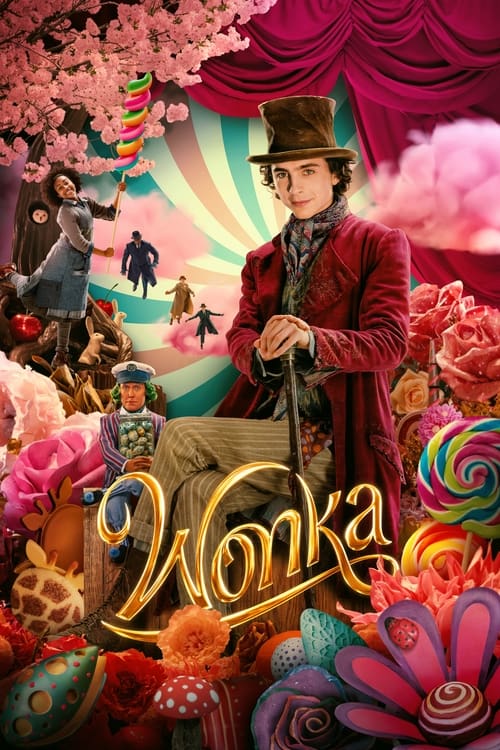
Wonka (2023)
Directed by Paul King
No · Based
How we score movies →Consciousness Markers
The film features a notably diverse cast with Keegan-Michael Key, Olivia Colman, and Paterson Joseph in significant roles. However, this representation functions primarily as aesthetic inclusion rather than thematic integration.
The film reimagines Wonka's origin story with sympathetic framing and diverse casting, presenting a version of events that differs from previous adaptations. This constitutes mild revisionist history.
The film gestures toward critique of a corrupt Chocolate Cartel monopoly, but resolves the conflict through individual entrepreneurial success rather than systemic reform or collective action.
While the cast is racially diverse, the film demonstrates no explicit racial consciousness or engagement with systemic racism. Diversity is presented as natural casting rather than thematic statement.
Female characters exist in supporting roles without particular feminist agency or critique. Olivia Colman's character is a corrupt authority figure, not a vehicle for feminist analysis.
The film maintains a light, musical tone and avoids preachy moralizing. Characters do not explicitly lecture the audience about social values or correct thinking.
No discernible LGBTQ+ representation or themes. The film remains entirely heteronormative in its romantic and relational structures.
No climate themes or environmental consciousness present. The narrative concerns chocolate production and factory operations without any ecological consideration.
No particular body positivity messaging. The cast reflects conventional Hollywood aesthetics without intentional diversity in body types or deliberate counter-messaging.
No representation of or engagement with neurodivergence. The narrative contains no characters coded as neurodivergent or thematic exploration of neurodiversity.


Synopsis
Willy Wonka – chock-full of ideas and determined to change the world one delectable bite at a time – is proof that the best things in life begin with a dream, and if you're lucky enough to meet Willy Wonka, anything is possible.
Why it received this score
Paul King's "Wonka" presents itself as a whimsical origin story, yet beneath the candy-colored production design and Hugh Grant's delightfully villainous turn lies a film that struggles to reconcile its progressive sensibilities with its fundamentally apolitical narrative. The casting is deliberately diverse, with Keegan-Michael Key, Olivia Colman, and Paterson Joseph occupying significant roles, yet the film treats this diversity as aesthetic garnish rather than structural consequence. The chocolate maker's rebellion against the Chocolate Cartel reads less as genuine social critique and more as a feel-good fable where individual pluck and imagination trump systemic power.
The film's approach to class consciousness is frustratingly muddled. We are presented with oppressed chocolate shop workers and street orphans, yet the narrative resolves these injustices through Wonka's personal success and entrepreneurial vision, not through collective action or structural reform. The message amounts to a fairly conventional bootstrap narrative: work hard, dream big, and you too can become a wealthy industrialist. There is no interrogation of whether such individual triumph adequately addresses systemic exploitation, nor any suggestion that perhaps the system itself might require examination. The street orphans become employees in Wonka's factory, their poverty solved through benevolent employment rather than dignity or agency.
The film's progressive window dressing cannot obscure its essentially conservative core. It celebrates imagination and individual exceptionalism while remaining entirely comfortable with hierarchies of power, wealth, and labor. One could charitably read the Chocolate Cartel as anti-capitalist critique, but the film's resolution suggests that ethical capitalism, led by a visionary genius, is the proper antidote to corrupt capitalism. This is progressivism of the most anodyne variety: change the individuals in power, not the systems that concentrate power itself. "Wonka" succeeds as family entertainment and as a vehicle for its charismatic lead, but as a vehicle for meaningful cultural critique it remains stubbornly, almost defiantly conventional.
Analysis generated by our Consciousness Algorithm
Critic Reviews
“I enjoyed this more than either of the two earlier filmed versions, with Gene Wilder in 1971 and Johnny Depp in 2005. It supplies the chocolate-endorphins.”
“Like any good chocolatier, King has obsessively focused on texture and flavour. And it’s those qualities – tuned to mass-market tastes, yet held in connoisseurish balance – that give his film its irresistible velvety sweetness.”
“The film is charming and warm-hearted, much like Paddington and its sequel, and the onscreen delight is infectious. ”
“Young audiences may well be enchanted, but I’m sad to report I found the whole confection sickly sweet and hopelessly twee.”