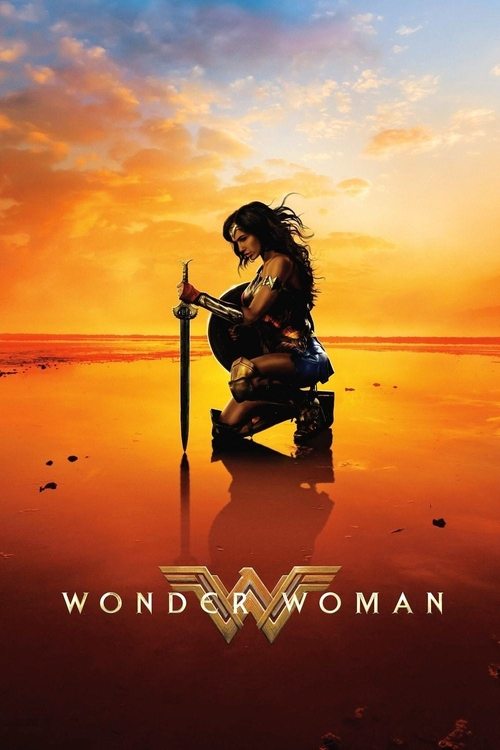
Wonder Woman (2017)
Directed by Patty Jenkins
Partly · Woke-Adjacent
How we score movies →Consciousness Markers
Strong feminist themes throughout. Diana challenges patriarchal authority, asserts her autonomy, and serves as the moral center questioning male violence and cynicism.
Female lead and female director in a major studio superhero film was genuinely progressive for 2017. However, the supporting cast and Amazon warriors are predominantly white and European.
Moderate lecture energy through Diana's dialogue questioning violence and male authority. However, the film relies on narrative demonstration rather than explicit pedagogical messaging.
Light revisionist framing of WWI through Diana's outsider perspective, but the film largely accepts historical conventions rather than offering radical reinterpretation.
Diana is presented as an idealized warrior form rather than through a body positivity lens. No explicit engagement with diverse body types or disability representation.
Minimal racial consciousness. While Amazon warriors include some diverse casting, the film makes no attempt at postcolonial critique or engagement with racial themes.
Minimal anti-capitalist messaging. Ares is presented as the god of war, but there is no systemic economic critique or class consciousness in the narrative.
No explicit LGBTQ+ representation or themes in the narrative. The film makes no attempt to incorporate queer perspectives.
No climate themes present. The film is set during WWI and does not engage with environmental concerns.
No representation of neurodivergence or disability. The film makes no attempt to include or represent neurologically diverse characters.


Synopsis
An Amazon princess comes to the world of Man in the grips of the First World War to confront the forces of evil and bring an end to human conflict.
Why it received this score
Wonder Woman arrives as a curious artifact of 2017 progressive cinema, a film that wears its feminist credentials visibly while remaining fundamentally committed to the traditional superhero spectacle. Patty Jenkins brings a female director's sensibility to the action sequences and Diana's character arc, emphasizing her agency and autonomy in ways that were genuinely novel for the genre at that moment. The narrative framework positions Diana as the moral center of the film, questioning the cynicism and violence of the male-dominated world of men, which reads as a deliberate counterpoint to the typical masculine heroism of superhero films.
However, the progressive framework operates largely within the gender dimension. The film's racial composition skews heavily white, with the Amazons presented as an idealized warrior society that nonetheless bears the aesthetic markers of European classicism. There is no attempt at racial consciousness, climate awareness, economic critique, or engagement with marginalized communities beyond the basic fact of female protagonism. The lecture energy remains minimal, the film content to let its themes emerge through narrative rather than explicit dialogue about systemic injustice.
What we have, ultimately, is a film that benefited enormously from contemporary cultural winds but was not designed as a vehicle for comprehensive social consciousness. It is a movie that wanted to make women action heroes feel normal, which was itself a meaningful intervention in 2017. That this impulse has since been absorbed into standard industry practice speaks to both the film's influence and its limitations as a document of progressive cinema.
Analysis generated by our Consciousness Algorithm
Critic Reviews
“Wonder Woman is as much about a superhero rising as it is about a world deserving of her, and Diana’s hard-won insistence on battling for humanity (no matter how frequently they disappoint) adds the kind of gravitas and emotion that establishes it as the very best film the DCEU has made yet. There’s only one word for it: wonderful.”
“Wonder Woman is smart, slick, and satisfying in all of the ways superhero films ought to be. How deliciously ironic that in a genre where the boys seem to have all the fun, a female hero and a female director are the ones to show the fellas how it’s done.”
“While the villains are standard issue evil, Wonder Woman is remarkable in the genre for its early 20th century setting and Gadot's galvanizing performance.”
“It’s plagued by the same problems that dragged down previous visits to the DC movie world: over-earnestness, bludgeoning special effects, and a messy, often wildly implausible plot. What promised to be a glass-ceiling-smashing blockbuster actually looks more like a future camp classic.”