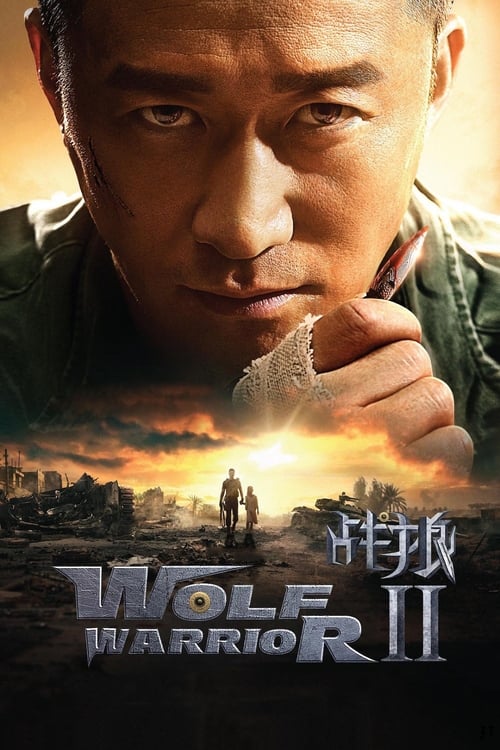
Wolf Warrior 2 (2017)
Directed by Wu Jing
No · Ultra Based
How we score movies →Consciousness Markers
The film presents a revisionist narrative of Chinese military capability and benevolent intervention abroad, aligning with contemporary Chinese state narratives. This represents a particular form of historical revisionism in service of nationalist mythology.
International and African cast members are present but function primarily as supporting characters or objects of rescue. The protagonist and heroic agency remain centered on the Chinese male lead. Diversity exists as window dressing rather than meaningful representation.
While the film is not explicitly preachy, its narrative functions as state propaganda with an implicit message about Chinese strength and global responsibility. The messaging is more subtle than direct lectures but present throughout.
While the film features African settings and characters, it perpetuates narratives of African helplessness requiring Chinese military intervention. No critical examination of race, colonialism, or power imbalances exists.
The film features minimal female characters. Those present are largely passive or secondary to the male hero's narrative. No feminist critique or examination of gender dynamics appears in the text.
While mercenaries are portrayed as villainous, this serves a nationalist agenda rather than any genuine critique of capitalism. The film celebrates state power and military-industrial strength.
No LGBTQ+ themes, characters, or subtext present. The film is entirely heteronormative and focused on traditional masculine heroism.
Climate themes are entirely absent from this nationalist military action film. Environmental concerns receive no consideration whatsoever.
The film celebrates traditional masculine physicality and military fitness as ideals. No body diversity or body positivity messaging is present.
No representation of neurodivergent characters or themes. The film centers on traditionally abled military operatives.


Synopsis
China's deadliest special forces operative settles into a quiet life on the sea. When sadistic mercenaries begin targeting nearby civilians, he must leave his newfound peace behind and return to his duties as a soldier and protector.
Why it received this score
Wolf Warrior 2 is a nationalistic action spectacle that inverts the typical progressive sensibilities one might expect from contemporary cinema. The film is fundamentally concerned with validating state power and military intervention, positioning China's armed forces as the righteous protectors of global order. Its narrative unfolds as a propaganda vehicle wrapped in the familiar language of action cinema, complete with heroic soldiers, evil mercenaries, and a clear moral hierarchy that privileges national strength above all other considerations.
The casting reflects surface-level diversity, with international actors and African settings, but this diversity serves the film's imperial narrative rather than challenging it. The representation exists to populate a world where Western mercenaries and African chaos require Chinese military salvation. There is no interrogation of power dynamics, colonialism, or the complications of foreign intervention. Instead, we receive a straightforward endorsement of muscular nationalism and the righteousness of projecting military might across borders in service of one's nation.
The film's cultural politics are distinctly anti-progressive in their refusal to engage with any critique of militarism, imperialism, or state violence. What we have here is not progressive cinema by any meaningful measure, but rather its ideological opposite: a celebration of traditional power structures, military heroism, and nationalist fervor. The film's massive box office success in China reflected audience appetite for precisely this kind of state-validated patriotic fantasy. It remains a useful artifact for understanding how cinema can be deployed in service of nationalist rather than progressive consciousness.
Analysis generated by our Consciousness Algorithm
Critic Reviews
“Wolf Warrior 2 is even bigger and bolder than its predecessor, which doesn’t always work in its favor. But genre fans will definitely relish the near-constant barrage of elaborate set pieces that are choreographed and filmed for maximum impact.”
“More apolitical moviegoers are likely to simply enjoy the runaway train of action set pieces that Wu propels with his flimsy but serviceable plot, and dismiss all the jingoist chest-thumping as roughly akin to John Rambo’s stated desire to refight the Vietnam War — and, dammit, win this time! — in “Rambo: First Blood Part II.””
“While Wolf Warrior 2 is blandly generic more often than not, there’s something bracing about its patriotic fervor, which asserts that the Chinese will act in the best interests of the world’s downtrodden, while the rest of the world just exploits them.”
“Wolf Warrior 2 lectures you, pummels you, and then expects you to cheer. ”