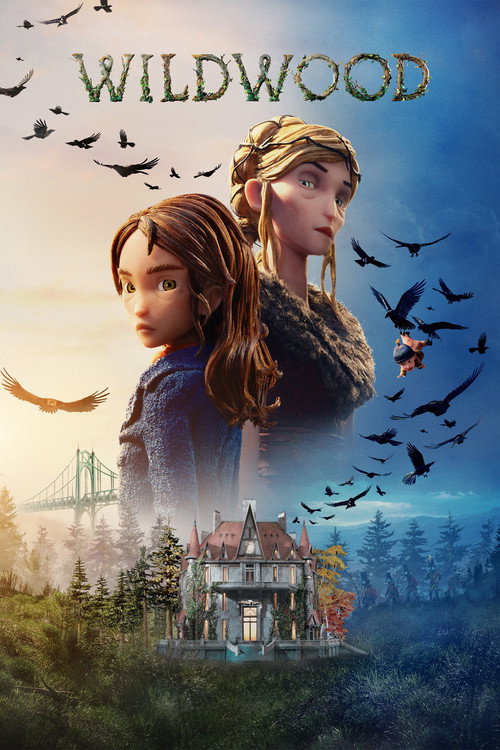
Is Wildwood (2026) Woke?
Wildwood · 2026 · Directed by Travis Knight · $12.3M domestic
Woke Score
CriticCritic Score
Audience
Ultra Based
Critics rated this 72 points above its woke score. Among Ultra Based films, this critic score ranks #190 of 1503.
Answer: No
Woke Score 15/100 · Verdict: Ultra Based
Strongest markers: Representation Casting (62) · Feminist Agenda (18) · Eat the Rich (10)
Representation Casting
Score: 62/100
An Asian-American actress voices the central protagonist, and the ensemble is assembled with unmistakable intentionality: Mahershala Ali, Angela Bassett, Amandla Stenberg, Awkwafina, and Tantoo Cardinal occupy prominent roles. The diversity is real, deliberate, and dense enough to register on any instrument.
LGBTQ+ Themes
Score: 0/100
No LGBTQ+ characters, themes, or narrative elements were identified in any available research or critical coverage. The score is zero.
Feminist Agenda
Score: 18/100
Prue is a resourceful female lead driving the plot forward, which earns a modest score, though a girl rescuing her baby brother from a sorceress is a fairy-tale archetype older than the genre itself. The film does not appear to editorialize about this arrangement.
Racial Consciousness
Score: 8/100
The diverse cast exists without any reported thematic commentary on race within the story. Characters do not appear to function as vessels for racial discourse. The score reflects the casting choices alone, not any narrative content.
Climate Crusade
Score: 0/100
No climate themes, environmental messaging, or ecological sermonizing were identified. A magical forest is present, but it is not a metaphor for anything the film wishes to discuss with us.
Eat the Rich
Score: 10/100
The Portland setting includes gentle satire of hipster storefronts and progressive signage, which critics describe as affectionate rather than pointed. Travis Knight is the son of a billionaire, which the internet found ironic, but irony is not a woke marker.
Body Positivity
Score: 0/100
No body positivity themes were identified in any source. The score is zero.
Neurodivergence
Score: 0/100
No neurodivergent characters or related themes were identified in any available material. The score is zero.
Revisionist History
Score: 0/100
The film takes place in a wholly invented fantasy world adjacent to Portland. There is no history to revise. The score is zero.
Lecture Energy
Score: 5/100
The Portland hipster milieu implies a certain ambient progressivism, and Travis Knight's public remarks against generative AI carry a faint sermonizing quality, though none of this appears to have been imported into the film's narrative in any measurable way.
Synopsis
Prue and her classmate Curtis are drawn into a magical forest filled with enchanted creatures, loyal allies, and formidable adversaries as they embark on a desperate quest to rescue Prue's abducted baby brother from a murder of crows led by a mysterious woman named Alexandra.
Why it received this score
*Wildwood* arrives as a stop-motion fantasy from LAIKA, a studio that has spent sixteen years and an unspecified portion of a Nike fortune constructing 130 sets and hundreds of hand-built puppets to adapt Colin Meloy's children's novel. The result is a PG-13 animated film featuring decapitation, battlefield carnage, and infant abduction, which places it in a curious position: a children's movie that has decided children can handle things. The casting is assembled with the kind of demographic intentionality that suggests someone ran a spreadsheet before the first audition, with Peyton Elizabeth Lee, Mahershala Ali, Angela Bassett, Amandla Stenberg, and Awkwafina all present and accounted for. This is the film's most legible gesture toward contemporary cultural sensibilities, and it is, in the end, a casting choice rather than a thesis.
The story itself is a fairy tale in the classical sense: a girl crosses into a forbidden wilderness to rescue her stolen baby brother from a sorceress commanding a murder of crows. Portland, Oregon, provides the threshold, and the film reportedly treats the city's progressive signage and spiritual-hippie parents with gentle, affectionate mockery. This is satire the way a decorative throw pillow is satire. The film's genuine darkness, its willingness to show violence and grief without softening them for the presumed sensitivity of young audiences, is the more interesting statement, and it is a statement about storytelling craft rather than social policy.
The loudest ideological signal in the entire *Wildwood* discourse was generated not by the film but by its director, who announced to the press that LAIKA would "absolutely fucking not" use generative AI, which is either a principled artistic stance or a very good press release, and possibly both. The film's social consciousness, such as it is, lives almost entirely in its ensemble and in its refusal to be frictionless. These are not nothing. They are also not very much.
Analysis generated by our Consciousness Algorithm
Critic Reviews
“From beginning to end, Wildwood is a truly captivating story with second-to-none stop-motion animation; fully-formed, nuanced characters who avoid common tropes; and a fantastical story that feels both familiar in its nuts-and-bolts, and unique and unexpected in all the ways that matter.”
“Laika’s most ambitious effort to date, Wildwood may also be the company’s masterpiece.”
“Wildwood is a surpassingly beautiful and beguiling modern-day Narnia fable, every frame of which has been hand-crafted with a delicacy and artistry that took my breath away. I am not sure I have ever seen a stop-motion film this intricate or lavish, nor am I sure I ever will again.”
“There’s too much here to be effectively explored in a feature, even a 131-minute one whose length is all the more impressive given how arduous stop-motion is as a process. But the familiarity of the fantasy elements and the brusqueness with which they’re treated would be forgivable if Wildwood did a better job exploring how the real world connects to the magical side of the story. At the heart of this movie is a tantalizing hint of an exasperation that’s not just that of a teenager, but of a generation. ”
Related rankings
Consciousness Markers
An Asian-American actress voices the central protagonist, and the ensemble is assembled with unmistakable intentionality: Mahershala Ali, Angela Bassett, Amandla Stenberg, Awkwafina, and Tantoo Cardinal occupy prominent roles. The diversity is real, deliberate, and dense enough to register on any instrument.
No LGBTQ+ characters, themes, or narrative elements were identified in any available research or critical coverage. The score is zero.
Prue is a resourceful female lead driving the plot forward, which earns a modest score, though a girl rescuing her baby brother from a sorceress is a fairy-tale archetype older than the genre itself. The film does not appear to editorialize about this arrangement.
The diverse cast exists without any reported thematic commentary on race within the story. Characters do not appear to function as vessels for racial discourse. The score reflects the casting choices alone, not any narrative content.
No climate themes, environmental messaging, or ecological sermonizing were identified. A magical forest is present, but it is not a metaphor for anything the film wishes to discuss with us.
The Portland setting includes gentle satire of hipster storefronts and progressive signage, which critics describe as affectionate rather than pointed. Travis Knight is the son of a billionaire, which the internet found ironic, but irony is not a woke marker.
No body positivity themes were identified in any source. The score is zero.
No neurodivergent characters or related themes were identified in any available material. The score is zero.
The film takes place in a wholly invented fantasy world adjacent to Portland. There is no history to revise. The score is zero.
The Portland hipster milieu implies a certain ambient progressivism, and Travis Knight's public remarks against generative AI carry a faint sermonizing quality, though none of this appears to have been imported into the film's narrative in any measurable way.