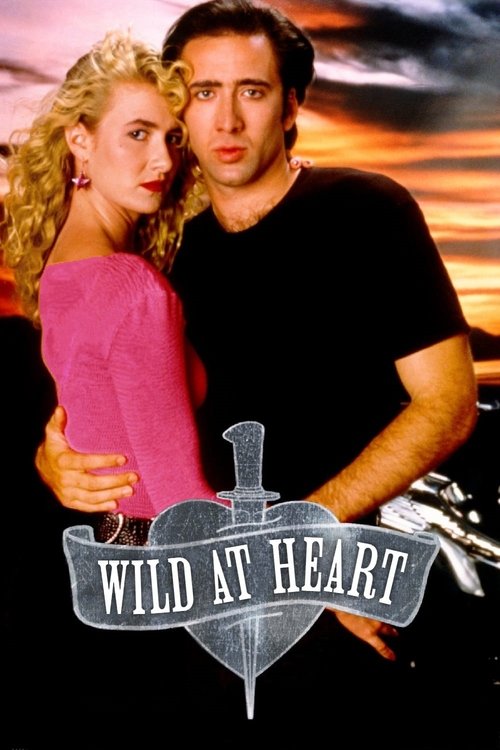
Wild at Heart (1990)
Directed by David Lynch
No · Ultra Based
How we score movies →Consciousness Markers
Lula functions as a co-protagonist with some agency, but her liberation is framed through romantic partnership and escape rather than feminist consciousness. The mother figure is portrayed as an antagonist. The film's approach to female sexuality is transgressive rather than progressive.
The film communicates its thematic interests through surrealist abstraction rather than preachy messaging. While Lynch engages with postwar American dysfunction, the approach is artistic rather than pedagogical, with minimal lecture quality.
The cast is predominantly white with no intentional diverse representation by race, ethnicity, or other marginalized identities. Casting is based on aesthetic fit to Lynch's vision rather than progressive representation.
No LGBTQ+ themes, characters, or representation present in the film. The romantic narrative is exclusively heterosexual.
No engagement with racial themes, racial consciousness, or commentary on racial dynamics. Race is not a thematic concern.
No climate, environmental, or ecological themes present in the film.
While the couple flees society, this motivation is personal escape from antagonists rather than ideological critique. No anti-capitalist messaging or wealth system critique.
The film makes no engagement with body positivity. Casting emphasizes conventional attractiveness standards consistent with 1990s cinema.
No representation of neurodivergent characters or engagement with neurodivergence as a thematic concern.
This is a contemporary fictional narrative, not a historical film. No revisionist historical claims or reinterpretations of historical events.


Synopsis
Young lovers Sailor and Lula hit the road to start a new life together away from the wrath of Lula's deranged, disapproving mother, who has hired a team of hitmen to cut the lovers' surreal honeymoon short.
Why it received this score
David Lynch's 1990 Palme d'Or winner is a surrealist fever dream of romantic escape and familial terror, distinguished primarily by its complete indifference to contemporary progressive sensibilities. The film presents Lula as a co-protagonist with agency, yet frames her agency largely through her desire to flee her mother's control and join her lover in transgressive freedom. This is not feminist consciousness but rather a male auteur's vision of female liberation as romantic partnership and sexual availability. The violence is explicit, the sexuality is explicit, the entire enterprise is explicitly unconcerned with the cultural messaging that would later define woke cinema.
The cast is uniformly white and conventionally attractive, selected for their capacity to embody Lynch's distinctive aesthetic of grotesquerie and beauty. There is no engagement with racial consciousness, LGBTQ+ representation, or any of the other markers that characterize contemporary progressive filmmaking. The film's commentary on postwar American dysfunction and familial toxicity, while thematically coherent, arrives through surrealist abstraction rather than preachy messaging. One encounters no lectures, no moral instruction, no sense that the film wishes to educate its audience about social hierarchies or systemic inequities.
What emerges is a work genuinely of its moment: the product of a major auteur operating in 1990, before the cultural reckonings that would reshape cinema. Viewed through the lens of modern progressive sensibilities, "Wild at Heart" reads as a period piece, interesting precisely because it documents a time when such concerns had not yet colonized artistic practice. It is a film about love and violence, not about social consciousness. The distinction matters.
Analysis generated by our Consciousness Algorithm
Critic Reviews
“Starting with the outrageous and building from there, he ignites a slight love-on-the-run novel, creating a bonfire of a movie that confirms his reputation as the most exciting and innovative filmmaker of his generation.”
“Joltingly violent, wickedly funny and rivetingly erotic, David Lynch's Wild at Heart [based on the novel by Barry Gifford] is a rollercoaster ride to redemption through an American gothic heart of darkness.”
“And yet there is enough of a core of sincerity to turn even the most preposterous moments-such as the film's dream-sequence finale-into something moving and true: You buy the feelings, even as the situations degenerate into the ludicrous and absurd. [17 Aug 1990, Friday, p.C]”
“What "Wild at Heart" feels like is a kind of housecleaning -- a disjointed collection of images and odd snatches of ideas that the director couldn't make room for anyplace else. They have no context, and as a result, no power to thrill or disturb.”