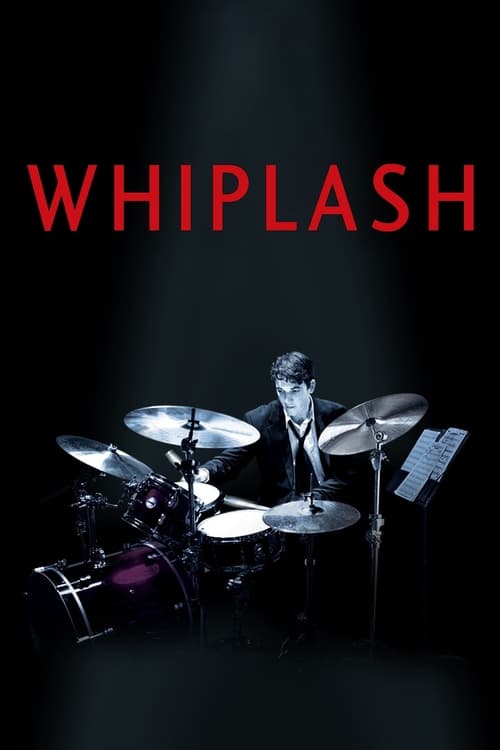
Whiplash (2014)
Directed by Damien Chazelle
No · Ultra Based
How we score movies →Consciousness Markers
The cast is predominantly male with minimal female characters serving purely supporting roles. No deliberate effort toward diverse representation is evident.
The film critiques the ruthless pursuit of excellence and the institutional structures that enable abuse, though not from an explicitly anti-capitalist framework.
The film contains diverse cast members in supporting roles, but makes no explicit engagement with racial themes or systemic critique.
Female characters are present but serve narrative functions in relation to the male protagonist. No feminist framework or critique is applied.
The film occasionally drifts toward preachy moments about perfectionism and ambition, though it generally prefers to show rather than tell.
No LGBTQ+ themes, characters, or content present in the film.
No climate-related themes, messaging, or content appears anywhere in the film.
No body positivity framework or messaging present. The film is indifferent to such concerns.
No representation or discussion of neurodivergence in any form.
The film contains no historical elements or revisionist framing of any kind.


Synopsis
Under the direction of a ruthless instructor, a talented young drummer begins to pursue perfection at any cost, even his humanity.
Why it received this score
Whiplash arrives as a film from the moment before contemporary social consciousness frameworks became culturally inescapable. Damien Chazelle's portrait of psychological abuse in the pursuit of artistic perfection makes no concessions to progressive sensibilities, nor does it need to. The film is almost defiantly apolitical, concerning itself instead with the Faustian bargain between a student drummer and his sadistic instructor. We watch Miles Teller's character sacrifice everything, including his humanity, on the altar of excellence. J.K. Simmons delivers a performance of such controlled menace that we find ourselves aesthetically seduced even as the narrative repels us.
The film's refusal to interrogate power structures through a contemporary lens might be read as a limitation, though this misses the point entirely. Whiplash is not interested in systemic analysis. It presents abuse as a personal rather than political problem, which is precisely what makes it such a compelling tragedy. The gender dynamics are notably unremarkable: the female characters exist purely in supporting roles, but this reflects the film's focus rather than a deliberate statement. This is a film about two men, and it knows it.
What emerges is a work that predates the cultural moment we now inhabit, which is both its strength and its particular interest as an artifact. The film's success derives entirely from its aesthetic control and emotional intensity, not from any engagement with social consciousness. It is a film that would be nearly impossible to make in precisely this form today, which tells us something valuable about how cultural expectations have shifted.
Analysis generated by our Consciousness Algorithm
Critic Reviews
“However genius may flourish, you know it when you see it, and Whiplash is it.”
“Chazelle proves an exceptional builder of scenes, crafting loaded, need-to-succeed moments that grab our attention and hold it tight.”
“Although a couple of narrative twists late on threaten to drum us into melodrama, Chazelle never misses a beat and the film builds to a cathartic crescendo.”
“I don’t get the enthusiasm for this movie, written and directed by Damien Chazelle, which is such a cooked-up piece of claptrap that I half expected Darth Vader to pick up the baton. We’re supposed to think that Terence’s tough love is more “honest” than the usual pussyfooting tutelage, but in any sane society this guy would have been brought up on charges long ago. ”