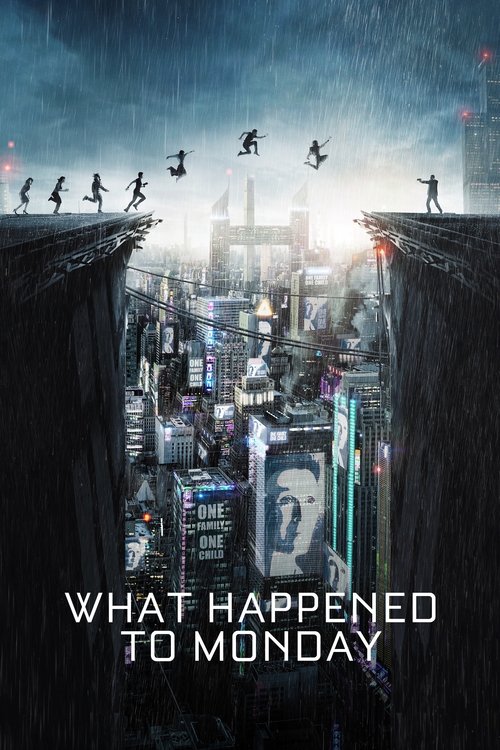
What Happened to Monday (2017)
Directed by Tommy Wirkola
No · Based
How we score movies →Consciousness Markers
The film features a female lead across all seven protagonists and Glenn Close as a complex antagonist in power. However, the feminist elements serve the thriller mechanics rather than representing sustained gender consciousness or exploration of patriarchal systems.
Noomi Rapace carries the film across seven distinct roles, providing female-centered action narrative. The ensemble includes some casting diversity with Tomiwa Edun, though this appears incidental rather than intentional representation consciousness.
The film occasionally deploys exposition about the one-child policy and governmental control, though it remains primarily focused on action and plot mechanics rather than preachy social messaging or explicit thematic lectures.
The film depicts governmental authoritarianism and corporate control through the CAB, but these elements function as dystopian thriller backdrop rather than as coherent anti-capitalist critique or systematic examination of economic power.
The cast includes actors of color, but there is no evidence the film engages with racial themes or consciousness as part of its narrative or thematic structure.
No evidence of LGBTQ+ themes or representation in the film's plot, characters, or thematic concerns.
No evidence of climate change themes or environmental consciousness in the film. The one-child policy stems from generic overpopulation rather than climate-specific concerns.
No evidence of body positivity themes or discussions of body diversity, acceptance, or related messaging in the film.
No evidence of neurodivergent representation or thematic exploration of neurodiversity in the film.
This is a science fiction film set in a fictional future, not a historical narrative or revisionist interpretation of historical events.


Synopsis
In a world where families are limited to one child due to overpopulation, a set of identical septuplets must avoid being put to a long sleep by the government and dangerous infighting while investigating the disappearance of one of their own.
Why it received this score
What Happened to Monday constructs its dystopian premise around mandatory population control, a concept that invites thematic exploration of reproductive autonomy, governmental overreach, and bodily sovereignty. The film declines this invitation. Instead, the one-child policy functions as a mechanical plot device, a justification for the central conceit of identical septuplets in hiding. The narrative prioritizes action sequences, mystery elements, and interpersonal conflict over engagement with the social implications of its own premise. Noomi Rapace's performance across seven distinct personalities does provide a female-centered action vehicle, yet the film treats this as a technical achievement rather than as an opportunity for gender-conscious storytelling.
The film's representation of governmental authority through Glenn Close's character and the CAB agency offers minimal systematic critique. Close performs as a competent antagonist in power, which inverts some conventional thriller gender dynamics, but the film does not interrogate what her authority represents or explore the ideological dimensions of state control. The dystopian elements remain atmospheric window dressing for what amounts to a high-concept heist thriller with familial conflict. The supporting cast includes actors of color and international talent, reflecting contemporary casting practices rather than deliberate representation consciousness.
The film borrows the aesthetic and narrative furniture of socially conscious science fiction without the intellectual commitment such narratives require. The septuplets' struggle for survival is engaging on a plot level, but the film never asks deeper questions about the systems that threaten them. It is content to use overpopulation and authoritarianism as pretexts for action rather than as opportunities for genuine thematic investigation. The result is competent thriller filmmaking that wears the costume of social commentary without inhabiting it.
Analysis generated by our Consciousness Algorithm
Critic Reviews
“Even in a future bereft of new ideas, it’s fun to watch Noomi Rapace act against herself six times over and her game performances in the midst of fast-paced action make What Happened to Monday? a mostly enjoyable thriller.”
“Wirkola is more comfortable engaging with gunfire than people.”
“Links between climate change, population growth, and a potentially catastrophic worldwide famine are reduced to background plot points. The moral/ethical conundrums of the “solution” are paid lip service but not aggressively integrated into the story. ”
“Tommy Wirkola’s film squanders an evocative premise in favor of rote gun-fu carnage. ”