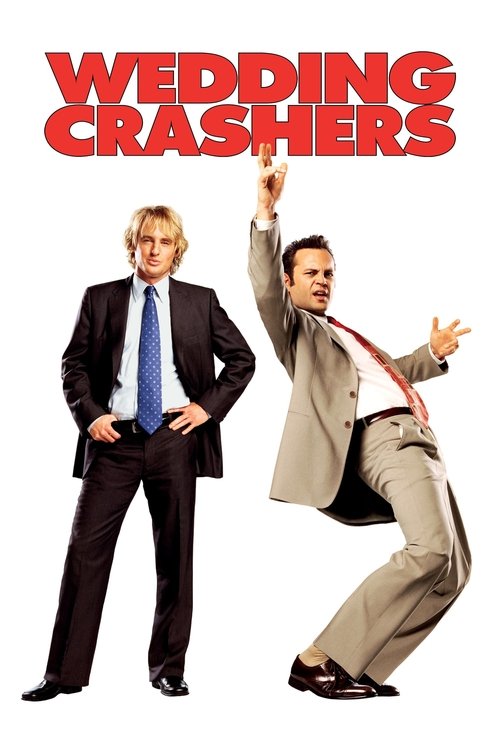
Wedding Crashers (2005)
Directed by David Dobkin
No · Ultra Based
How we score movies →Consciousness Markers
The cast is predominantly white with minimal meaningful diversity. Supporting roles feature some variety, but the main characters and romantic interests are uniformly pale and heterosexual.
The film's core premise involves systematic deception of women for sexual conquest, which it frames as entertainment rather than problematic. While the male leads eventually pursue genuine relationships, this represents character growth within a fundamentally non-feminist framework.
No meaningful engagement with racial themes or consciousness. The film treats race as irrelevant to the narrative, featuring an almost entirely white cast without comment or consideration.
The film contains no explicit moralizing or preachy messaging about social issues, though its implicit endorsement of deceptive male behavior carries an unexamined ideological stance.
No LGBTQ+ themes, characters, or representation of any kind present in the film.
No climate-related themes, messaging, or environmental consciousness present in the film.
No anti-capitalist themes or critique of wealth and class structures. The film celebrates consumption and status without question.
No body positivity messaging present. The film operates within conventional Hollywood beauty standards without acknowledgment or critique.
No representation of or engagement with neurodivergent characters or themes.
No historical claims or revisionist historical narratives present in this contemporary romantic comedy.


Synopsis
John and his buddy Jeremy are emotional criminals who know how to use a woman's hopes and dreams for their own carnal gain. Their modus operandi: crashing weddings. Normally, they meet guests who want to toast the romantic day with a random hook-up. But when John meets Claire, he discovers what true love – and heartache – feels like.
Why it received this score
Wedding Crashers arrives from an era when the romantic comedy had not yet developed the self-awareness required to examine its own power dynamics, and the film wears this innocence like an ill-fitting suit. Two men spend the entire first half of the narrative systematically deceiving women at vulnerable moments, a plot device that the film treats as charming rather than predatory. The women they target exist largely as conquests and foils, their emotional availability treated as a resource to be mined. Even when the film's moral arc ostensibly demands that the male leads learn something about genuine connection, the underlying architecture remains unchanged: women are things that happen to men, not agents with their own narrative weight.
The casting reflects the mid-2000s baseline of Hollywood comedy, which is to say it is overwhelmingly white and heterosexual. Rachel McAdams and Isla Fisher are presented as interchangeable romantic interests defined almost entirely by their availability and attractiveness. The film's few attempts at diversity are relegated to supporting roles played for laughs. There is no interrogation of the film's own assumptions about gender, sexuality, or the nature of romantic pursuit. The violence inherent in the male protagonists' scheme is treated as a punchline rather than something requiring any reckoning.
The film would be considered impossibly retrograde by contemporary progressive standards, yet at the time of its release it occupied a comfortable middle ground in the mainstream comedy landscape. It is not attempting to offend or provoke, and it contains no explicit political content. It is simply a film made for a different cultural moment, when such behavior could be presented without irony as the basis for romantic comedy.
Analysis generated by our Consciousness Algorithm
Critic Reviews
“Funny, ungirdled romp - a buddy picture about buddies who actually know what women want.”
“Sometimes a movie comedy just clicks. Welcome to one of those times.”
“The flick brings two hours of great big sloppy buck-wild laughs by morphing into a cross between "Meet the Parents" and "Some Like It Hot."”
“A stiff drink or maybe some pharmaceutical assistance might have made me overlook the film's sour tone, or the unremarkableness of its direction.”