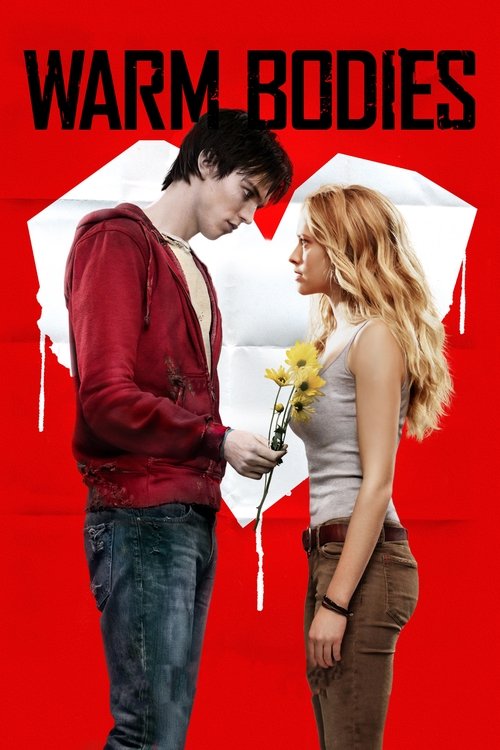
Warm Bodies (2013)
Directed by Jonathan Levine
No · Ultra Based
How we score movies →Consciousness Markers
The female lead has agency and screen time but exists primarily in relation to the male protagonist. The narrative structure is fundamentally romantic rather than feminist in orientation.
The cast is predominantly white with minimal intentional representation. While Cory Hardrict provides some racial diversity, the casting reflects typical early 2010s Hollywood norms without deliberate effort toward representation.
The film is primarily entertainment-focused with minimal preachy messaging, though a faint anti-war sentiment underlies its Romeo and Juliet structure.
The film contains no engagement with racial themes or consciousness. It is a genre comedy without social commentary on race.
No LGBTQ+ representation or themes are present in the film. The narrative is a straightforward heterosexual romance.
No environmental or climate-related messaging is present in the film.
The film contains no critique of capitalism, wealth systems, or economic structures.
The zombie protagonist's decay is treated as comedic and horrific spectacle, not as commentary on body acceptance or positivity.
No representation of neurodivergent characters or themes related to neurodivergence is present.
The film does not engage with historical narratives or attempt to revise them.


Synopsis
After a zombie becomes involved with the girlfriend of one of his victims, their romance sets in motion a sequence of events that might transform the entire lifeless world.
Why it received this score
Warm Bodies stands as a relic of early 2010s mainstream entertainment, a zombie romantic comedy that traffics in familiar genre tropes without the slightest pretense toward contemporary progressive sensibilities. The film's central conceit, a Romeo and Juliet narrative transplanted to a post-apocalyptic wasteland, carries only the faintest echo of social commentary, and even that is incidental to the primary goal of providing lightweight romantic humor with undead special effects. Director Jonathan Levine constructs what is essentially a conventional star-crossed lovers story, one that happens to feature a decaying protagonist, and asks nothing more of its audience than to accept the absurdist premise and enjoy the comedic beats that follow. Teresa Palmer's female lead is capable and present throughout, but her character exists primarily as the object of the zombie protagonist's affection, a narrative dynamic that would hardly register as progressive even by 2013 standards. The supporting cast, while featuring some racial diversity through the inclusion of Cory Hardrict, remains predominantly white and unremarkable in its construction. There is no engagement with questions of representation, identity, or systemic inequality. The film contains no environmental messaging, no interrogation of wealth or power structures, no examination of bodily autonomy or diversity beyond the literal decomposition of its main character, treated here as comedic spectacle rather than as anything remotely resembling commentary on human variation. What the film offers is an experience of watching pure entertainment, untethered from any desire to engage with the cultural conversations that would come to define the following decade. This is neither condemnation nor praise, merely observation: Warm Bodies is precisely what it appears to be, a genre exercise from an earlier moment, before the cultural moment we now measure had fully crystallized. It scores low on contemporary progressive markers not because it is reactionary, but because it is simply indifferent to such concerns.
Analysis generated by our Consciousness Algorithm
Critic Reviews
“A well-paced, nicely directed, post-apocalyptic love story with a terrific sense of humor and the, um, guts to be unabashedly romantic and unapologetically optimistic.”
“Levine – whose last picture was the intriguing, if only partly effective, cancer comedy “50/50” — is going for something more here, exploring what makes us human by contrasting it with a character who has lost all the basics and is desperate to get them back.”
“Hoping to do for flesh-eaters what "The Twilight Saga" did for vampires, albeit on a smaller scale, writer-director Jonathan Levine spins Isaac Marion's novel into a broadly appealing date movie about a zombified Romeo and his lively Juliet.”
“For all of R’s allegedly humorous observations about the wasteland of the undead through which he walks, they feel tacked on — like somebody decided to turn this thing into a comedy at the last second.”