WarGames (1983)
Directed by John Badham
No · Ultra Based
How we score movies →Consciousness Markers
Technical exposition from military and political figures explains nuclear deterrence, but this reflects establishment authority rather than progressive pedagogical impulse.
The cast is predominantly white with minimal representation of other groups. The female character exists primarily to support the male protagonist's story rather than having agency.
A female character is present but occupies a supporting girlfriend role with minimal agency in the central narrative.
The protagonist is portrayed as exceptionally intelligent and tech-savvy, but this is treated as genius rather than neurodivergence, and without contemporary awareness of the concept.
The film implicitly critiques military-industrial systems but presents this as a technical problem to be solved by individuals rather than a structural issue.
No examination of race or racial dynamics. The film reflects 1980s casting practices without apparent attention to representation.
No LGBTQ+ themes or representation present in the film.
No climate-related themes or messaging present.
No engagement with body positivity themes or commentary on physical appearance and acceptance.
No revisionist historical framing present. The film engages with contemporary Cold War anxieties rather than reexamining historical narratives.


Synopsis
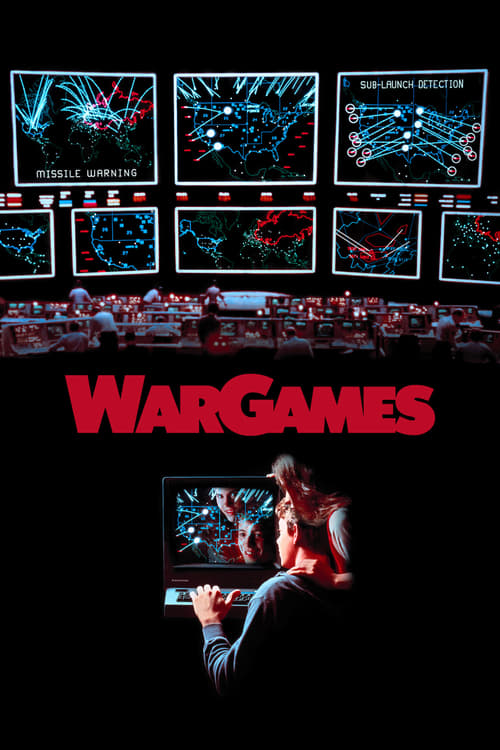
High school student David Lightman has a talent for hacking. But while trying to hack into a computer system to play unreleased video games, he unwittingly taps into the Department of Defense's war computer and initiates a confrontation of global proportions. Together with his friend and a wizardly computer genius, David must race against time to outwit his opponent and prevent a nuclear Armageddon.
Why it received this score
WarGames operates as a straightforward Cold War thriller with minimal engagement in contemporary progressive cultural consciousness. The film's narrative centers on a white teenage male protagonist whose computer skills position him as the hero of the story, with supporting characters existing primarily to advance his arc. The female character serves a familiar supporting function, offering companionship but little agency or substantive presence in the central conflict. The cast is predominantly white, reflecting 1980s Hollywood's casting practices without any apparent attention to broader representation.
The film's social commentary, such as it is, concerns itself with nuclear deterrence and the dangers of automated warfare systems. This reflects genuine Cold War anxiety of the early 1980s rather than the specific markers of 2020s progressive sensibility. The narrative does not interrogate power structures, capitalism, or systemic inequalities. It does not examine gender dynamics beyond the presence of female characters, nor does it engage with questions of racial consciousness or representation. The male military and political establishment figures who deliver technical exposition are presented as reasonable authorities attempting to manage crisis, not as representatives of oppressive systems requiring critique.
The film's lens remains determinedly mainstream and establishment-aligned. There is no gesture toward LGBTQ+ representation, body positivity, neurodivergence, revisionist history, or structural critique. The teenage hacker protagonist is presented as an individual genius whose talents accidentally trigger global consequences, a framework that emphasizes personal agency rather than examining how systems of power distribute opportunity and consequence. This is a product of its era's anxieties, not a work engaging with contemporary social consciousness.
Analysis generated by our Consciousness Algorithm
Critic Reviews
“There's not a scene here where Badham doesn't seem to know what he's doing, weaving a complex web of computerese, personalities and puzzles; the movie absorbs us on emotional and intellectual levels at the same time. And the ending, a moment of blinding and yet utterly elementary insight, is wonderful.”
“Badham and company elide a lot of technical details of hacking, but the basics of the nascent computer culture still feel spot-on, right down to the body type and personalities of Eddie Deezen and Maury Chaykin, who play two of Broderick's techno-literate confederates (and work in Seattle, no less). More important is how WarGames plays up the contrast between teenagers—rebellious on the surface but conformist by nature—with a cynical adult world that has become convinced that nuclear annihilation might not be so bad.”
“WarGames is a soft-sell protest -- pro- people, anti-nuclear and anti-machine -- that entertains. It peddles neither the hysterics of Jane Fonda's "China Syndrome" nor the hopelessness of "Dr. Strangelove." It's a war cry for peace that's good to the last byte. [3 June 1983, p.23]”
“The first half has a sardonic edge to it, but the more seriously the movie takes itself the sillier it gets.”