Warcraft (2016)
Directed by Duncan Jones
No · Ultra Based
How we score movies →Consciousness Markers
The cast includes Paula Patton, Ruth Negga, and Daniel Wu alongside the primarily male ensemble. Director Duncan Jones explicitly discussed the importance of female representation in interviews.
Duncan Jones' public advocacy for female representation is undermined by the film itself, where female characters remain peripheral to a male-dominated action narrative.
Diverse actors appear in the cast, but there is no narrative engagement with racial themes or consciousness. Their presence is incidental rather than thematically integrated.
The film is primarily spectacle-driven with minimal preachy messaging. Director's public statements show awareness of representation issues, but the film itself does not lecture.
No LGBTQ+ themes, characters, or representation present in this fantasy action film.
No climate-related themes or environmental messaging in this fantasy warfare epic.
No critique of capitalism or economic systems present in the narrative.
Standard fantasy action film featuring conventionally attractive and muscular protagonists with no body diversity messaging.
No representation of or engagement with neurodivergent characters or neurodiversity themes.
While featuring interdimensional invasion, the film does not engage in historical revisionism or recontextualization of real events.


Synopsis
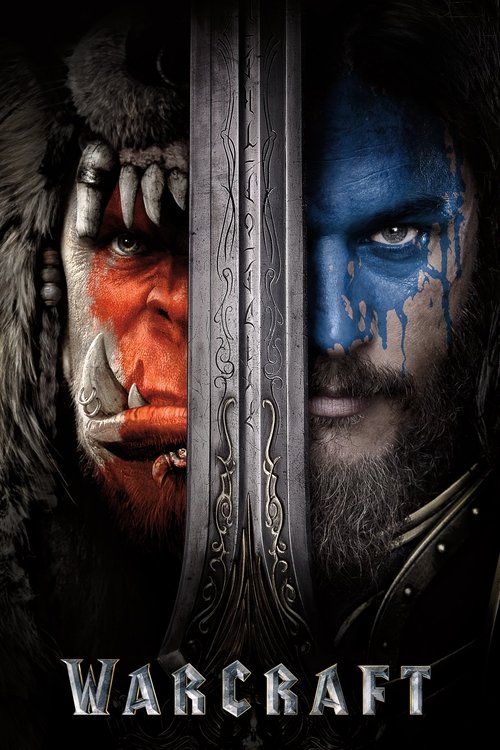
The peaceful realm of Azeroth stands on the brink of war as its civilization faces a fearsome race of invaders: orc warriors fleeing their dying home to colonize another. As a portal opens to connect the two worlds, one army faces destruction and the other faces extinction. From opposing sides, two heroes are set on a collision course that will decide the fate of their family, their people, and their home.
Why it received this score
Warcraft arrives as a competent video game adaptation that takes its source material with the seriousness of a graduate seminar on fantasy worldbuilding. Director Duncan Jones has made public statements about the importance of female representation in cinema, and these convictions appear to have influenced his casting decisions. Paula Patton, Ruth Negga, and other women populate the film's ensemble, though they remain largely peripheral to a narrative that privileges male warriors and their martial tribulations.
The film's engagement with progressive cultural sensibilities is cursory at best. Beyond the surface-level inclusion of diverse actors in its cast, Warcraft makes no effort to interrogate its themes through a contemporary social lens. The premise itself, which involves one civilization invading another's world to escape extinction, might have invited commentary on colonialism, resource scarcity, or the moral ambiguity of survival at others' expense. Instead, the film treats these elements as mere plot mechanics, preferring to focus on spectacle and video game fan service.
What emerges is a film that acknowledges the existence of progressive values without meaningfully integrating them into its narrative or thematic structure. It is less a work of social consciousness and more a blockbuster that remembered to hire women before cameras rolled. For those seeking evidence of contemporary cultural awareness in their fantasy epics, Warcraft offers little beyond good intentions.
Analysis generated by our Consciousness Algorithm
Critic Reviews
“Warcraft wins by not trying to be the second coming of a 10-hour cinematic trip through Mordor with Hobbits and jewelry. Rather, it’s a simpler, yet still wholly entertaining tale of magic and larger-than-life soldiers in a battle for survival.”
“The performances of Travis Fimmel, Toby Kebbell and Paula Patton as the warrior Lothar, the orc hero Durotan and the half-orc/half-woman Garona, all awakening to the evil forces around them, are meaty enough to hold attention.”
“It's a knock-down, drag-out fight between storytelling, franchise-making, and fan service, and some casualties were inevitable. But even a messy fight for nuance is better than an apathetic sell-out.”
“Longtime World of Warcraft players should and likely will storm the cineplex gates, burn the castle down, and salt the earth (and screenwriters) from whence this abomination sprung. Me, I’m going to chill out and download 1982’s top-notch "The Sword and the Sorcerer."”