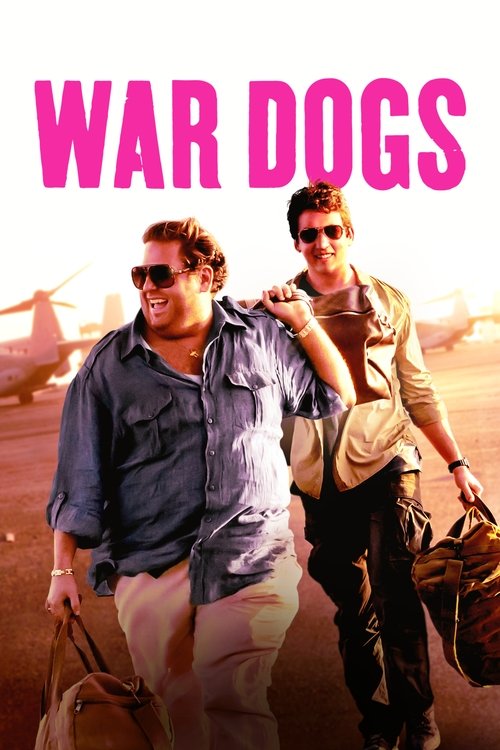
War Dogs (2016)
Directed by Todd Phillips
No · Ultra Based
How we score movies →Consciousness Markers
While the film depicts arms dealing as morally questionable, it ultimately frames the protagonists as charming entrepreneurs rather than offering systematic critique of capitalism or the military-industrial complex.
Ana de Armas appears in the cast, providing some gender and ethnic diversity, though her character lacks meaningful development or narrative agency.
The film depicts Afghanistan and its people as background scenery for American profiteering, with no meaningful engagement with the cultural or political implications of this dynamic.
Female characters are minimally developed and primarily serve supporting roles in a male-centered narrative about male bonding and entrepreneurship.
The film adapts a true story but frames American arms dealing in Afghanistan as an entertaining criminal enterprise rather than engaging with historical or geopolitical context.
No LGBTQ+ themes, representation, or character arcs are present in the film.
Climate change and environmental concerns are entirely absent from the film's thematic concerns.
No body diversity, disability representation, or body positivity themes are present in the film.
No neurodivergent characters or representation of neurodivergence appears in the narrative.
The film prioritizes entertainment and comedy over preachy social commentary or moral instruction.


Synopsis
Based on the true story of two young men, David Packouz and Efraim Diveroli, who won a $300 million contract from the Pentagon to arm America's allies in Afghanistan.
Why it received this score
War Dogs exists in a peculiar register: a film about American weapons trafficking that treats the subject matter as material for a buddy comedy romp. Todd Phillips constructs a narrative that oscillates between celebration and mild moral hand-wringing, ultimately landing closer to the former. The film's central characters are morally compromised entrepreneurs engaged in profiteering from global conflict, yet the movie affords them considerable charm and relatability. Miles Teller and Jonah Hill are presented as lovable rogues, their criminality framed as a consequence of American hustle and capitalism rather than as a genuine indictment of the military-industrial complex.
The film's social consciousness registers primarily through its depiction of Afghanistan as a backdrop for American opportunism, though this observation emerges incidentally rather than through deliberate thematic construction. Ana de Armas's presence in the cast provides minimal representation without meaningful character development or narrative weight. The supporting cast includes actors of various backgrounds, but their inclusion appears incidental to the story's concerns. There is no meaningful engagement with feminist themes, LGBTQ+ representation, disability awareness, or contemporary social justice frameworks. The film's lecture energy remains low; it prefers entertainment over commentary.
War Dogs traffics in the idiom of mid-2000s comedy, where the moral dimensions of arms dealing take a backseat to comedic set pieces and character bonding. The movie's relationship to capitalism is one of bemused observation rather than critique. It is a 2016 film that might have been comfortably released a decade earlier without significant alteration, suggesting a deliberate resistance to the cultural conversations occurring around it at the time of its release.
Analysis generated by our Consciousness Algorithm
Critic Reviews
“War Dogs marks a key turning point for Phillips. After all these years of yocks, it’s his first true grown-up movie, and it’s a nimble, gripping, and terrific one, with plenty of laughs, only now they’re rooted in the reality of fear, and in behavior that’s authentically scurrilous.”
“This is a solid example of the Sobering Comedy, where we laugh consistently at the madness onscreen, all the while lamenting how it’s rooted in real-world reality.”
“War Dogs is cocked with an irreverent pedigree and loaded with the genius teaming of Jonah Hill and Miles Teller as high rolling gun runners making up everything as they go. It's a splendid mismatch, physically and tempermentally, folded into a screenplay that's only occasionally as razored as it might be.”
“Phillips has made a copy of a copy, a brotastic toast to capitalism that steals from all the other movies that stole from Scarface and Goodfellas. ”