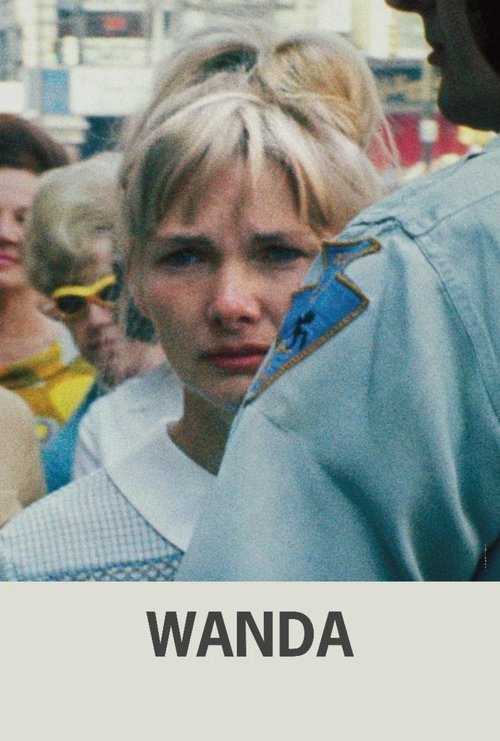
Wanda (1970)
Directed by Barbara Loden
No · Ultra Based
How we score movies →Consciousness Markers
The film depicts a woman rejecting traditional roles and maternal duty, which carries feminist implications. However, this emerges from character and circumstance rather than ideological positioning. The film offers no feminist analysis or empowerment narrative.
The film depicts economic precarity and the degradation of working-class life, which implicitly critiques capitalism. However, there is no explicit anti-capitalist ideology or class consciousness articulated by the narrative or characters.
Female director and lead in 1970 is historically significant, but the film contains no deliberate casting politics or diversity agenda. The cast reflects the working-class communities depicted, without commentary on representation itself.
The film's aesthetic is deliberately non-preachy and resists explanation or moral instruction. Its observational style actively avoids the pedagogical tone characteristic of woke cinema.
No LGBTQ themes, characters, or content present in the film.
The film contains no explicit racial consciousness, racial themes, or commentary on racial identity or systems. Race is not addressed in the narrative.
No climate themes, environmental messaging, or ecological consciousness present in the film.
No body positivity messaging, discussions of beauty standards, or body-acceptance themes present in the film.
No representation of neurodivergence, mental health frameworks, or neurodivergent characters present in the narrative.
The film contains no historical narrative or revisionist historical claims. It is set in contemporary 1970 America without historical perspective or reinterpretation.


Synopsis
After a string of abusive relationships, Wanda abandons her family and seeks solace in the company of a petty criminal.
Why it received this score
Wanda occupies a peculiar position in the genealogy of progressive cinema, being both genuinely ahead of its time and entirely indifferent to contemporary social consciousness frameworks. Barbara Loden's 1970 portrait of a woman's drift through economic precarity and emotional destitution is undeniably a work of feminist cinema, but not in the manner that modern sensibilities would recognize or categorize. The film's protagonist abandons maternal and spousal obligations, which might seem radical through a 2020s lens, yet the film itself offers no ideological scaffolding around this choice. There is no lecture, no validation, no therapeutic narrative arc. Wanda simply is, and her degradation proceeds without commentary.
The film's refusal to moralize or offer solutions is precisely what makes it resistant to contemporary woke aesthetics. Loden does not position her working-class female protagonist as a site of political consciousness or representation. She is not empowered or victimized by the narrative, nor is she made symbolically legible. Instead, she is a person of remarkable passivity, shaped by circumstance and her own paralysis. The men around her are depicted with similar flatness and moral ambiguity. The film's realism is almost anthropological, observing without judgment or agenda. This is a fundamentally humanist work concerned with alienation and social drift, not with the contemporary markers of progressive cultural production.
What emerges from this analysis is a film that predates the specific constellation of concerns we now associate with cultural progressivism by decades. It has no LGBTQ content, no explicit racial consciousness, no body positivity rhetoric, no climate messaging, and no revisionist historical agenda. Its feminist credentials derive from who made it and what it depicts, not from what it says or advocates. For the purposes of woke scoring, Wanda registers as a genuinely important work that simply occupies a different philosophical universe than the one we now inhabit.
Analysis generated by our Consciousness Algorithm
Critic Reviews
“Writer-director-actor Barbara Loden's 1970 feature has a wonderful, hard-won sense of everyday rapture.”
“Barbara Loden struck the mother Loden of bleakly pathetic romances with her groundbreaking and brilliant 1970 film.”
“An abrasive and cajoling film with a unique singular voice.”
“It's delicious to see this kind of character taking up so much space on screen: unkempt, dazed, and aimless.”