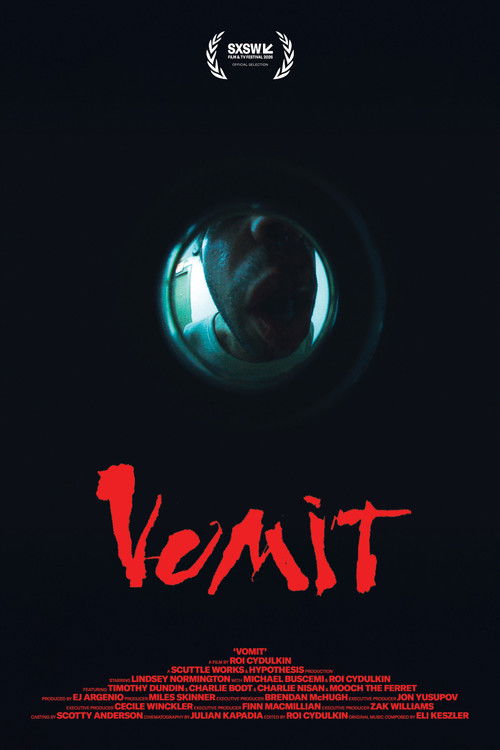
Vomit (2026)
Directed by Roi Cydulkin
No · Ultra Based
How we score movies →Consciousness Markers
The cast includes people of various backgrounds, but this appears organic to the narrative rather than intentional representation. No indication of conscious casting choices for diversity messaging.
While a female character (home health aide) is central to the plot, she functions as a romantic interest and plot device rather than a vehicle for feminist commentary. No evident gender consciousness present.
While the protagonist is an addict and the setting may involve economic precarity, there is no systematic critique of capitalism or wealth structures evident in the synopsis.
The protagonist's addiction and erratic behavior might suggest neurodivergence, but this appears incidental rather than intentional representation or advocacy.
The film prioritizes chaos and comedy over messaging, but the dark comedy genre itself carries implicit social commentary about human dysfunction, even if not explicitly stated.
No apparent LGBTQ+ themes, characters, or representation evident from the plot synopsis or available information. The narrative centers on heterosexual dysfunction.
No indication of racial themes, commentary, or consciousness in the film's narrative. Characters appear to be treated without regard to racial identity.
No climate-related themes, imagery, or messaging present. The film is entirely unconcerned with environmental consciousness.
No indication of body positivity messaging or celebration of diverse body types. The film appears indifferent to questions of physical representation.
This contemporary short film contains no historical content or revisionist framing. Not applicable to the work.
Synopsis
Wildcard addict on the run from trouble shows up bloodied and battered at the door of his home health aide ex-girlfriend, turning both their lives upside down in this super dark comedy about love, death, drugs, and ferrets.
Why it received this score
Vomit arrives as an aggressively uncommitted short film, content to wallow in the muck of addiction and romantic dysfunction without bothering to extract any larger meaning from the proceedings. Director Roi Cydulkin appears interested only in the chaos of bodily and emotional dissolution, the kind of transgressive comedy that emerged from pre-internet indie sensibilities, when shock value was the primary currency of provocation. The narrative presents its characters as damaged, flawed, and utterly resistant to redemption, which at least spares us the exhausting burden of their transformation arcs.
What makes Vomit's minimal woke footprint notable is how thoroughly it ignores the machinery of contemporary cultural awareness. The cast is diverse, but this reads as accident rather than intention, a byproduct of casting actual humans rather than a statement about representation. There are no speeches about systemic anything, no characters who exist primarily to educate the protagonist, no framing device that asks us to consider the larger social implications of addiction or precarious labor. The home health aide exists not as a symbol of exploited care workers but as a plot device and romantic interest, treated with the same indifference as every other person in this small, sordid drama.
The film's one concession to modern sensibility is its inclusion of a ferret, which may or may not signal some form of neurodivergence appreciation, though more likely it simply signals that someone on set had a ferret. Vomit remains a period piece of sorts, a work that would fit comfortably in the indie landscape of 2005, untouched by the currents that have reshaped American cinema over the past fifteen years. This is, paradoxically, the film's most honest quality.
Analysis generated by our Consciousness Algorithm
Critic Reviews
“In CinemaBlend's own review of the film, Eric Eisenberg lauded the film's giggle-inducing nastiness.”
“In the uproarious short comedy Vomit, a simple dinner party spirals.”
“Wildcard addict on the run from trouble shows up bloodied and battered at the door of his home health aide ex-girlfriend, turning both their lives upside down in this super dark comedy about love, death, drugs, and ferrets.”
“Wildcard addict on the run from trouble shows up bloodied and battered at the door of his home health aide ex-girlfriend, turning both their lives upside down in this super dark comedy about love, death, drugs, and ferrets.”