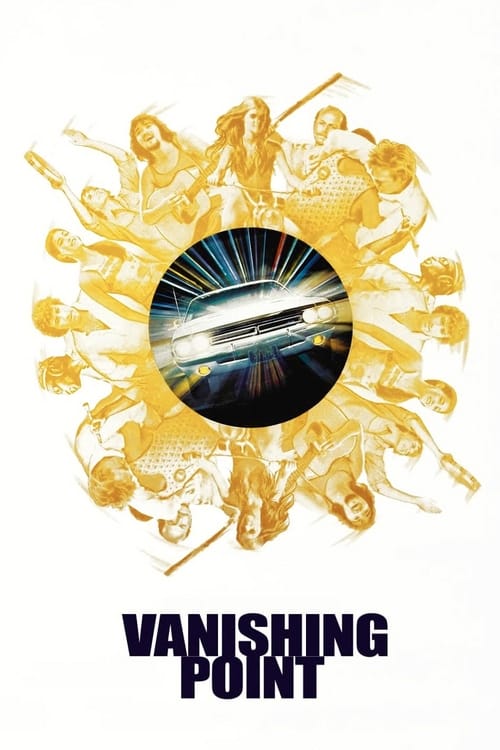
Vanishing Point (1971)
Directed by Richard C. Sarafian
No · Ultra Based
How we score movies →Consciousness Markers
The protagonist embodies individualist rebellion against society, but this reflects 1970s counterculture rather than systemic anti-capitalist ideology.
Cleavon Little's character is portrayed sympathetically and the film has vague anti-establishment ethos, but lacks explicit racial consciousness or systemic critique.
Cleavon Little appears in a sympathetic supporting role as the radio DJ, reflecting casting practices of 1971 rather than conscious representation strategy.
Female characters appear minimally and peripherally, with no feminist agenda or commentary on gender dynamics.
The film is primarily narrative and action-driven with minimal preachy or instructional tone.
No LGBTQ+ themes, characters, or representation present in the film.
Climate themes are not present or relevant to the film's narrative.
Body positivity themes are not present or relevant to the film.
Neurodivergence representation is not present in the film.
The film does not engage in historical revisionism or reinterpretation of historical events.
Synopsis
Kowalski works for a car delivery service, and takes delivery of a 1970 Dodge Challenger to drive from Colorado to San Francisco. Shortly after pickup, he takes a bet to get the car there in less than 15 hours.
Why it received this score
Vanishing Point arrives from an era when the very concept of strategic cultural consciousness had not yet calcified into its contemporary form. The film pursues a protagonist across the American landscape in service of pure narrative momentum, that most traditional of cinematic aims. Barry Newman's Kowalski is a man fleeing society itself, though the film harbors no illusions about what he might be fleeing toward, which is to say nothing at all. The presence of Cleavon Little as the philosophical radio DJ "Super Soul" lends the proceedings a countercultural veneer, and one could strain to read this as early representation, but such an interpretation would require us to retroactively impose contemporary analytical frameworks onto a work that simply lacks the apparatus to accommodate them.
The film is resolutely uninterested in systemic critique or the machinery of social consciousness. It is concerned with speed, pursuit, and the aesthetics of masculine solitude, delivered with the deadpan precision of an automotive advertisement that somehow achieved artistic merit. There are no lectures here, no representation strategies, no progressive sensibilities waiting to be unpacked. It is a film about a man driving a car very fast, which is precisely what it intends to be, and no amount of thematic excavation will transform it into something else.
In the context of contemporary cultural analysis, Vanishing Point registers as a historical artifact rather than an active participant in ongoing social discourse. It predates the entire conceptual apparatus we employ to measure such things. The film simply does not speak the language we are attempting to measure.
Analysis generated by our Consciousness Algorithm
Critic Reviews
“Newman picks up speed and symbolic baggage as the movie progresses, and much of the film’s brilliance lies in the way Sarafian balances the two elements. ”
“Vanishing Point is a fantastic chase film, which despite its heavy-handed symbolism, is an absolute must for any movie lover – whether you're a petrol head or not.”
“While Richard Sarafian's direction of this action thriller and drive-in favorite isn't especially distinguished, the script by Cuban author Guillermo Cabrera Infante takes full advantage of the subject's existential and mythical undertones without being pretentious, and you certainly get a run for your money, along with a lot of rock music. ”
“A movie about which I can think of almost nothing good to say.”