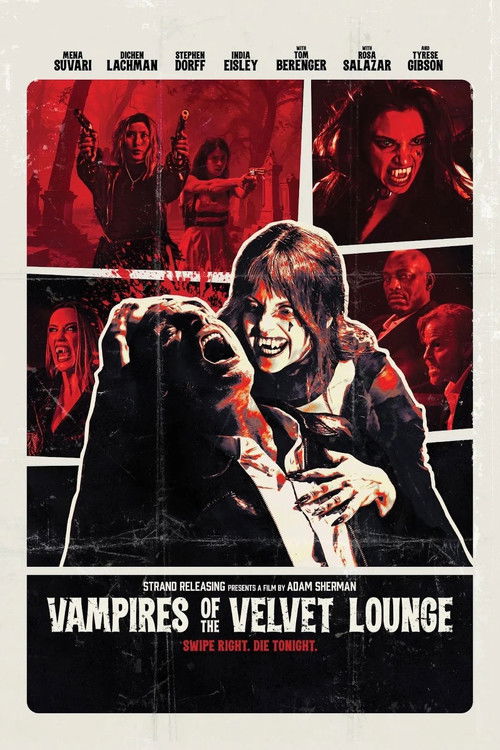
Vampires of the Velvet Lounge (2026)
Directed by Adam Sherman
Yes · Woke
How we score movies →Consciousness Markers
The ensemble features multiple women of color in central roles rather than peripheral positions. Mena Suvari, Dichen Lachman, Rosa Salazar, and others share meaningful screen time and agency within the narrative.
The narrative centers a female vampire coven with agency and power. Women drive the plot as hunters and decision-makers rather than victims, subverting traditional vampire narrative hierarchies.
The diverse casting suggests intentional inclusion, but the film's engagement with race as a thematic element remains unclear from available information. Representation present but racial commentary unconfirmed.
While the premise suggests social awareness, the horror-comedy genre positioning suggests entertainment prioritized over didacticism. However, the checklist-like quality noted in critical coverage implies some risk of heavy-handed messaging.
The absinthe bar setting implies capitalist engagement rather than critique. No evidence of systemic economic commentary or anti-establishment themes in the horror-comedy framework.
No evidence of explicit LGBTQ+ representation or themes in available materials. The film appears to center heterosexual dynamics within its dating app premise.
As a vampire film, the narrative likely engages with bodies as objects of desire and predation rather than celebrating body diversity or challenging conventional attractiveness standards.
The film appears to take contemporary setting and vampire mythology as given rather than reexamining historical narratives or power structures through a revisionist lens.
No indication of neurodivergent representation or themes in the available plot description or marketing materials.
No indication of climate-related themes or environmental consciousness in the premise or available plot descriptions.
Synopsis
A group of vampires confronts the challenges of adapting to contemporary society while grappling with their own mortality, all while engaged in a conflict with a dangerous enemy.
Why it received this score
Adam Sherman's indie horror-comedy arrives as a calculated exercise in contemporary cultural signaling wrapped in the familiar trappings of vampire fiction. The premise itself reads like a checklist, as one critic noted with palpable weariness, placing a female-centered coven in an absinthe bar in the American South while they hunt through dating apps. The casting brings together a genuinely diverse ensemble, with particular attention paid to ensuring multiple women of color anchor the narrative rather than serve as supporting players. This is representation deployed with intention, not accident.
The film's setting and mechanics deserve scrutiny. Dating apps function as both literal hunting ground and metaphor for contemporary isolation, a detail that speaks to genuine millennial and Gen-Z anxieties about connection and trust. The vampire hunters who populate the narrative create a framework for conflict that allows the film to comment on power dynamics and predation in modern courtship. Whether these observations land with satirical precision or collapse into didacticism remains to be seen, though the evidence suggests Sherman has constructed something more playful than preachy.
Yet there are limits to the film's progressive sensibilities. It remains, fundamentally, a genre exercise about monsters. The diversity of the cast does not necessarily indicate deeper engagement with systemic themes, and the contemporary setting does not automatically translate to social consciousness. The film appears content to entertain rather than interrogate, which places it firmly in the middle register of our current cultural moment: aware of contemporary discussions without necessarily committing to their implications.
Analysis generated by our Consciousness Algorithm