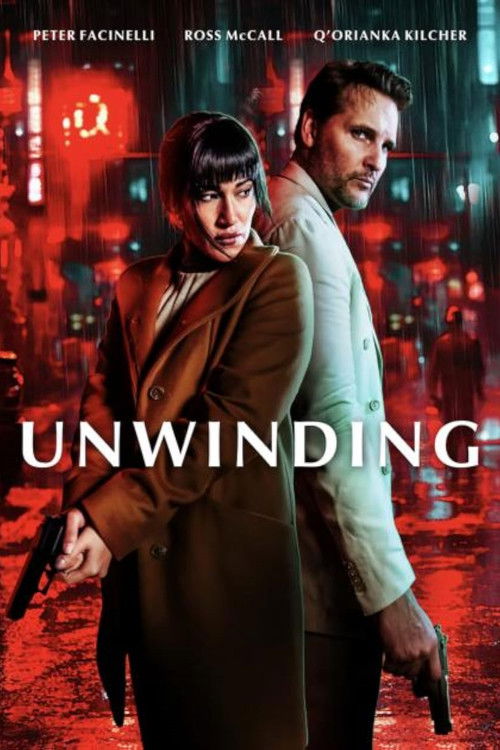
Unwinding (2026)
Directed by Reza Ghassemi
No · Based
How we score movies →Consciousness Markers
Q'orianka Kilcher, a Peruvian Quechua actress and prominent indigenous rights activist, is cast as a co-lead private investigator. This is a deliberate and visible casting choice in a genre that has rarely centered Indigenous women.
The film positions a woman as co-equal lead in a noir investigation framework, a genre with a long history of marginalizing female investigators. The structure is progressive by genre standards, though no explicit feminist messaging has been identified.
The casting of a Quechua-descent actress in a prominent role introduces racial and cultural identity into the film's surface texture, but no documented narrative engagement with racial themes has been found.
A senator's family hiring a private investigator carries the faint genre-standard suggestion that the powerful have resources the rest do not. This is noir boilerplate, not an anti-capitalist argument.
Political thrillers involving corrupt or compromised establishment figures carry a baseline moralizing register by genre convention. No specific sermonizing has been identified in this film's available materials.
No LGBTQ+ themes, characters, or storylines have been documented in any available material for this film.
No climate or environmental themes are present in the film's documented premise or marketing materials, despite Kilcher's well-known environmental activism off-screen.
No body positivity themes or messaging have been identified in any available material.
No neurodivergent characters or related themes are present in any documented material for this film.
The film is a contemporary thriller with no historical setting or documented revisionist historical framing.
Synopsis
When the son of a Senator goes missing, private investigator Gaven Mori is hired by the family to piece together and solve the mystery.
Why it received this score
Reza Ghassemi's "Unwinding" presents itself as a neo-noir thriller in the classical tradition: a missing person, a powerful family, and two private investigators navigating the murky space between. The genre has always carried a low-grade cynicism about institutions, so the presence of a senator as the concerned patron is less a political statement and more a furniture choice. The film's most notable casting decision is Q'orianka Kilcher, a Peruvian Quechua actress whose real-world activism on behalf of indigenous rights and environmental justice precedes her by several years. Whether the film does anything with this biographical context, or simply collects it as ambient credibility, remains to be seen.
The co-lead structure, pairing Kilcher with Peter Facinelli in a genre that has historically treated the female investigator as either love interest or exposition device, does represent a modest recalibration of noir's default settings. It is not a revolution. It is the genre updating its wardrobe. The thriller mechanics, a senator's son, a mystery to unravel, appear to be operating in good faith as genre machinery rather than as a delivery system for social instruction. The political backdrop registers at roughly the same temperature as a cup of coffee left on a desk for forty minutes.
The film, at the time of assessment, has generated essentially no cultural discourse, which is either a mark of its restraint or its obscurity, and it is too early to determine which. It scores in the lower registers of the cultural awareness spectrum: present enough to note, restrained enough to leave mostly alone. A neo-noir that hired a prominent indigenous activist as its co-lead and then made a film about a senator's missing son has, at minimum, exercised a certain discipline.
Analysis generated by our Consciousness Algorithm