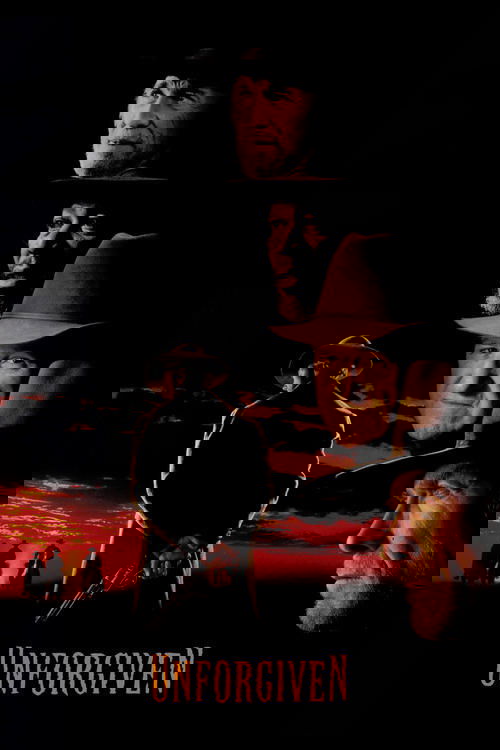
Unforgiven (1992)
Directed by Clint Eastwood
No · Ultra Based
How we score movies →Consciousness Markers
Cast is predominantly white and male, typical for 1992 Hollywood. Morgan Freeman's role as sidekick follows familiar archetypes without conscious diversity considerations.
Morgan Freeman's presence is noteworthy but not reflective of conscious racial representation or engagement with racial dynamics in contemporary sense.
Film deconstructs Western mythology and presents cynical critique of frontier justice, but this is artistic reinterpretation rather than contemporary historical revisionism.
The brutalized prostitute functions as plot device rather than subject of feminist analysis. Film centers male violence and masculinity without interrogating gender dynamics through contemporary feminist lens.
Film critiques greed and corruption through timeless moral lens rather than contemporary anti-capitalist sensibilities.
Eastwood's approach is dramatic and narrative-driven rather than explicitly preachy or preachy in tone.
No LGBTQ+ representation or themes present in the film.
Climate themes completely absent from this Western narrative.
No engagement with body positivity themes or discourse.
No representation of or engagement with neurodivergence.


Synopsis
William Munny is a retired, once-ruthless killer turned gentle widower and hog farmer. To help support his two motherless children, he accepts one last bounty-hunter mission to find the men who brutalized a prostitute. Joined by his former partner and a cocky greenhorn, he takes on a corrupt sheriff.
Why it received this score
Unforgiven stands as a monument to the pre-contemporary sensibility, a work of moral seriousness that operates in an entirely different register from modern cultural consciousness. Eastwood's meditation on violence, aging, and the mythology of the frontier is genuinely accomplished cinema, but it remains largely indifferent to the concerns that animate contemporary progressive discourse. The film deconstructs Western mythology through narrative sophistication and thematic complexity rather than through explicit social awareness.
The casting reflects the norms of 1992 Hollywood without apparent consideration for representation in any contemporary sense. Morgan Freeman's presence as William Munny's former partner follows established cinematic patterns of the era. The brutalized prostitute who catalyzes the plot serves as narrative device rather than subject of feminist interrogation. Eastwood's approach throughout is dramatic realism rather than preachy moralizing, which means the film maintains a certain distance from the lecture podium.
The film is a masterwork of 1992 that simply predates the constellation of social consciousness markers we now measure. It is not hostile to progressive values so much as indifferent to them. For those keeping score on cultural metrics developed in the 2020s, Unforgiven registers as essentially inert, which is precisely what we should expect from a work of its era.
Analysis generated by our Consciousness Algorithm
Critic Reviews
“Simultaneously heroic and nihilistic, reeking of myth but modern as they come, it is a Western for those who know and chrish the form, a film that resonates with the spirit of films past while staking out a territory quite its own. [7 Aug 1992]”
“Clint Eastwood has crafted a tense, hard-edged, superbly dramatic yarn that is also an exceedingly intelligent meditation on the West, its myths and its heroes.”
“The cast is universally strong. Hackman, Freeman and Harris don't do anything they haven't done before, but the roles suit their personae to a degree where they approach archetypal status.”
“At the last, we're left with a film that tries to doll up a conventional genre with hints of depth, hoping to disguise the cross-dressing by putting it in the shape of an epic. Murnau, Mizoguchi, Ford, even you authors of the Book of Genesis, rest easy. [12 Oct 1992]”