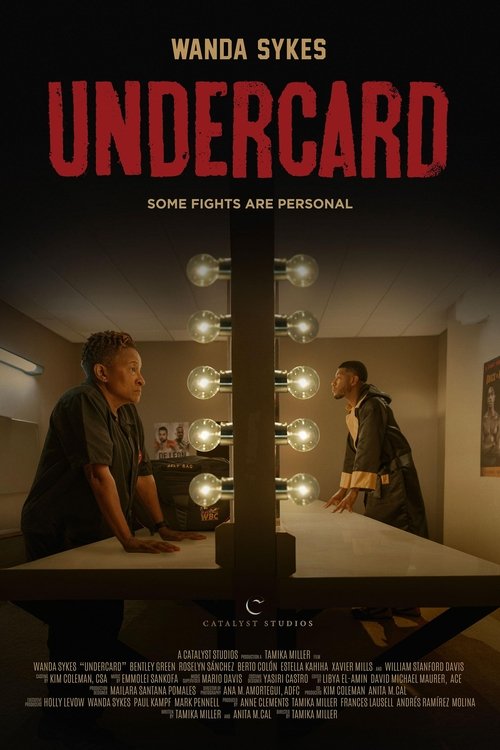
Undercard (2026)
Directed by Tamika Miller
Partly · Woke-Adjacent
How we score movies →Consciousness Markers
The film centers a Black female protagonist and features a predominantly non-white cast. The casting appears intentional in its diversity, though it functions primarily within a conventional narrative rather than as an explicit statement about representation.
The film centers a female protagonist in a traditionally male-dominated sport, and her journey involves reconciliation and vulnerability. However, the film does not appear to engage explicitly with feminist critique or systemic gender analysis.
The film's title and setting invite reflection on the positioning of Black women in sports and entertainment, and critics have noted this metaphorical potential. However, available evidence suggests the film does not deeply explore these structural inequities.
Critical reception suggests the film prioritizes intimate character drama over preachy messaging. While it may contain moments addressing social themes, it does not appear to adopt an overtly pedagogical or sermonic tone.
As a boxing film, the narrative involves athletic bodies and physical training. The film does not appear to engage with body positivity discourse, though Wanda Sykes' casting itself may challenge conventional expectations about female athletic bodies.
The film engages with boxing, a sport historically tied to working-class aspiration and economic precarity, but does not appear to mount any critique of capitalist structures or wealth inequality.
The director Tamika Miller has a documented history of LGBTQ+ advocacy and board service with OUTFEST, but no LGBTQ+ themes or characters are evident in the film's plot or available critical discussion of it.
The film addresses addiction and recovery, which touches on mental health themes. However, there is no evidence of engagement with neurodivergence as a specific social consciousness marker.
No climate-related themes or messaging are present in this sports drama about boxing and family reconciliation.
This is a contemporary fictional drama set in the world of boxing. It does not engage with historical narratives or revisionist framings of historical events.
Synopsis
After abandoning her son, a female boxing trainer rises from the ashes to coach him in the biggest fight of his career.
Why it received this score
Undercard arrives at a curious juncture in contemporary cinema, a film that appears to have all the structural components of progressive sensibility without necessarily deploying them toward any particular end. Director Tamika Miller, an accomplished television director with documented commitments to LGBTQ+ representation and storytelling, has crafted a sports drama that centers a Black woman as its protagonist, features a diverse supporting cast, and engages with themes of addiction recovery and maternal redemption. The film's very title invites us to consider the marginalization of Black women in sports and entertainment, yet critics note that it largely sidesteps these deeper interrogations in favor of a more conventional family reconciliation narrative.
The film's progressive elements are present but somewhat diffuse. Wanda Sykes' lead performance, her first dramatic role, carries the weight of a character wrestling with alcoholism and the consequences of abandonment, themes that align with contemporary interest in character vulnerability and recovery narratives. The cast reflects demographic diversity in a naturalistic manner rather than as a deliberate statement. What remains unclear from critical reception is whether the film engages meaningfully with the structural inequities it might examine or whether it treats these as mere backdrop to a more intimate family drama.
The film appears content to exist in a middle register, neither aggressively progressive nor explicitly conservative, performing progressive sensibilities without necessarily committing to them with any particular intensity. This is not necessarily damning, but it does result in a moderate assessment. The available evidence suggests a work that has inherited the aesthetics of contemporary cultural consciousness without fully embracing its commitments.
Analysis generated by our Consciousness Algorithm
Critic Reviews
“It's the kind of movie my 2½-star rating was invented for; that is, a movie that's interesting enough to put me on the ropes for several rounds before dropping its hands and getting knocked out.”
“Sykes steps into the role enthusiastically, but Miller's script (with cowriter Anita M. Cal) is beat-you-over-the-head melodramatic, making Sykes' committed effort to deliver heartfelt pathos all the more difficult to buy.”
“Sykes brings what she can to the proceedings, but there's only so much she can do to make Undercard even slightly distinctive.”