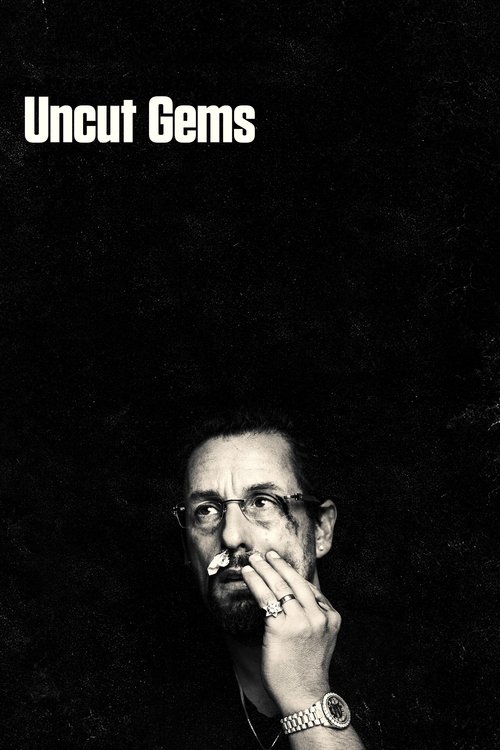
Uncut Gems (2019)
Directed by Josh Safdie
No · Based
How we score movies →Consciousness Markers
The film critiques capitalist excess and the destructive nature of wealth obsession through Howard's downfall, but this operates as classical moral critique rather than modern progressive 'eat the rich' ideology.
LaKeith Stanfield appears in a significant role, and the Hasidic Diamond District setting provides authentic cultural representation, though the film shows no consciousness of this as a representational choice.
LaKeith Stanfield's character is present as a Black actor in a crime drama, but the film contains no explicit racial consciousness or commentary on race.
The film conveys moral messages about greed through narrative tension and pacing rather than through explicit preachy commentary or lecturing.
No LGBTQ+ themes, characters, or subtext present in the film.
Female characters exist in the narrative but are not central to any feminist agenda or commentary about gender dynamics.
No climate-related content or environmental messaging appears anywhere in the film.
No body positivity messaging or representation is present in the film.
While Howard exhibits compulsive behavior, there is no explicit representation of or commentary about neurodivergence.
The film is set in contemporary times and contains no historical revisionism.


Synopsis
A charismatic New York City jeweler always on the lookout for the next big score makes a series of high-stakes bets that could lead to the windfall of a lifetime. Howard must perform a precarious high-wire act, balancing business, family, and encroaching adversaries on all sides in his relentless pursuit of the ultimate win.
Why it received this score
Uncut Gems operates as a masterclass in what happens when a film's artistic merit and thematic sophistication remain entirely orthogonal to contemporary progressive sensibilities. Josh Safdie has crafted a visceral descent into capitalist pathology, with Adam Sandler delivering a performance of such raw desperation that one almost forgets this is a man best known for comedies about grown men in ridiculous situations. The film's critique of American greed and the hollow pursuit of wealth accumulation is unsparing and genuine, yet it emerges not from a place of social consciousness as currently configured but from a more timeless humanist concern with moral degradation.
The casting of LaKeith Stanfield alongside Sandler represents the film's closest approach to contemporary representation discourse, though the film itself shows no interest in interrogating this choice through any cultural lens. Stanfield is a creditor, a threat, a plot function. He is not a statement. The Diamond District setting authentically portrays the Hasidic Jewish community that actually inhabits this commercial space, which constitutes genuine representation by accident rather than by design. The women in the narrative exist primarily as obstacles or witnesses to Howard's self-destruction, which may reflect the actual patriarchal dynamics of the world depicted but does nothing to complicate or critique them.
What remains is a film of considerable formal achievement in service of classical rather than contemporary moral concerns. It is a thoroughly traditional morality tale about a man who wants too much and loses everything, told with kinetic urgency and told well. The anxiety it produces comes not from social awareness but from empathetic identification with human weakness. This is cinema that works, but it works in registers that predate our current moment's particular obsessions by decades.
Analysis generated by our Consciousness Algorithm
Critic Reviews
“If Uncut Gems leaves people rattled, disoriented, grasping for clarity in the chaos of one man’s hectic routine, that all speaks to the sheer precision of a visionary achievement in full control.”
“Uncut Gems feels like being locked inside the pinwheeling brain of a lunatic for more than two hours — and guess what: It’s a gas!”
“Uncut Gems is a movie that lives in the gut, where shit makes a name for itself, where anxiety, folly, and instinct are borne out without morality or restriction.”
“The story's unrelenting nature works against it, blunting the lure of seeing Adam Sandler in one of his occasional dramatic performances -- a showy role, yes, but in a movie that proves all that glitters is not gold.”