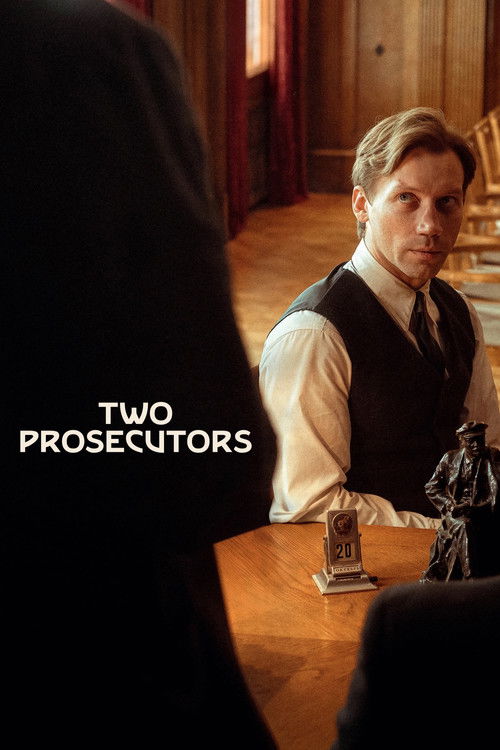
Two Prosecutors (2025)
Directed by Sergei Loznitsa
No · Ultra Based
How we score movies →Consciousness Markers
While the film carries the weight of historical significance and moral gravity, it does not appear to employ heavy-handed didacticism. However, its theme of authoritarianism as a universal warning carries some contemporary lecture-like quality.
The film depicts the Soviet system and its institutional machinery, but this is not anti-capitalist critique in the contemporary sense. It is a historical examination of totalitarianism and bureaucratic evil.
The cast consists primarily of male Eastern European actors reflecting the historical context and source material. No visible efforts toward contemporary demographic representation or conscious casting choices.
The film adapts a novella by Gulag survivor Georgy Demidov and presents a historically grounded examination of the Great Terror. It is not revisionist but rather an effort at historical truthfulness.
No LGBTQ+ themes, representation, or subtext present in the film. The narrative focuses entirely on male bureaucratic figures navigating state terror.
No feminist agenda or commentary present. The film is concerned with institutional power and moral complicity, not gender dynamics or patriarchal critique.
No racial consciousness or commentary. The film engages with Soviet history and authoritarianism as universal themes, not through the lens of racial identity or power.
Climate themes are entirely absent. The film concerns itself with historical political terror, not environmental issues.
Body positivity is not a theme. The film depicts prisoners and officials in a historical drama framework, with no commentary on body image or acceptance.
Neurodivergence representation is absent. The film does not engage with autism, ADHD, mental health, or neurodiversity as themes.
Synopsis
In 1937, amidst Stalin's Great Terror, a newly appointed prosecutor for the USSR is made aware of alleged corruption in the Secret Police, and takes it upon himself to investigate.
Why it received this score
Sergei Loznitsa's "Two Prosecutors" is a film of considerable historical and moral seriousness, yet it operates in a register entirely foreign to contemporary progressive sensibilities. The picture concerns itself with the machinery of state terror, bureaucratic complicity, and the moral paralysis that overtakes those who serve tyranny. These are weighty themes, certainly, but they predate by decades the particular cultural vocabulary we are tasked with measuring. The film does not interrogate its subject matter through the lens of identity or representation. It simply presents men confronting the machinery of evil, and their varying capacities for resistance or collaboration. This is humanist cinema in a pre-2015 sense.
The cast appears to be predominantly male and composed of Eastern European actors, which reflects both the historical reality and the source material's provenance. There are no visible efforts at demographic rebalancing, nor any contemporary markers of representation consciousness. The film's engagement with authoritarianism is framed as a universal warning about the dangers of unchecked state power, not as a commentary on specific modern power structures or identity hierarchies. Loznitsa himself is a dissident filmmaker concerned with historical truth and the mechanics of oppression, but not with the particular constellation of social justice frameworks that define contemporary wokeness.
The film registers as almost quaint in its refusal to engage with the categories we are meant to evaluate. It is a serious work about serious matters, yet it exists almost entirely outside the taxonomy of modern progressive cultural consciousness. This is not a condemnation of the film, merely an observation about the nature of its engagement with its subject matter.
Analysis generated by our Consciousness Algorithm