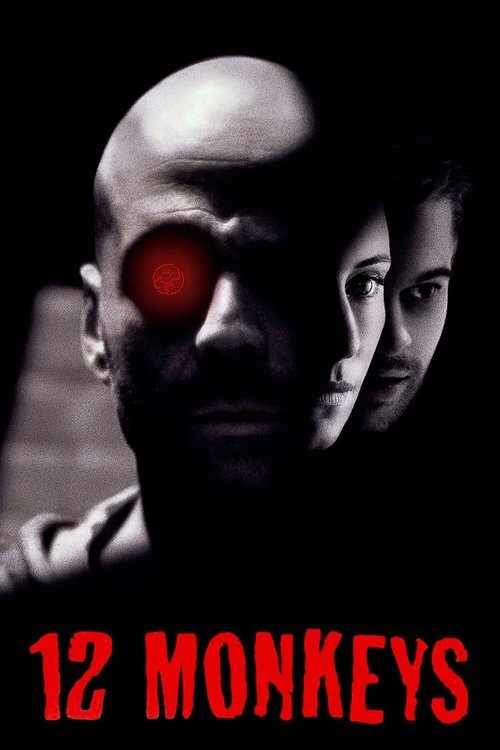
Twelve Monkeys (1995)
Directed by Terry Gilliam
No · Ultra Based
How we score movies →Consciousness Markers
The protagonist's institutionalization and ambiguous mental state function as plot devices to confuse reality and delusion. Mental illness is treated as narrative machinery rather than explored with dignity or understanding.
Dystopian institutional control is present but incidental to the plot rather than a systematic economic critique. The film treats systemic control as inevitable rather than as something to be dismantled.
Madeleine Stowe appears as a professional authority figure, but the cast is predominantly white and no intentional progressive casting strategy is evident. Representation exists but is incidental rather than deliberate.
Stowe's character possesses agency as a medical professional but remains secondary to the male protagonists' narrative arc. Gender dynamics are not interrogated or challenged.
Gilliam's aesthetic deliberately resists exposition and explanation. The film refuses preachiness, though institutional critique carries implicit commentary that never becomes explicit preaching.
No LGBTQ+ characters, themes, or representation appear in the narrative.
The film contains no racial commentary, consciousness, or meaningful racial diversity. Race is entirely absent from the film's thematic concerns.
The catastrophic virus is man-made rather than environmentally driven. Climate themes or environmental consciousness do not factor into the narrative.
No body diversity, body representation commentary, or body positivity messaging appears in the film.
The film is set in a fictional future and past, not in actual history. No historical revisionism occurs.


Synopsis
In the year 2035, convict James Cole reluctantly volunteers to be sent back in time to discover the origin of a deadly virus that wiped out nearly all of the earth's population and forced the survivors into underground communities. But when Cole is mistakenly sent to 1990 instead of 1996, he's arrested and locked up in a mental hospital. There he meets psychiatrist Dr. Kathryn Railly and the son of a famous virus expert who may hold the key to the Army of the 12 Monkeys; thought to be responsible for unleashing the killer disease.
Why it received this score
Terry Gilliam's "Twelve Monkeys" arrives as a deliberately obscurantist fever dream of institutional paranoia and temporal collapse, utterly indifferent to the social consciousness movements that would come to define cinema three decades later. The film concerns itself with the architecture of confinement, the malleability of sanity, and the possibility that prophecy and delusion are indistinguishable. These are not social justice concerns. Bruce Willis stumbles through a 1990s cityscape seeking answers about a virus that will devastate humanity, accompanied by Brad Pitt's manic energy and Madeleine Stowe's competent psychiatry, none of whom exist to make a point about representation or systemic oppression. The film is too busy constructing its Kafkaesque puzzle to pause for messaging. Gilliam's aesthetic is one of controlled chaos and visual overload, but the overload serves narrative paranoia, not progressive pedagogy. The dystopian future that frames the narrative involves institutional control and corporate surveillance, yet these elements are presented as inevitable features of existence rather than systems requiring critique or dismantling. Mental illness functions as a plot device to confuse the audience about what is real rather than as an opportunity to explore neurodivergence with nuance. The film's genius lies in its refusal to explain itself, to resolve its paradoxes, to offer the comfort of clear moral positions. This same refusal means it offers nothing to progressive sensibilities searching for validation of their worldview.
Analysis generated by our Consciousness Algorithm
Critic Reviews
“Gilliam keeps the audience guessing, and in doing so creates a startlingly effective rumination on the nature of sanity and madness cloaked in the shroud of a sci-fi thriller.”
“Bruce Willis is bruisingly good as the hero and Brad Pitt is suitably zany as the activist who dogs his trail. ”
“Gilliam, along with the gifted cinematographer Roger Pratt and production designer Jeffrey Beecroft, fashions a disturbing and dazzling lost world.”