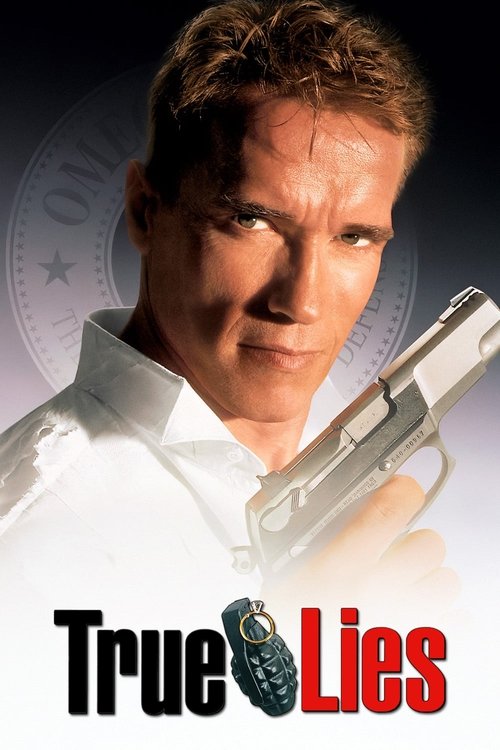
True Lies (1994)
Directed by James Cameron
No · Ultra Based
How we score movies →Consciousness Markers
Jamie Lee Curtis plays a female action hero, which was somewhat progressive for 1994, but her representation remains secondary to Schwarzenegger and coded as comedic rather than powerful.
Helen's empowerment arc is undermined by its comedic framing and ultimate resolution into marital reconciliation. Her agency serves male satisfaction rather than independent growth.
The film occasionally gestures toward commentary on marriage and gender roles, but these moments are always undercut by comedy and never develop into sustained critique.
Tia Carrere is cast as a Eurasian villain defined by exoticized sexuality and foreignness. The film deploys ethnic stereotypes without self-awareness or critique.
The used car salesman is a comedic villain, but this reflects class-based humor rather than any coherent anti-capitalist critique.
No LGBTQ+ themes, characters, or representation present in the film.
No climate-related themes or environmental consciousness present in this action-thriller.
The film presents conventional 1990s beauty standards without any body-positive messaging or diversity in physical representation.
No representation of neurodivergent characters or themes in the narrative.
The film contains no historical revisionism. It is a contemporary action-comedy set in the present day.


Synopsis
A fearless, globe-trotting, terrorist-battling secret agent has his life turned upside down when he discovers his wife might be having an affair with a used car salesman while terrorists smuggle nuclear war heads into the United States.
Why it received this score
True Lies exists in a peculiar liminal space, offering just enough contemporary gender-consciousness to confuse the matter while remaining fundamentally committed to 1994 action-comedy conventions. Jamie Lee Curtis's Helen transforms from anxious housewife to capable operative, which one might mistake for progressive representation until noting that her arc hinges on proving her sexual desirability to her husband, that her competence is played largely for laughs, and that the film devotes considerable energy to her humiliation and discomfort. The entire middle section treats her agency as a source of comedic embarrassment rather than empowerment.
The film's relationship to its female characters extends no further than surface-level. Tia Carrere appears as a Eurasian villain whose villainy is inextricable from her sexuality and foreignness, a stock archetype that requires no commentary here. Helen's journey, while ostensibly about discovering her own capabilities, ultimately resolves into her becoming a better wife and sexual partner to Schwarzenegger's character, a narrative that mistakes marital reconciliation for feminist vindication. The tone remains one of comedic indulgence rather than genuine critique or consciousness.
Cameron's film predates contemporary progressive sensibilities by a full generation, and it shows. The humor trades in discomfort with women in spaces coded masculine, the casual deployment of ethnic stereotypes passes without comment, and the underlying philosophy suggests that a woman's true satisfaction comes through participation in her husband's world on his terms. This is not a film ahead of its time. It is precisely a film of its time, offering just enough surface-level female agency to feel modern without challenging anything of substance.
Analysis generated by our Consciousness Algorithm
Critic Reviews
“Director James Cameron always works on a mega- canvas, yet he's brought off something unique here.”
“Much of the appeal of True Lies comes from the smooth grafting of battle-of-the-sexes comedy onto a high-tech action picture.”
“One of the best things about True Lies is that it's genuinely funny.”
“The tale begins and ends in a flurry of joke violence; Cameron has decided to spoof what he used to take seriously, and the result, though bright and deafening, feels oddly slack -- he loosens the screws, and our interest drops away.”