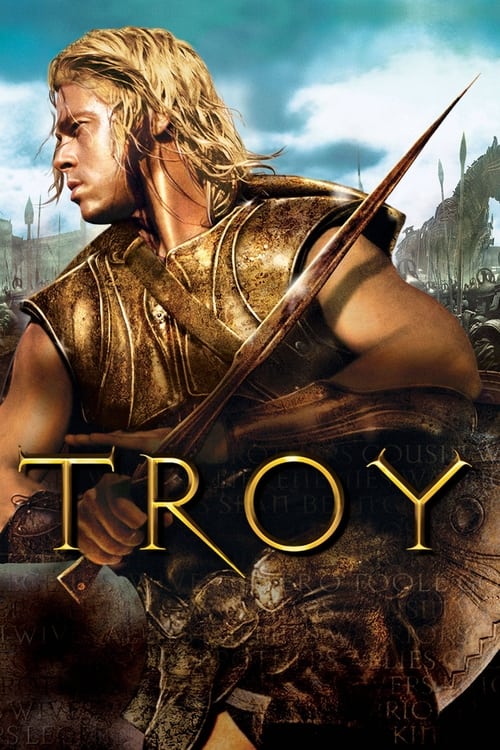
Troy (2004)
Directed by Wolfgang Petersen
No · Ultra Based
How we score movies →Consciousness Markers
The ensemble cast is predominantly white and male-dominated. While Diane Kruger brings some international representation, the roles of narrative significance overwhelmingly favor men.
The film deliberately removes supernatural elements from Homer's source material, presenting a grounded historical interpretation. This is creative demythologizing rather than progressive reframing.
Helen functions as a tragic catalyst for male conflict rather than as an agent with meaningful autonomy. The film presents her objectification without ironic critique.
The film makes no effort to examine race or ethnicity as meaningful themes. It operates as a straightforward historical epic without interrogating power through a racial lens.
Virtually absent. The source material's subtext between Achilles and Patroclus is deliberately reframed as a mentor-student relationship, stripping any romantic or queer implications.
Minimal engagement. While depicting kings and nobility in conflict, the film presents this as narrative backdrop rather than systemic critique of wealth or class inequality.
The film is primarily action-driven spectacle without preachy asides. It tells a straightforward war story without lecturing about contemporary social concerns.
The film celebrates idealized male muscularity and conventional beauty standards without irony. There is no diversity in body types among principal characters.
Entirely absent. The film concerns itself with ancient warfare and mythology, not environmental themes or ecological consciousness.
Completely absent. The film contains no representation of or engagement with neurodivergent characters or themes.


Synopsis
In year 1250 B.C. during the late Bronze age, two emerging nations begin to clash. Paris, the Trojan prince, convinces Helen, Queen of Sparta, to leave her husband Menelaus, and sail with him back to Troy. After Menelaus finds out that his wife was taken by the Trojans, he asks his brother Agamemnon to help him get her back. Agamemnon sees this as an opportunity for power. They set off with 1,000 ships holding 50,000 Greeks to Troy.
Why it received this score
Troy operates as a thoroughly traditional historical action film, unmolested by contemporary progressive sensibilities. Wolfgang Petersen's 2004 epic removes the gods from Homer's Iliad but preserves the patriarchal power structure intact, rendering it a grounded war narrative centered on male heroism and conflict. The removal of divine intervention is a creative choice, not a social statement, and the film remains fundamentally indifferent to questions of gender, representation, or systemic inequality.
The presence of Diane Kruger as Helen might suggest some modernization of the female perspective, yet she remains the narrative catalyst rather than its center. She is beautiful, tragic, and ultimately passive, existing to motivate the masculine ambitions and violence of the men around her. The ensemble cast, while featuring some international performers, is predominantly white and male-dominated, reflecting the blockbuster conventions of the early 2000s rather than any conscious commitment to diverse representation.
The film's scale and technical ambition are notable, but its cultural consciousness is negligible. It asks no questions about the systems it depicts, offers no critique of the hierarchies it portrays, and makes no attempt to interrogate its own narrative through a contemporary lens. Troy is exactly what it appears to be: a spectacle of ancient warfare untroubled by irony, introspection, or social awareness.
Analysis generated by our Consciousness Algorithm
Critic Reviews
“In a league with Hollywood's top historical epics, ancient or otherwise. It's stunningly handsome film, with an equally stunning cast and engrossing story.”
“An exhilarating piece of epic filmmaking that it pulls you in, sweeps you up and works very much as its own thing. ”
“In this vigorous, stalwart epic, they blend martial breadth and emotional intimacy, honor and obsession, romance and machismo to show the glamour and folly of war. ”
“In Troy, and in overreaching, underachieving productions like it, digital imagery is fast becoming both a Trojan horse and Achilles' heel. ”