Transformers: Rise of the Beasts (2023)
Directed by Steven Caple Jr.
No · Based
How we score movies →Consciousness Markers
Lead roles feature Anthony Ramos and Dominique Fishback, marking deliberate diversification from previous franchise entries. However, this represents casting choice rather than thematic integration of identity concerns.
Diverse casting signals surface-level awareness, but the film does not engage meaningfully with racial themes or consciousness as part of its narrative.
Standard blockbuster expository dialogue exists to explain the plot, but this represents conventional storytelling mechanics rather than conscious lecturing about social issues.
Dominique Fishback provides female representation in a capable role, but the film shows minimal evidence of conscious feminist thematic work or agenda.
No evidence of LGBTQ+ themes, characters, or representation in the film.
No evidence of climate change themes or environmental consciousness in this alien robot conflict narrative.
No anti-capitalist messaging or critique of economic systems present in the film.
No evidence of body positivity themes or representation of diverse body types.
No evidence of neurodivergent characters or representation in the film.
While set in the 1990s, the film shows no evidence of revisionist historical framing or reinterpretation of past events.


Synopsis
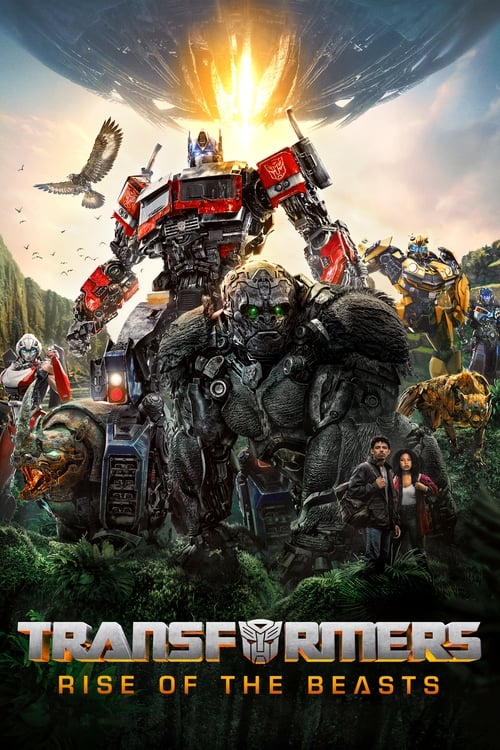
When a new threat capable of destroying the entire planet emerges, Optimus Prime and the Autobots must team up with a powerful faction known as the Maximals. With the fate of humanity hanging in the balance, humans Noah and Elena will do whatever it takes to help the Transformers as they engage in the ultimate battle to save Earth.
Why it received this score
Transformers: Rise of the Beasts arrives as a blockbuster that has thoroughly internalized the vocabulary of contemporary representation without necessarily committing to its substance. The film swaps the previous franchise's pale male leads for Anthony Ramos and Dominique Fishback, a choice that generated considerable industry discussion about diversity initiatives in tentpole filmmaking. Yet this recasting functions primarily as aesthetic adjustment rather than thematic exploration. The diverse cast members inhabit the story competently, but their presence generates no particular commentary on identity, power, or social structures. They are simply there, which represents progress of a sort, though perhaps not the sort that warrants extended cultural analysis. The film's progressive casting choices sit uneasily alongside its fundamental commitment to spectacle and property management. One observes the calculated nature of the diversity initiative, the press interviews emphasizing the "melting pot" of the ensemble, the careful placement of marginalized actors in roles of consequence. This is not malice. This is professionalism in an era when demographics are understood as market segments requiring calibrated representation. The 1990s setting provides no historical revisionism, and the giant robots smashing through cities generate no particular consciousness beyond the immediate demands of plot mechanics. Rise of the Beasts is a film that has absorbed the correct lessons about casting diversity without grappling with what such choices might actually mean.
Analysis generated by our Consciousness Algorithm
Critic Reviews
“Director Caple Jr. takes his time allowing Ramos and Fishback to develop their characters as they fight being marginalized and dismissed in ‘90s New York. They’re no mere cardboard characters but rather fully dimensional individuals, a rarity in “Transformers” movies.”
“Maybe giant robots that turn into cars, or in this case, animals, isn’t your deal. But despite the goofy premise and the formulaic nature of the story in Transformers: Rise of the Beasts, it isn’t that bad. ”
“The newest Transformers film, Rise of the Beasts, is a genuinely entertaining summer blockbuster, with its high point being Pete Davidson as Mirage. Highlighting a voice performance as the best quality of a film like Rise of the Beasts could be seen as damning with faint praise, but that's not the case here. Instead, it's an appreciation of how much Davidson's work enhances Beasts as a production, as these films continue to move away from Bay's super-serious vibe in favor of a new, lighter approach.”
“The only people to feel sorry for in Transformers: Rise of the Beasts are Anthony Ramos (“In the Heights”) and Dominique Fishback (“Swarm”) who play actual humans trying to save the planet, when in real life they’re just humans trying to save a movie. They’re fine, but they can’t make a dent in the awfulness.”