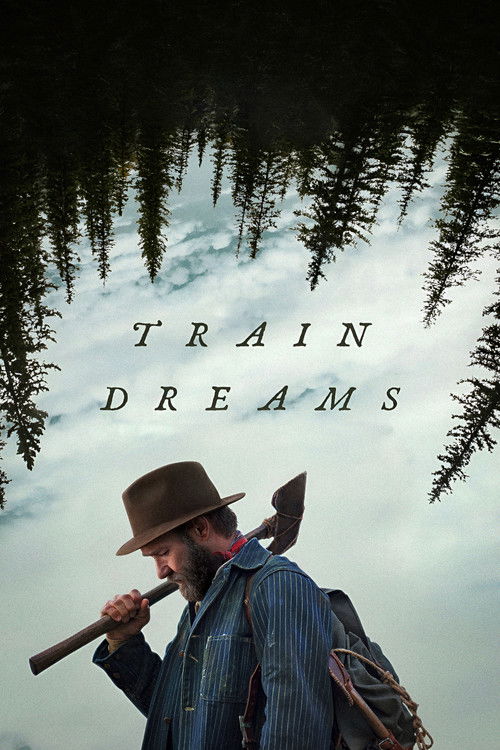
Train Dreams (2025)
Directed by Clint Bentley
No · Ultra Based
How we score movies →Consciousness Markers
The cast includes actors of various racial backgrounds, but this appears incidental to the narrative rather than a deliberate statement about representation. The diversity is present but not foregrounded.
While the cast includes actors of color, there is no evidence that the film engages with racial consciousness as a thematic concern in its narrative.
No evidence of LGBTQ+ themes or representation in the available plot description or cast information.
No indication of feminist critique or agenda in the narrative. The film does not appear to interrogate historical gender dynamics.
No evidence of climate consciousness or environmental messaging in a film about early 20th-century logging.
No indication of anti-capitalist messaging or critique of economic systems in the narrative.
No evidence of body positivity themes or representation in the available information.
No indication of neurodivergent characters or themes in the plot description.
The film appears to be a straightforward literary adaptation without evidence of revisionist historical framing.
No indication that the film privileges preachy messaging or explicit social instruction over narrative immersion.


Synopsis
A logger leads a life of quiet grace as he experiences love and loss during an era of monumental change in early 20th-century America.
Why it received this score
Train Dreams arrives as a period drama of studied restraint, content to observe the interior lives of its characters rather than interrogate the systems surrounding them. The film is set in early 20th-century America during industrial transformation, yet shows no interest in the ideological frameworks through which contemporary audiences might analyze such upheaval. Its cast includes actors of various backgrounds, though this diversity appears organic to the narrative rather than calculated as representation. The overall sensibility is one of classical storytelling, where emotional authenticity and individual experience take precedence over social commentary.
The film demonstrates minimal engagement with contemporary progressive sensibilities. There is no visible LGBTQ+ content, no emphasis on feminist critique of historical gender dynamics, no climate consciousness, and no systematic interrogation of capitalism or class structure. The narrative focuses on a logger's personal journey through love and loss, operating within a humanist rather than ideological register. One might detect faint traces of racial consciousness simply in the inclusion of actors of color in the ensemble, but this registers as incidental rather than intentional.
Train Dreams exists largely outside the contemporary cultural conversation. It represents a deliberate choice to prioritize artistic tradition over contemporary relevance, to tell a story about people experiencing universal human conditions in a specific historical moment. For those seeking films animated by modern progressive consciousness, this will register as negligible. For those valuing classical narrative craft and emotional specificity, its refusal to perform contemporary sensibilities may read as a modest virtue.
Analysis generated by our Consciousness Algorithm
Critic Reviews
“The passage of time is somehow both fluid and jagged in Clint Bentley’s soulful film of the Denis Johnson novella, Train Dreams. It flows or ambles or bumps along, passing over moments of joy, shock, discovery, lonesomeness or devastating sadness, but just as often over seemingly mundane experiences that only later reveal their significance when we look back.”
“In telling the seemingly unremarkable life story of one ordinary man, Clint Bentley’s trancelike film, based on Denis Johnson’s acclaimed 2012 novella, ruminates on the interconnectedness of all things, but it wears its metaphysics lightly. ”
“Past western, part romance, part philosophical treatise, this Sundance Film Festival stunner also feels like the greatest Terrence Malick film that Malick never made. ”
“For all its attempted ethereal touches, Train Dreams never settles on a track that delivers one.”