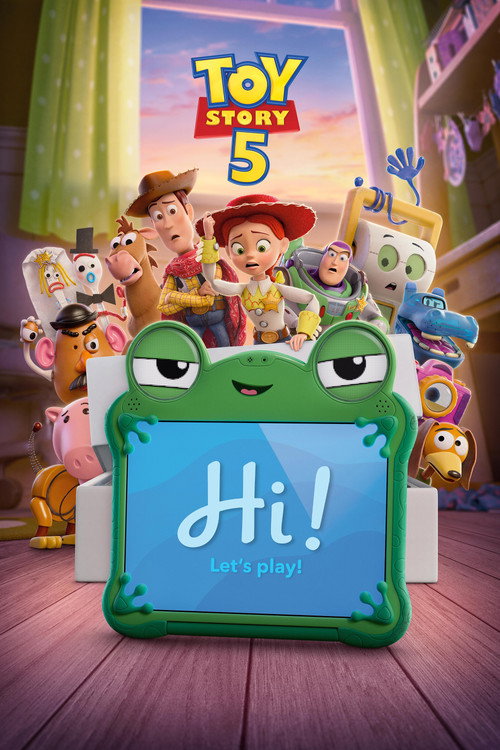
Toy Story 5 (2026)
Directed by Andrew Stanton · $475.6M domestic
No · Based
How we score movies →Consciousness Markers
The film's central conceit, toys versus screens as a metaphor for healthy versus unhealthy childhood, is an extended sermon on screen time delivered to children and their guilt-ridden parents simultaneously. NPR and USA Today both note parents are using the film as a conversation-starter about devices, which suggests the film is functioning as intended: as an animated TED Talk with a cowboy hat.
The new additions to the voice cast include Greta Lee and Mykal-Michelle Harris, bringing demographic diversity to the ensemble. Critics and cultural analysts broadly describe this as organic rather than pointed, which is precisely what one expects from a franchise that has always populated its toy box with variety.
The villain is a corporate tech product, a Lilypad tablet, and the film gestures toward Big Tech as a predatory force disrupting childhood. The critique is soft and some reviewers note it does not go far enough, but a faint 'tech monopoly bad' undertone is present.
No LGBTQ+ themes, characters, or subtext have been identified in the film. The toys remain resolutely uninterested in this particular frontier.
Jessie is present, as she has been since 1999, doing cowgirl things. No feminist agenda has been grafted onto her or any other character for this installment.
Race is not a thematic concern of the film. The diverse cast exists without the film drawing attention to it, which is the correct approach and earns no points here.
No climate themes are present. The existential threat in this film is a tablet computer, not a melting ice cap.
No body positivity themes are present. The toys have the same bodies they have always had, which is to say, plastic.
No neurodivergence themes or characters have been identified. Bonnie's tablet obsession is framed as a universal childhood behavior, not a clinical condition.
The film is set in the present day and engages in no historical revisionism. The past is left unmolested.
Synopsis
When Bonnie receives a Lilypad tablet as a gift and becomes obsessed, Buzz, Woody, Jessie and the rest of the gang's jobs become exponentially harder when they have to go head to head with the all-new threat to playtime.
Why it received this score
Toy Story 5 arrives bearing the full weight of a franchise that has, across three decades and four previous installments, already resolved every meaningful question about toy sentience, child abandonment, and the existential terror of the donation bin. Andrew Stanton, returning to a universe he helped build, has chosen to spend the fifth chapter on a new enemy: the tablet computer. The villain is a product called the Lilypad. It has a name, a mascot, and presumably a terms-of-service agreement that no one has read. Buzz, Woody, and Jessie must compete with it for Bonnie's attention, and the film frames this as a civilizational struggle of some urgency.
The screen-time message is delivered with the subtlety of a push notification set to maximum volume. Parents across America are reportedly bringing their children to see this film and then having Serious Conversations about devices on the drive home, which means Pixar has successfully produced a $200 million parenting pamphlet. The voice cast is diverse in the contemporary manner, with Greta Lee and others joining the ensemble in ways that feel, as critics have noted, organic rather than calculated. This is to the film's credit. It earns no points for simply casting people who exist. The anti-Big-Tech undercurrent is present but timid; the film gestures at corporate technology as a threat to childhood without following that thought anywhere uncomfortable, which some reviewers have flagged as a missed opportunity and others have flagged as a reasonable choice for a film aimed at six-year-olds.
The franchise continues. The toys endure. The message, that children should put down their screens and play with physical objects manufactured by other corporations, lands with the gentle irony that the film will be watched primarily on streaming services, on tablets, by children eating snacks. We note this without judgment. The Lilypad, presumably, takes no notes.
Analysis generated by our Consciousness Algorithm
Critic Reviews
“It’s a sublime summing up, a movie that reflects the whole series in its magic mirror, and (just maybe) a perfect ending.”
“The film itself doesn’t feel overly new, but smartly, smoothly evocative of the first installment.”
“Toy Story 5 is a movie for everyone. But if you're feeling down, if the world seems overwhelmingly bleak, or if you just need a reminder that your heart can still be touched, then forget the chores and see it. ”
“In a year where Disney gave us the utterly darling, and original, Hoppers, Toy Story 5 feels like a reheated lunch. ”