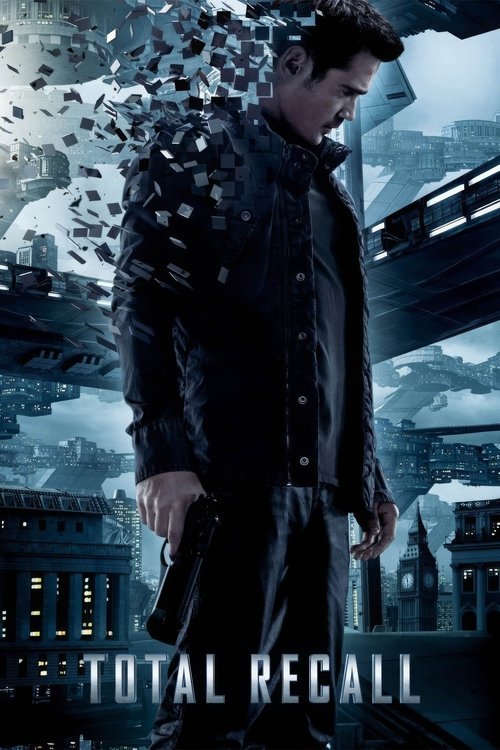
Total Recall (2012)
Directed by Len Wiseman
No · Ultra Based
How we score movies →Consciousness Markers
The cast includes actors of color in supporting roles, but their casting appears incidental to the narrative. No specific attention is paid to their identities or experiences.
Jessica Biel's character functions as a capable action partner, reflecting contemporary action cinema standards rather than any deliberate feminist engagement with gender dynamics.
The dystopian setting implies a critique of authoritarianism, but the film shows no interest in exploring capitalism, class dynamics, or economic systems as themes.
No LGBTQ+ themes, characters, or representation are present in the film.
The film contains no exploration of race, racial dynamics, or racial consciousness despite its diverse cast.
No climate-related themes or environmental consciousness are present in the film.
The film contains no engagement with body positivity or diversity in body representation.
No neurodivergent characters or themes are present in the film.
The film contains no historical narrative or revisionist engagement with historical events.
The film contains no preachy messaging or explicit instruction on social issues.


Synopsis
Factory worker Doug Quaid takes a virtual mind-trip vacation with the Rekall company, opting for implanted memories of being a spy. When the procedure goes wrong, Quaid becomes a wanted man by the police and joins forces with a rebel fighter to stop the evil Chancellor Cohaagen.
Why it received this score
Total Recall arrives as a textbook action remake, all neon-soaked cityscapes and choreographed violence, with the cultural awareness of a fire extinguisher. The 2012 iteration dutifully includes a diverse supporting cast, with John Cho, Bokeem Woodbine, and Will Yun Lee positioned in roles that demand no particular engagement with their identities or experiences. This represents the baseline of contemporary Hollywood casting practice rather than any deliberate commitment to representation. The film's central narrative concerns a working-class protagonist, yet the script shows no interest in exploring class dynamics, labor exploitation, or systemic inequality beyond their function as plot scaffolding.
The dystopian setting presents an authoritarian regime and colonized population, the raw material for social commentary that the film resolutely ignores. Instead, we receive an exercise in aesthetic spectacle: the camera pans across oppressive architecture while remaining entirely indifferent to oppression itself. The female lead, played by Jessica Biel, operates as a capable action partner, though this represents standard contemporary action cinema rather than any meaningful feminist engagement. The film treats her agency as a given without examining gender dynamics or power structures.
Total Recall contains progressive elements, but only incidentally, the way a highway contains wildflowers. The film is unconcerned with cultural consciousness of any kind, existing in a hermetically sealed bubble where social issues are irrelevant. This is not progressive cinema attempting and failing to engage with important themes. It is cinema that has decided such engagement is unnecessary for its purposes.
Analysis generated by our Consciousness Algorithm
Critic Reviews
“One of the most complex and visually interesting science fiction movies in a long time. ”
“Starts out as mind-bending futuristic satire and then turns relentless -- it becomes a violent, postpunk version of an Indiana Jones cliff-hanger.”
“A worthy entry in the dystopian cycle of SF movies launched by "Blade Runner" (including "The Terminator" and "Robocop"), this seems less derivative than most of its predecessors yet equally accomplished in its straight-ahead storytelling, with plenty of provocative satiric undertones and scenic details.”
“The overall effect is like wading through hospital waste. Verhoeven, who also directed the maliciously stylistic "Robocop," disappoints with this appalling onslaught of blood and boredom.”