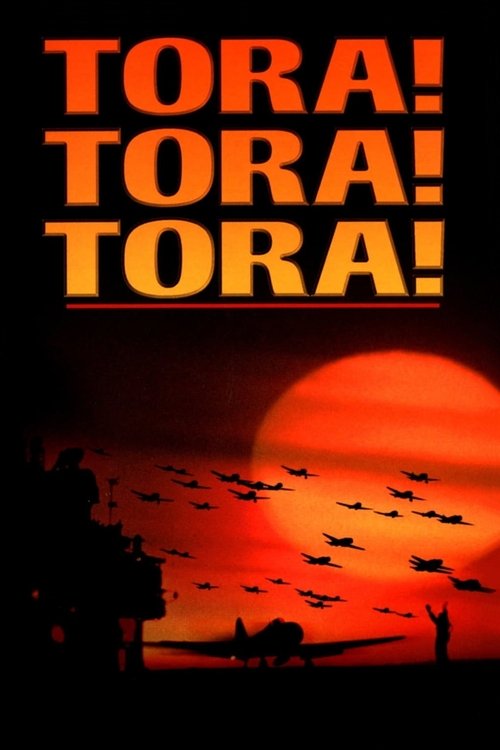
Tora! Tora! Tora! (1970)
Directed by Richard Fleischer
No · Ultra Based
How we score movies →Consciousness Markers
The film explicitly presents the Japanese perspective on Pearl Harbor with sympathy and complexity, including their strategic thinking and internal debates. This was genuinely progressive for 1970 American cinema.
Casting follows ethnic and national lines with Japanese actors playing Japanese roles and American actors playing American roles. This reflects 1970s practice without deliberate progressive intent.
While the film has documentary-like procedural detail, it avoids explicit moral lectures. However, the sheer accumulation of historical detail creates a quasi-educational atmosphere.
While the film treats Japanese characters with respect as military professionals, there is no metacommentary on race or racial systems. Japanese-Americans are absent from the narrative despite their historical presence.
The film is almost entirely male-centered, reflecting both the historical military context and 1970s filmmaking norms. No feminist critique or female agency is present.
The film depicts military-industrial systems and geopolitical conflict but makes no critique of capitalism or economic systems. War is presented as the result of political miscalculation rather than systemic economic forces.
No LGBTQ+ themes or characters present. The film focuses entirely on military and diplomatic proceedings with no romantic or personal subplots of significance.
No climate or environmental themes appear in this military historical drama about Pearl Harbor.
Body positivity concepts are entirely absent from this 1970 war film, which focuses on action and strategy rather than physical representation.
No representation of or engagement with neurodivergence. The film depicts military personnel as standard professional archetypes.


Synopsis
In the summer of 1941, the United States and Japan seem on the brink of war after constant embargoes and failed diplomacy come to no end. "Tora! Tora! Tora!", named after the code words used by the lead Japanese pilot to indicate they had surprised the Americans, covers the days leading up to the attack on Pearl Harbor, which plunged America into the Second World War.
Why it received this score
Tora! Tora! Tora! represents that rarest of specimens, a 1970 war film unconcerned with the fashionable progressive sensibilities that would later reshape Hollywood. This dual-perspective examination of Pearl Harbor stands as a monument to the old school of historical cinema, wherein events are presented with meticulous procedural detail rather than contemporary moral instruction. The film devotes itself to depicting military operations, diplomatic failures, and strategic miscalculations across two nations with remarkable even-handedness. Neither the Americans nor the Japanese receive hagiographic treatment, nor are they subjected to the kind of reflexive self-examination that would become standard practice after 2015.
The casting choices reflect the film's era. American actors inhabit American roles, Japanese actors inhabit Japanese roles, with no apparent effort to signal progressive consciousness through demographic representation. The film treats its Japanese characters as fully realized military professionals rather than as caricatures, which was not unremarkable for a 1970 American production, yet this naturalistic portrayal remains distant from the specific contemporary markers of cultural awareness. The narrative structure itself resists the pedagogical impulse. We are shown what happened and why from both sides. No one lectures us about systemic injustice or the structural violence of imperialism, though these things are present in the historical record.
The film's commitment is to technical accuracy and dramatic scope rather than to making a statement about power, identity, or social systems. This is precisely why its score remains so low. It is a serious historical work that happens to predate the entire vocabulary we use to discuss these matters. Measured against the specific markers of 2020s progressive cultural sensibility, it simply does not register. It is a film about history, not a film about what we should think about history.
Analysis generated by our Consciousness Algorithm
Critic Reviews
“It's rare for a feature film to attain the trifecta of entertaining, informing, and educating.”
“Watching real planes crashing into real planes on a runway is flatout exciting, and the bombing sequence here is easily the equal of anything that Michael Bay could do.”
“The careful balancing of the two sides produces its own interesting effect, however, showing how war goes from possible to inevitable, whatever the wishes on either side.”
“Tora! Tora! Tora! is one of the deadest, dullest blockbusters ever made.”