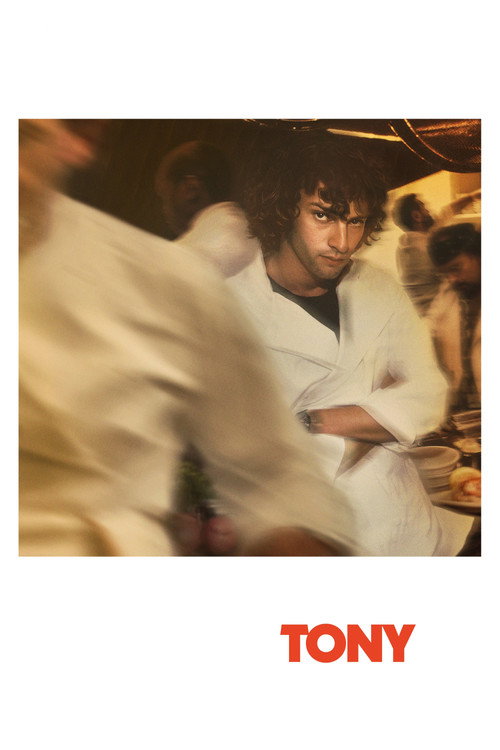
Tony (2026)
Directed by Matt Johnson · $11.0M domestic
No · Ultra Based
How we score movies →Consciousness Markers
The cast includes Antonio Banderas, Monica Raymund, and Michael Jibrin in substantive roles alongside the white male lead. The diversity reads as modern casting practice rather than thematic intent, and no character's background is foregrounded as a point of cultural commentary.
The film frames a Vassar-attending, middle-class protagonist being humbled by the physical and moral demands of service industry labor. There is class friction, but the film's resolution is personal accountability and work ethic, not systemic critique of capital.
The dual-mentor structure carries an implicit moral thesis about labor, discipline, and the correction of privilege. However, reviewers consistently noted that director Matt Johnson avoids moralizing, letting the narrative do its work without sermonizing directly at the audience.
The film is set in Provincetown, a historically significant queer haven, and critics at Out Magazine and Them noted the film is 'strangely un-gay,' largely sidelining the town's LGBTQ+ identity. Period-typical homophobic slurs appear in kitchen dialogue, but the film does not meaningfully engage with queer culture, making this a case of conspicuous absence rather than affirmation.
The film depicts a real historical figure's youth and received estate approval for doing so without hagiography. This is biographical portraiture, not ideological revisionism. The score reflects only the minor act of presenting a cultural icon as an arrogant, unlikable young man.
The film is structured around male mentorship and masculine coming-of-age with no identifiable feminist framework. Female characters exist in the narrative without serving an ideological function.
No racial consciousness themes are present. The diverse cast exists without the film drawing attention to race as a social or political subject.
No climate themes, environmental messaging, or ecological anxiety of any kind are present or reported.
No body positivity themes are present or reported in any review or commentary.
No neurodivergence themes are present or reported.
Synopsis
A 19-year-old Anthony Bourdain travels to Provincetown and stumbles into the chaotic world of a restaurant kitchen, setting off a summer that will shape the course of his life.
Why it received this score
A24 presents us with a young Anthony Bourdain, age nineteen, arriving in Provincetown in the summer of 1975 to be humbled by a commercial kitchen. This is, on its surface, a story about a privileged boy learning that the world does not require his opinions. Director Matt Johnson, by his own admission not a Bourdain devotee, approaches the material with the detachment of a man filing a tax return: thorough, accurate, and free of sentiment. The result is a coming-of-age film that declines, with some stubbornness, to celebrate its subject. This is rarer than it sounds.
The film's most culturally legible choice is what it leaves out. Provincetown in 1975 was, by any honest historical account, a landmark of American queer life. The film acknowledges this the way a restaurant menu acknowledges the existence of vegetables: technically, briefly, and without conviction. Critics at publications devoted to LGBTQ+ culture noticed. The period-appropriate slurs in the kitchen dialogue register as atmosphere rather than examination, and the town's identity becomes little more than a postcard backdrop for a heterosexual male education. Whether this constitutes a missed opportunity or admirable restraint from an A24 film is a question the film does not appear to have asked itself.
The progressive sensibilities on display are, by contemporary standards, modest. There is class consciousness of a kind: a Vassar student performing working-class authenticity while actual working-class people do the same job without the identity crisis. The film notices this irony. It does not, however, deliver a lecture about it, which, in the current landscape of biographical drama, qualifies as a form of discipline in itself. Antonio Banderas as the chef provides the film's moral center through craft and silence. The lesson, such as it is, is that kitchens do not care about your self-image. For a film distributed by A24, this is practically conservative.
Analysis generated by our Consciousness Algorithm
Critic Reviews
“No man in the film is a complete picture of healthy masculinity, but "Tony" seems to honestly reflect that issue both for 1975 and the present.”
“Tony doesn’t give Tony too much growth by the end, but it does highlight some core values that Bourdain would express in his work as an adult: The pleasure of creation, the beauty of consumption, and the power of the unassuming and unexpected.”
“Matt Johnson creates a film that bridges the faux-doc jitteriness of his earlier work with the richness of classic one-perfect-summer cinema.”
“If something seems cheesy in “Tony,” it was likely added in to create drama.”