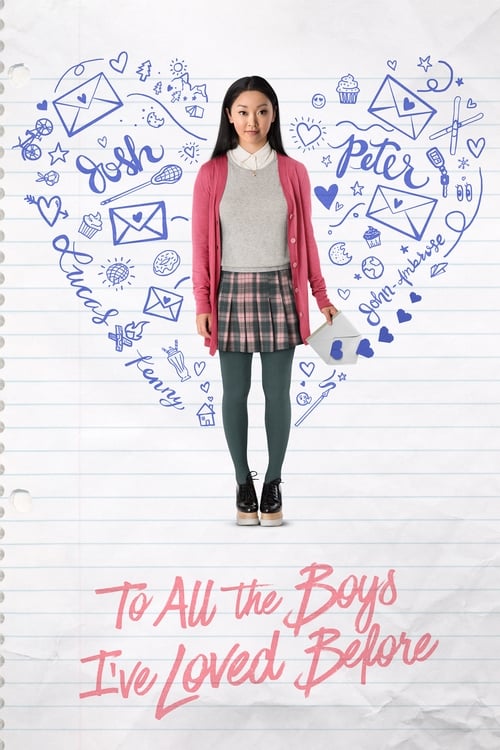
To All the Boys I've Loved Before (2018)
Directed by Susan Johnson
Partly · Woke-Adjacent
How we score movies →Consciousness Markers
Asian-American protagonist in a mainstream teen romance, a historically rare occurrence. Supporting cast includes diverse actors in non-stereotypical roles, though diversity is presented as normative rather than explicitly addressed.
The film validates cross-racial attraction and normalizes an Asian-American protagonist without restriction, but avoids explicit engagement with racism or systemic racial dynamics. Representation through normalization rather than critique.
Lara Jean demonstrates agency and makes her own choices, rejecting passive victimhood. However, the film's ultimate investment in romantic resolution limits deeper feminist interrogation of relationships and desire.
The film maintains a light comedic tone and generally avoids preachy instruction. Minimal explicit messaging about social consciousness, though the representation itself carries implicit cultural commentary.
No LGBTQ+ themes, characters, or representation present in the film. The narrative focuses exclusively on heterosexual relationships.
No climate themes, environmental consciousness, or references to ecological concerns appear in the film.
No anti-capitalist messaging or critique of economic systems. The film operates within conventional consumer culture without comment or resistance.
No body positivity messaging or representation of diverse body types. The film features conventionally attractive actors without thematic engagement with body image or acceptance.
No neurodivergent characters or representation. No engagement with autism, ADHD, dyslexia, or other neurological differences.
No historical reinterpretation or revisionist engagement with history. The film is set in contemporary high school with no historical dimension.


Synopsis
Lara Jean's love life goes from imaginary to out of control when her secret letters to every boy she's ever fallen for are mysteriously mailed out.
Why it received this score
To All the Boys I've Loved Before arrives as a cultural artifact of genuine historical significance, though perhaps not in the way progressive critics might have hoped. The film's primary contribution to contemporary cinema is not ideological activism but rather the simple, almost revolutionary act of centering an Asian-American protagonist in a mainstream teen romance. Lana Condor's Lara Jean Covey exists in a narrative universe where her ethnicity is neither invisible nor the subject of constant interrogation. The supporting cast reflects a casual multiculturalism that feels organic to the story rather than imposed from above. The film presents an interracial romantic relationship without the ponderous "very special episode" energy that typically accompanies such representations in American media.
What the film fundamentally lacks is any impulse toward social commentary or ideological instruction. There are no lectures about systemic racism, no deconstructions of capitalism, no environmental consciousness, and no neurodivergent representation. The feminist elements are present but modest: Lara Jean makes her own choices and rejects passive victimhood, yet the narrative remains deeply invested in romantic resolution. The film is not particularly interested in interrogating the structures it inhabits. It simply proceeds as though an Asian-American girl's romantic life deserves the same comedic treatment and emotional investment as anyone else's, which in 2018 felt genuinely transgressive.
The cultural reception of this film reveals the peculiar moment it occupied. Progressive critics hailed it as a breakthrough precisely because it offered visibility without the burden of representing an entire racial category or delivering explicit social messages. Simultaneously, the film's very success illustrated how low the baseline for representation had been. That a charming, lightweight romantic comedy could become a watershed moment in Hollywood's racial reckoning speaks volumes about the industry's historical indifference. The film operates at perhaps 52 degrees on the cultural consciousness scale: present but not insistent, progressive in its casting choices but fundamentally uninterested in progressive pedagogy.
Analysis generated by our Consciousness Algorithm
Critic Reviews
“There’s emotional complexity, making it work for more than just its key demo.”
“Ms. Johnson directs the picture with an assurance that matches that of her plucky protagonist.”
“Every beat of the film might be obvious, but that doesn’t detract from the enjoyability of watching an indelible young heroine like Lara Jean figure out her own life and just maybe fall in love in the process.”
“First-time feature writer Sofia Alvarez’s attempt to shrink Han’s lengthy, largely internal, and culturally specific story into a 97-minute movie is, simply put, a botch job. Stilted and scattered and strangely cold in its cinematography, it’s a handsomely shot whole lotta nothin’.”