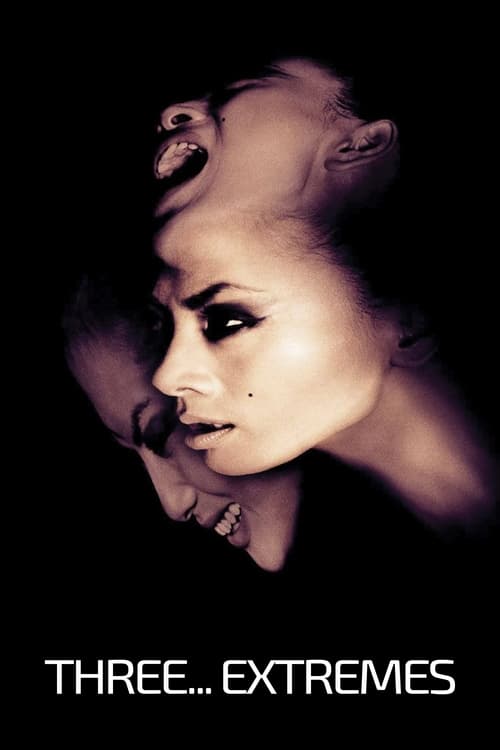
Three... Extremes (2004)
Directed by Fruit Chan
No · Ultra Based
How we score movies →Consciousness Markers
Dumplings involves female beauty standards and aging, but presents these as body horror and moral corruption rather than feminist critique or sympathy.
The film occasionally veers toward cautionary implications about beauty and desire, but primarily pursues visceral impact over preachy messaging.
The film features Asian directors and cast, but this reflects the organic context of pan-Asian cinema rather than modern progressive representation efforts.
No LGBTQ+ themes or representation present in any of the three segments.
While the film celebrates Asian directors, it engages in no modern progressive racial consciousness discourse or examination of systemic inequality.
No environmental themes or climate-related content present.
The film contains no critique of capitalism, wealth systems, or class structures.
The film actively rejects body positivity, centering on body horror, grotesque modification, and transgression against bodily integrity.
No representation or thematic engagement with neurodivergence.
No historical content or revisionist historical narratives present.


Synopsis
Features an anthology centred on the experiences of a witch doctor, a film-maker and a disgruntled extra determined to take revenge on him, and a novelist as well as her twin sister.
Why it received this score
Three... Extremes arrives as a deliberately transgressive horror anthology from three accomplished Asian auteurs, each crafting a 40-minute nightmare from their respective national traditions. The film makes no gestures toward contemporary progressive sensibilities. Instead, it pursues shock and provocation with the single-minded focus of a surgeon wielding a scalpel. Fruit Chan's "Dumplings" segment, which frames the collection, concerns itself with an actress pursuing grotesque body modification for youth and beauty. The film presents this not as sympathetic commentary on beauty standards but as a descent into moral and physical corruption. The other segments follow similar trajectories into transgression and body horror.
What becomes clear upon examination is that this work operates entirely outside the framework of modern social consciousness. Its transgressive content is not deployed to critique systems of power or advance progressive causes. Rather, the transgression exists for its own sake, as an end in itself. The film's interest lies in testing boundaries and violating taboos, not in examining the social structures that create beauty standards or examining representation in any modern sense. The cast is predominantly Asian, but this reflects the film's origin in pan-Asian cinema networks rather than any conscious effort toward diverse representation.
The anthology confirms what one might suspect: extreme horror cinema from the early 2000s occupied an entirely different cultural and critical space. It pursued visceral impact and artistic provocation without reference to the constellation of social consciousness markers that would later become commonplace. This is transgressive art made in earnest, not transgressive art deployed as a vehicle for social messaging. The film remains effective as horror precisely because it refuses to lecture or explain itself through any contemporary ideological lens.
Analysis generated by our Consciousness Algorithm
Critic Reviews
“So here it is, an arena rock type film event for lovers of Asian cinema. Good news is that you won’t have that annoying ringing in your ears the day after. Better news is that you’ll have food for thought way after witnessing these spectacles.”
“What all three of these stories share is the quality found in Edgar Allan Poe, H.P. Lovecraft and Stephen King: An attention to horror as it emerges from everyday life as transformed by fear, fantasy and depravity.”
“There's a sense of diminishing returns here -- "Extremes" leads with its strongest short and ends with its most esoteric. But all three offer provocative, distinct and gorgeous twists on horror and splatter conventions.”
“All three look great and the filmmakers deliver a certain artiness, but their overall triviality and the unpleasantness of the first two make for an extremely distasteful experience.”