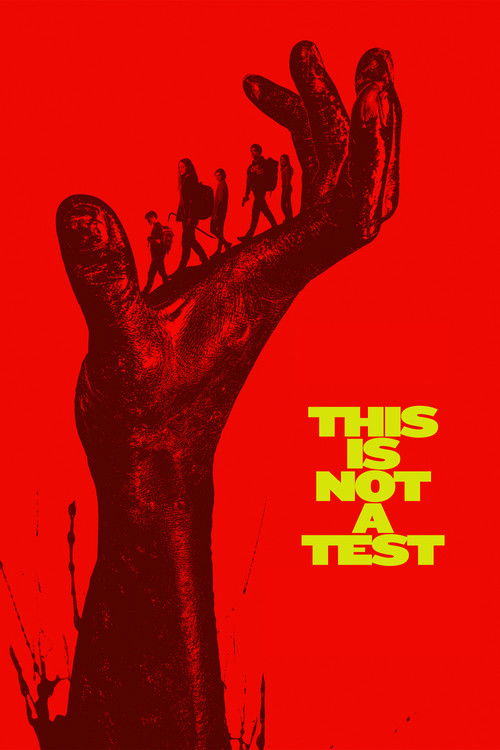
This Is Not a Test (2026)
Directed by Adam MacDonald
Partly · Woke-Adjacent
How we score movies →Consciousness Markers
The ensemble cast includes racial diversity with Corteon Moore and Froy Gutierrez in significant roles. Casting appears intentional rather than incidental, though the film avoids making representation itself a narrative focal point.
The protagonist is female and agency-driven, though her arc centers on survival and emotional growth rather than systematic critique of patriarchal structures. The film engages with abuse as personal trauma rather than as a broader feminist statement.
While the cast includes racial diversity, critical reception suggests the film does not foreground racial consciousness as a thematic element. Diversity appears compositional rather than ideologically explicit.
The film's engagement with mental health, suicidality, and emotional damage suggests oblique neurodivergence representation, though framing remains more trauma-focused than neurodiversity-affirming.
Critical reception emphasizes the film's restraint from preachy messaging. Characters' arcs involve emotional revelation rather than characters delivering explicit ideological instruction to one another.
Set within a high school during an apocalypse, the film does not appear to engage with capitalist critique or systemic economic commentary. Class consciousness remains background rather than foreground.
The film contains graphic violence and body horror inherent to the zombie genre. No evidence suggests deliberate body positivity messaging, which would be incongruous with the genre's visual language.
As a contemporary zombie apocalypse set in a high school, the film does not engage with historical revisionism or reframing of past events.
No significant LGBTQ+ themes or representation are evident in available plot descriptions or critical reception. The film does not appear to engage meaningfully with queer identity or relationships.
The apocalypse is driven by a zombie outbreak, not environmental catastrophe. Climate consciousness is entirely absent from the film's framework.

Synopsis
Sloane and four classmates take cover in Cortege High to escape a world plagued by the infected. As danger relentlessly pounds on the doors, Sloane begins to see the world through the eyes of those who actually want to live and takes matters into her own hands.
Why it received this score
Adam MacDonald's adaptation of Courtney Summers' 2012 novel presents a zombie apocalypse through the lens of damaged teenagers, each carrying their own interior wounds alongside the existential threat. The film distinguishes itself by refusing to soften the source material's emotional brutality, a choice that carries both artistic and ideological weight. Sloane Price, played by Olivia Holt, functions as the narrative's emotional center, a suicidal abuse survivor whose arc involves learning to value survival itself, which the film treats with a seriousness that borders on therapeutic.
The cast composition reflects contemporary casting sensibilities without reducing any character to a mere demographic checkbox. Corteon Moore appears in a supporting role within an ensemble that includes Froy Gutierrez and Luke Macfarlane, suggesting a deliberate effort toward racial and gender representation in a genre space historically dominated by whiteness. The film's treatment of mental health, abuse, and suicidality marks its most significant engagement with modern progressive consciousness, though such engagement remains firmly within the genre's established framework of trauma as narrative fuel rather than as an explicit social critique demanding viewer reckoning.
Where the film resists the current moment's more demonstrative gestures is in its refusal to pause for preachy lectures about systems of oppression or to position its characters' suffering as a platform for abstract political consciousness. The zombie outbreak functions as a pressure cooker rather than an allegory, and the teenagers' survival depends on mutual recognition rather than ideological alignment. This restraint, whether intentional or circumstantial, leaves the film occupying an uncertain middle ground between genuine artistic commitment to its characters' interiority and a more conventional horror framework that occasionally threatens to instrumentalize their damage.
Analysis generated by our Consciousness Algorithm
Critic Reviews
“This Is Not a Test won't give you shivers, but its zombie invasion will leave you hopeful.”
“What’s mostly lacking is a matter of character-enhancing detail, the kind that would better integrate the movie’s high-concept thrills with its heartstring-tugging melodrama. Soapy’s not bad, but “This is Not a Test” lacks the sensationalism or sensitivity to make it more than a wan misfire.”
“This Is Not a Test suggests a filmmaker content to operate within the familiar confines of the horror genre rather than push beyond them.”
“The film struggles to bring its non-zombie characters to life.”