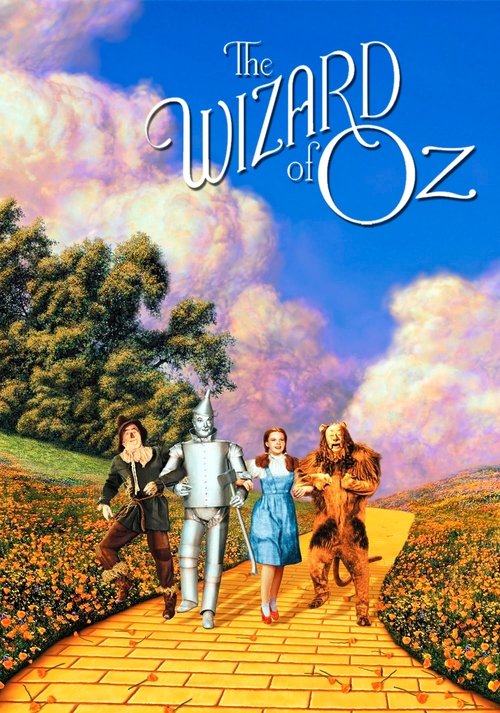
The Wizard of Oz (1939)
Directed by Victor Fleming
No · Ultra Based
How we score movies →Consciousness Markers
Dorothy displays agency and courage, but within conventional gender frameworks. The female characters are ultimately passive or punished. No systemic critique of gender structures exists.
The original L. Frank Baum novel contained populist critiques of capitalist systems, but the film adaptation strips away such political content in favor of pure fantasy adventure.
The cast consists entirely of white actors in all significant roles. No meaningful diversity of any kind is present.
No LGBTQ+ themes, representation, or subtext of any kind. The film operates within strictly heteronormative frameworks.
The film contains no racial consciousness whatsoever. Race is simply not a consideration in the narrative or visual language.
Environmental themes are entirely absent from the film. The fantasy world exists without any ecological commentary.
The film contains no body positivity messaging. All characters conform to conventional physical ideals of the era.
Neurodivergence is not represented or considered in any meaningful way within the narrative.
The film contains no historical narrative that could be revisionist in nature. It exists in pure fantasy.
The film prioritizes entertainment and emotional storytelling over preachy messaging. No characters lecture about social issues.


Synopsis
Young Dorothy finds herself in a magical world where she makes friends with a lion, a scarecrow and a tin man as they make their way along the yellow brick road to talk with the Wizard and ask for the things they miss most in their lives. The Wicked Witch of the West is the only thing that could stop them.
Why it received this score
The Wizard of Oz remains a towering achievement of cinema craft, yet from the vantage point of contemporary cultural analysis, it functions as a museum piece of pre-modern sensibilities. The film's depiction of a young girl finding agency and courage in a fantastical realm might seem progressive for 1939, but we must distinguish between general humanist storytelling and the specific constellation of contemporary progressive markers that define modern social consciousness. Dorothy's journey emphasizes self-reliance and emotional growth rather than any systematic critique of social structures or institutional power.
The film's casting and characterization present the clearest evidence of its historical distance from modern progressive sensibilities. Every significant role goes to white actors, with no meaningful representation of racial or ethnic diversity. The female characters, while not entirely passive, exist within firmly conventional gender frameworks. The Wicked Witch is punished with spectacular violence, while the Good Witch embodies passive, maternal benevolence. There is no interrogation of these dynamics, no layering of subtext suggesting awareness of gender constructs. The entire enterprise operates according to the entertainment logic of its era, which is to say it operates according to no contemporary progressive logic at all.
What makes this scoring exercise somewhat absurd is that the film predates the cultural moment it is being evaluated against by nearly a century. It is not woke because wokeness did not exist. It is not anti-woke either. It simply exists in a different moral and aesthetic universe, one where the primary concerns were spectacle, narrative coherence, and the emotional satisfaction of audiences. To score it at all is to commit a category error, but here we are.
Analysis generated by our Consciousness Algorithm
Critic Reviews
“Not only is it wonderfully entertaining, but the issues it addresses, and the way it presents them, are both universal and deeply personal. And therein lies The Wizard of Oz's true magic. ”
“This wonderful romp of a movie looks magical on the big screen: colors are a picnic for the eyes, details loom so clearly you can practically touch them and there's a sense of the larger-than-life with a film that's already larger than life. ”
“This is one vintage film that fully lives up to its classic status and should play with outstanding success to contemporary audiences of all ages.”
“Fantasy is still Walt Disney’s undisputed domain. Nobody else can tell a fairy tale with his clarity of imagination, his simple good taste, or his technical ingenuity. This was forcibly borne in on me as I sat cringing before M-G-M’s Technicolor production of The Wizard of Oz, which displays no trace of imagination, good taste, or ingenuity.”