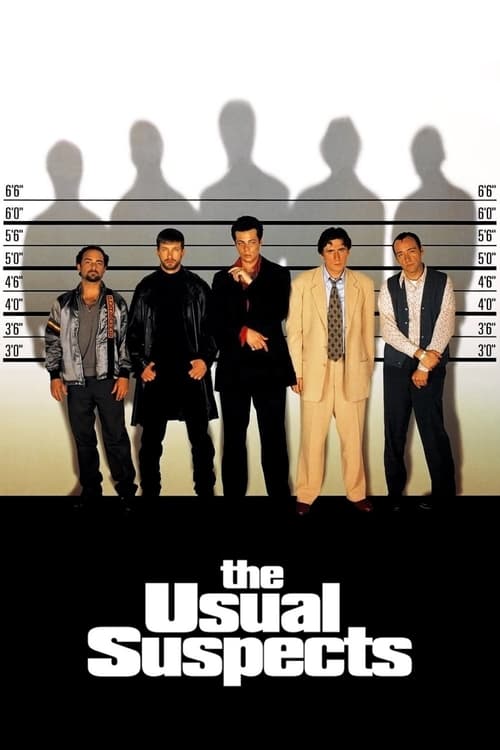
The Usual Suspects (1995)
Directed by Bryan Singer
No · Ultra Based
How we score movies →Consciousness Markers
The cast includes actors of various ethnic backgrounds, but this reflects basic casting diversity rather than deliberate representation. Female character presence is minimal and functional.
Actors of color participate in the narrative, but the film contains no racial consciousness or commentary on systemic issues.
The interrogation room setting involves exposition and explanation, but this serves plot mechanics rather than preachy messaging.
Female characters exist peripherally and serve plot functions. No feminist agenda or gender consciousness shapes the story.
The heist plot involves criminals stealing money, but this operates as genre mechanics rather than systemic critique.
No LGBTQ+ themes, characters, or subtext appear in the narrative.
No climate themes or environmental consciousness appear in the film.
No body positivity messaging or body-related consciousness is present in the film.
No neurodivergence representation or related themes appear in the narrative.
The film contains no historical revisionism or reframing of historical events.


Synopsis
Held in an L.A. interrogation room, Verbal Kint attempts to convince the feds that a mythic crime lord, Keyser Soze, not only exists, but was also responsible for drawing him and his four partners into a multi-million dollar heist that ended with an explosion in San Pedro harbor – leaving few survivors. Verbal lures his interrogators with an incredible story of the crime lord's almost supernatural prowess.
Why it received this score
The Usual Suspects represents a particular strain of mid-1990s crime cinema: aggressively male-centered, narratively ingenious, and entirely unconcerned with any form of social consciousness. The film's ensemble cast includes actors of various ethnic backgrounds, but this operates strictly as casting rather than any deliberate effort toward representation. Suzy Amis appears as a female character whose primary function is to advance the plot, a choice that reflects the genre conventions of its era rather than any progressive sensibility. The film's five male leads dominate the narrative completely, and the story makes no attempt to interrogate the masculinity on display or explore any dimension of gender dynamics beyond heterosexual attraction.
There is nothing in this film's thematic architecture that engages with progressive cultural concerns. No LGBTQ+ themes exist within the narrative. No racial consciousness inflects the story beyond the fact that actors of color participate in a crime plot. No feminist agenda shapes the female characters or their roles. The anti-capitalist impulse, if present at all, amounts to basic heist movie mechanics: criminals steal money. This is not a critique of wealth or systems but a plot device. Climate concerns, body positivity, neurodivergence representation, revisionist history, and lecture energy all register at zero.
The film's cultural moment was 1995, when mainstream cinema had not yet absorbed the sensibilities that would become dominant in the 2020s. "The Usual Suspects" is a product of its time, constructed with the priorities and blind spots of its era intact. It remains an effective narrative exercise, but one that operates entirely outside the framework we are assessing.
Analysis generated by our Consciousness Algorithm
Critic Reviews
“The Usual Suspects is an ironic, bang-up thriller about the wages of crime. A terrific cast of exciting actors socks over this absorbingly complicated yarn that's been spun in a seductively slick fashion by director Bryan Singer.”
“This movie has everything but Humphrey Bogart, and I'm sure he's sorry he was unavailable.”
“A near-classic blend of mystery, personality, humor and terror, laced with one stunning shock after another. [18 August 1995, Friday, p.C]”
“To the degree that you will want to see this movie, it will be because of the surprise, and so I will say no more, except to say that the "solution," when it comes, solves little - unless there is really little to solve, which is also a possibility.”