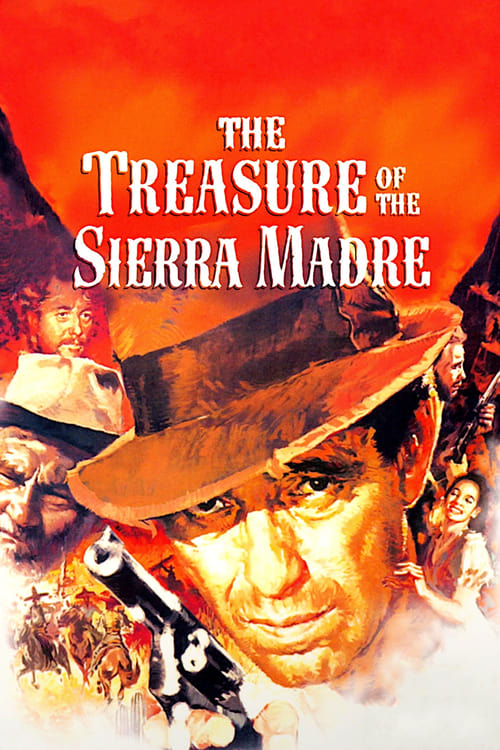
The Treasure of the Sierra Madre (1948)
Directed by John Huston
No · Ultra Based
How we score movies →Consciousness Markers
The film functions as a critique of greed and the corrupting influence of gold, with the moral arc suggesting that capitalist desire leads to madness and destruction. However, this critique remains implicit rather than ideological.
Bogart's character's descent into paranoia and psychological breakdown approaches depiction of mental instability, though it is portrayed as moral corruption rather than neurodivergence or mental illness requiring compassion.
Mexican actors are cast in minor roles as bandits and villagers, but they are depicted as largely interchangeable threats rather than fully realized characters. The main roles are reserved for white American actors.
While the film depicts Mexican characters and landscape, it does so without genuine engagement with Mexican culture or perspective. Mexican bandits function as generic antagonists rather than characters with agency or nuance.
The film trusts its narrative to convey its moral lessons about greed without preachy explanation. Its approach is subtle rather than preachy, though the moral message remains clear.
No LGBTQ+ themes or representation. The film is entirely focused on male relationships in a traditional heterosexual framework.
Women are essentially absent from this adventure narrative. No female characters of significance appear in the film.
No environmental or climate themes present. The natural landscape is treated as setting rather than subject of moral consideration.
No themes related to body positivity or body acceptance. The film is indifferent to these concerns.
The film makes no attempt to revise historical narratives or challenge established accounts. It accepts conventional Hollywood framings without interrogation.


Synopsis
Two jobless Americans convince a prospector to travel to the mountains of Mexico with them in search of gold. But the hostile wilderness, local bandits, and greed all get in the way of their journey.
Why it received this score
John Huston's 1948 masterwork remains a morality tale of unchecked greed and the corruption that gold inspires in men, themes that resonate across the decades with a kind of timeless fatalism. Humphrey Bogart's descent into paranoia and moral dissolution is the film's true treasure, a character arc so complete in its trajectory toward ruin that we watch it the way we might observe a perfect demonstration of entropy. The film's primary weakness from a contemporary perspective lies not in what it attempts but in what it refuses to see: the Mexican landscape and its people exist primarily as scenery and obstacles to the American protagonists' ambitions.
The film predates modern progressive sensibilities by a generation, which is to say it operates according to entirely different rules. Mexican characters are portrayed with a degree of exoticism and menace that reflects the Hollywood conventions of the 1940s rather than any sustained commitment to cultural consciousness. The bandits who threaten the prospectors are presented as one-dimensional villains, their nationality and appearance the sum total of their characterization. This is not revisionist history so much as unreflective history, the casual erasure that comes from assuming the audience cares only about the white American characters' interior lives.
The film's genius lies in its exploration of masculine paranoia and the corrupting influence of desire, themes that feel almost prescient in their psychological depth. Yet this very sophistication exists alongside a profound incuriosity about the world beyond the American characters' consciousness. We are asked to witness the tragedy of greed without being asked to consider the perspectives of those whom that greed displaces. It is a film of considerable artistic merit and minimal social consciousness, a combination that marks it as a product of its era: ambitious in some dimensions, entirely unreflective in others.
Analysis generated by our Consciousness Algorithm
Critic Reviews
“The movie has never really been about gold but about character, and Bogart fearlessly makes Fred C. Dobbs into a pathetic, frightened, selfish man -- so sick we would be tempted to pity him, if he were not so undeserving of pity.”
“Like "The Searchers", this is so brilliant that the only real effect of the other versions is to make you want to watch the original again.”
“Mr. Huston has shaped a searching drama of the collision of civilization's vicious greeds with the instinct for self-preservation in an environment where all the barriers are down. And, by charting the moods of his prospectors after they have hit a vein of gold, he has done a superb illumination of basic characteristics in men. One might almost reckon that he has filmed an intentional comment here upon the irony of avarice in individuals and in nations today...But don't let this note of intelligence distract your attention from the fact that Mr. Huston is putting it over in a most vivid and exciting action display. ”
“Outrageously Oscar-seeking performances like actor Huston's, coupled with director Huston's comparative conviction with action sequences, work against any yearning for significance. There's a quite enjoyable yarn buried under the hollow laughter. ”