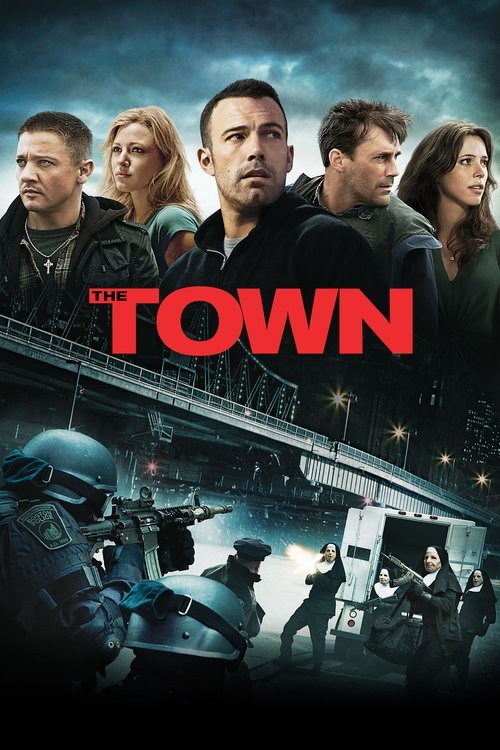
The Town (2010)
Directed by Ben Affleck
No · Ultra Based
How we score movies →Consciousness Markers
Rebecca Hall appears as a bank manager with professional authority, but she functions primarily as a love interest for the male protagonist. No meaningful diversity in the ensemble cast.
Working-class Boston setting and criminal protagonists could suggest critique of capitalism, but the film frames crime as personal choice and masculine honor rather than structural inequality.
No LGBTQ characters, themes, or representation present in the film.
Female characters exist to advance male narratives. The female hostage develops romantic feelings for her captor without critical examination.
No exploration of racial themes or systemic racism. Cast is entirely white, setting is Boston working-class with no racial commentary.
No environmental themes or climate-related content present.
No body diversity representation or body positivity themes present.
No neurodivergent characters or representation.
Contemporary crime thriller with no historical revision or reframing of past events.
Film presents narrative without preachy messaging or lectures about social issues.


Synopsis
Doug MacRay is a longtime thief, who, smarter than the rest of his crew, is looking for his chance to exit the game. When a bank job leads to the group kidnapping an attractive branch manager, he takes on the role of monitoring her – but their burgeoning relationship threatens to unveil the identities of Doug and his crew to the FBI Agent who is on their case.
Why it received this score
The Town is fundamentally a pre-2015 heist thriller with conventional gender dynamics and no discernible engagement with progressive social consciousness. The film centers a group of working-class male criminals and treats its female characters as romantic interests and emotional anchors rather than fully realized subjects of the narrative. The cast is entirely white, the film contains no LGBTQ themes, no discussion of systemic inequality, no environmental consciousness, and no neurodivergent representation. The working-class Boston setting could suggest some anti-capitalist sentiment, but the narrative frames criminality as personal tragedy and masculine honor rather than structural critique.
The film operates squarely within the conventions of the male-dominated heist genre, where women exist primarily to complicate the emotional stakes of the male protagonists. Rebecca Hall's character is a hostage who develops feelings for her captor, a dynamic that the film presents without irony or critical distance. Blake Lively's role as a junkie girlfriend serves to illustrate the collateral damage of her boyfriend's criminal life, but she is not given agency or depth. The film's moral universe is entirely masculine and operates on codes of loyalty, violence, and redemption that have nothing to do with contemporary progressive consciousness.
This is a competent crime drama from 2010, a period when such films were not expected to engage with representation, diversity, or social justice themes. Its cultural moment predates the emergence of the specific markers we evaluate. The film succeeds entirely on its own terms as entertainment and craft. It is not trying to be progressive and should not be penalized for existing as a product of its era.
Analysis generated by our Consciousness Algorithm
Critic Reviews
“A rich, dark, pulpy mess of entanglements that fulfills all the requirements of the genre, and is told with an ease and gusto that make the pulp tasty.”
“If "Heat" and "The Departed" had a baby, the result might come close to The Town, a riveting and explosive crime thriller and one of the year's best pictures. ”
“As a thriller, The Town has what it takes and then some.”
“An autopsy for The Town would list multiple causes of death.”