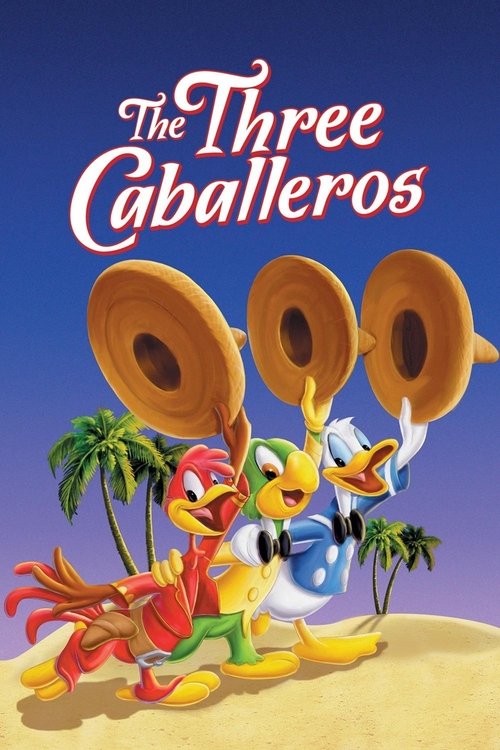
The Three Caballeros (1944)
Directed by Norman Ferguson
No · Ultra Based
How we score movies →Consciousness Markers
While the cast includes Latin American performers, they are employed primarily to voice stereotypical characters and provide exotic flavor. Their presence does not translate to meaningful representation.
The film demonstrates zero racial consciousness in the modern sense. Latin American peoples are rendered as exotic others rather than subjects worthy of genuine representation.
Female characters are decorative, sexualized, and lack agency. They exist to be observed rather than to drive narrative or possess depth.
Body types are caricatured for comedic effect, with no attempt at inclusive representation of human diversity.
No LGBTQ+ themes, representation, or subtext present in the film. This is a family entertainment product of 1944 wartime diplomacy.
No climate consciousness or environmental themes present. The natural world serves as scenery for adventure.
The film contains no critique of capitalism or class structures. It is a capitalist product promoting American cultural hegemony.
No representation of or engagement with neurodivergence. The film predates contemporary discourse entirely.
The film does not engage with history in any form, revisionist or otherwise. It is entertainment built on stereotypes rather than historical engagement.
The film contains no preachy intent or lecturing about social issues. It simply presents its stereotypes as entertainment without commentary.


Synopsis
For Donald's birthday he receives a box with three gifts inside. The gifts, a movie projector, a pop-up book, and a pinata, each take Donald on wild adventures through Mexico and South America.
Why it received this score
The Three Caballeros exists as a historical artifact of wartime cultural diplomacy, not a work of progressive consciousness. Released in 1944 as part of the Good Neighbor Policy, Disney's venture into Latin American animation was designed to secure regional allegiances during World War II, and it shows. The film trades in the visual vocabulary of exoticized stereotypes, rendering Mexico and South America as spaces of colorful chaos populated by caricatured figures who exist primarily for the amusement of an American audience. Donald Duck remains the emotional center, while the surrounding landscape and its inhabitants serve as backdrop.
The actual representation on screen is relentlessly limited. Female characters exist as decorative elements, typically designed to be aesthetically pleasing in ways that align with mid-century American standards of sexualization rather than dignity. The male characters speak in accents and embody tropics-adjacent caricatures that range from the patronizing to the outright offensive. There is no attempt at genuine cultural understanding, no space where Latin American perspectives might exist independently of American observation. Instead, we receive a tourist's view of tourism, mediated through the particular anxieties and desires of 1940s Hollywood.
What redeems the film from contemporary perspective is precisely its historical honesty. It does not pretend to be something it is not. The stereotyping is so thoroughgoing, so unabashedly of-the-moment, that it functions almost as an unintentional documentary of American attitudes circa 1944. Modern audiences can examine it as evidence rather than entertainment. Yet this very quality means that by the standards of contemporary cultural consciousness, the film is fundamentally a product of its era's casual racism and gender politics, however much we might contextualize those facts.
Analysis generated by our Consciousness Algorithm
Critic Reviews
“A smashing follow-up to SALUDOS AMIGOS, this is one of the most dazzling achievements of the cartoon genre.”
“One of the forgotten masterworks of Disney animation...No other Disney feature achieved this level of exuberant abstraction, or displayed the same sheer pleasure in the magic of the animator's art. ”
“It’s a gay, colorful, resplendent conceit. Neatly conceived, it ties in many Pan-American highlights through the medium of irascible Donald Duck, the wiseguy Joe Carioca (first introduced in Saludos Amigos), and a lovable character in Panchito, the little South American boy.”
“That rare event, a Disney failure...The movie as a whole presents the unhappy spectacle of a brilliant artist screaming his lungs out in an effort to make up for the fact that he has, for the moment, nothing to say.”