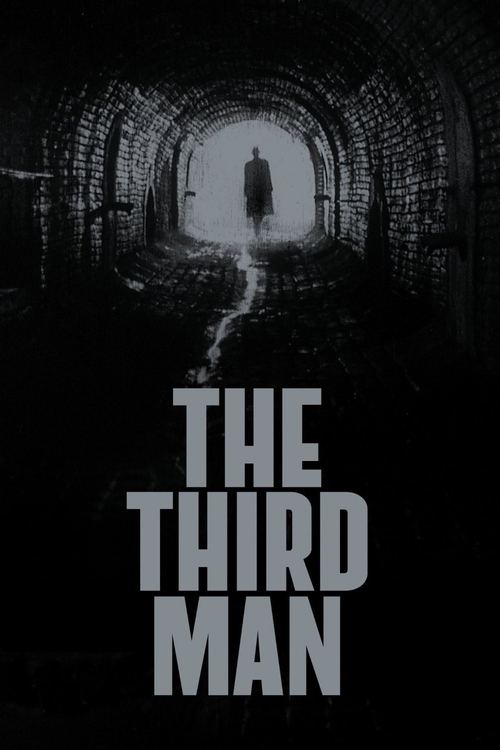
The Third Man (1949)
Directed by Carol Reed
No · Ultra Based
How we score movies →Consciousness Markers
The cast features international performers appropriate to the Vienna setting, but casting decisions reflect 1949 conventions rather than contemporary diversity initiatives. No apparent consideration of representation as a cultural value.
While Harry Lime's black market penicillin operation involves corruption and profiteering, the film does not present this as a critique of capitalism itself. It is treated as personal moral failing rather than systemic indictment.
Female characters exist within the narrative but are not presented through an explicitly feminist lens. Anna is a complex character but her agency is framed through romantic and personal rather than ideological concerns.
While the film depicts postwar Vienna with nuance, it does not engage in contemporary revisionist reinterpretation of historical events. It accepts the historical moment as given.
No LGBTQ+ themes, characters, or subtext are present in the film. The romantic relationships are strictly heterosexual and treated in conventional narrative terms.
The film contains no explicit engagement with race or racial dynamics. Characters are presented without commentary on their ethnic or national backgrounds.
Climate change or environmental concerns have no presence in the film whatsoever. The postwar Vienna setting is purely narrative backdrop.
No engagement with body diversity, neurodivergence, or alternative body standards. Physical appearance is treated as straightforward narrative element without ideological commentary.
No representation of neurodivergent characters or any engagement with disability as a cultural or social category. Characters are presented without such considerations.
The film trusts the viewer to draw moral conclusions. No characters deliver speeches explaining the themes, and the narrative proceeds through implication and dramatic action rather than exposition.


Synopsis
In postwar Vienna, Austria, Holly Martins, a writer of pulp Westerns, arrives penniless as a guest of his childhood chum Harry Lime, only to learn he has died. Martins develops a conspiracy theory after learning of a "third man" present at the time of Harry's death, running into interference from British officer Major Calloway, and falling head-over-heels for Harry's grief-stricken lover, Anna.
Why it received this score
Carol Reed's "The Third Man" stands as a masterwork of postwar cinema, a film so thoroughly committed to its own aesthetic and narrative concerns that it exists in complete indifference to the cultural preoccupations of our current moment. The film presents Vienna as a morally compromised space where British officers, American writers, and Austrian civilians navigate the rubble of empire with the kind of moral complexity that requires no contemporary ideological scaffolding to achieve its effects. Orson Welles's Harry Lime remains one of cinema's great moral enigmas not because the film lectures us about his villainy, but because it trusts the audience to arrive at their own conclusions about a man who sells diluted penicillin to orphans. The female characters, while limited by the conventions of 1949 cinema, are not presented as victims requiring rescue so much as active agents in their own moral calculations. Anna, particularly, embodies a kind of self-protective pragmatism that would be read as complex character work in any era.
The film's postwar setting could have been an opportunity for the kind of moral hand-wringing that contemporary sensibilities might demand, yet Reed resists this impulse entirely. The occupation of Vienna is treated as a given reality, a backdrop for personal betrayal and romantic entanglement rather than a canvas for political statement. The Austrian and German characters are rendered with the same moral ambiguity extended to their British and American counterparts, suggesting a worldview in which nationality provides no reliable indicator of virtue or corruption. This is not progressive politics by any modern definition; it is something more austere, a belief in the equal capacity for both nobility and moral compromise across all human populations.
The film's score of 2 reflects its complete historical distance from the specific cultural markers that define contemporary progressive consciousness. It contains no interrogation of representation, no engagement with gender, sexuality, or identity politics, no climate messaging, no anti-capitalist polemic, and no apparent concern with neurodiversity or bodily normativity. It is, in the most literal sense, innocent of all such concerns. This is not a deficiency; it is simply the nature of a film made in 1949 by a director concerned with craft, mystery, and the human capacity for self-deception.
Analysis generated by our Consciousness Algorithm
Critic Reviews
“Of all the movies I have seen, this one most completely embodies the romance of going to the movies.”
“Throughout the film the sense of Vienna as a frazzled echo of its glorious past is underpinned by Reed's greatest trouvaille – the discovery of Anton Karas's zither melodies, used as the only musical accompaniment. Half-jaunty, half-melancholic, they epitomise, like the film itself, a world gone sadly to seed. ”
“This will haunt you. The style, the plot, the character and of course ...that tune...”
“A peculiarly hollow, centerless blend of theatre and literature, from which what’s missing, for the most part (though not entirely), is precisely the cinema...It isn’t so much that The Third Man is a bad movie—far from it. But it’s far from being a great one, too.”